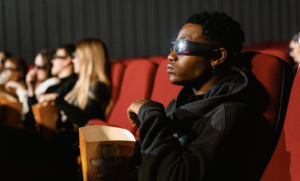
A good movie teaches viewers how to wait. In Jaws, the beach looks calm until John Williams tells you otherwise. In Rear Window, a man across a courtyard becomes a question the audience can’t leave alone. In Uncut Gems, every choice tightens the room by another inch. That craft now sits inside a film culture with many doors. Sundance said its 2025 festival program came from 15,775 submissions across 156 countries or territories. Independent cinema still depends on risk, timing, and payoff because those forces turn attention into feeling.
Suspense doesn’t need a car chase. It needs a gap between what you know and what you fear may happen next. Psycho uses that gap in a motel room. Get Out uses it in polite conversation. Memento builds it through memory loss and broken order. Researchers have studied the same effect in narrative terms. A 2018 paper on suspense found that uncertainty affects emotional response, while suspense can hold attention through a story.
Chance On Screen
Casino gaming uses chance in a more direct form than cinema. A casino-style game gives the player an action, then returns an outcome. Social casino games copy some of those formats for entertainment through virtual coins. Research on social casino games describes them as gambling-themed products that don’t count as gambling in a technical sense, though they can involve paid virtual currency. The important distinction for adults is simple. The game may resemble a casino format, but the coin system defines the experience.
Slot-style play has a compact reward loop. You press, wait, and read the result. That rhythm explains why ACE online slots can fit among the games you can find on ACE.com. The appeal comes from short rounds and clear feedback rather than a long plot. The same basic tension appears in cinema when a director delays the next piece of information. A viewer waits for the cut. A player waits for the result. Both formats rely on controlled uncertainty, though they use different rules.
Suspense As Craft
Filmmakers shape chance by deciding what the audience can see. In The Silence of the Lambs, Clarice enters rooms where each detail has weight. In No Country for Old Men, a coin toss turns a small exchange into a moral test. In Parasite, a family’s plan works until the house reveals another story beneath the floor. None of those scenes need clutter. They need pressure and consequence.
A study in Humanities and Social Sciences Communications tested how narrative content and music build film suspense. The researchers used a suspenseful short movie and compared full audio-video viewing with reduced versions. Their work confirms what editors and composers know in practice: music can steer tension, but story context gives the feeling its target.
The Payoff Problem
A reward loop works when the payoff feels earned. Rocky doesn’t win the title, but the movie gives him a complete reward through endurance and dignity. Whiplash turns applause into something more uneasy. Aftersun lets a home video carry grief because the viewer has learned how to watch the father’s face. Independent cinema can treat reward as recognition rather than victory.
Neuroscience gives that idea a hard edge. Wolfram Schultz’s review on dopamine and reward prediction error explains that the brain learns from the difference between expected and received rewards. In story terms, the expected outcome primes the viewer. The actual outcome teaches them how the movie works. A cheap twist breaks trust. A precise reveal gives the audience the pleasure of adjustment.
Big Films, Small Mechanisms
Marvel movies show reward design at franchise size. The Walt Disney Company said Marvel Studios passed $30 billion at the worldwide box office in 2024. That success comes from more than spectacle. The films train viewers to expect callbacks, post-credit scenes, and delayed answers. The reward can arrive after two hours, after three films, or after a character returns with a line the audience remembers.
Smaller films use the same principle with less hardware. Past Lives rewards a glance across a bar. The Florida Project rewards the viewer’s patience with a sudden break in style. Moonlight lets silence do the work of a speech. The loop stays tight because every return has a purpose. You watch, revise your reading, then carry that new knowledge into the next scene.
Fear And Release
Horror movies understand suspense better than most genres because they turn waiting into structure. The knife in Halloween may appear late. The sound in A Quiet Place can punish one mistake. The Babadook keeps the threat close to the home because the mother’s exhaustion has filled every room. A 2019 review of empirical horror research found that liking can rise as suspense rises, with stronger appeal when the threat gets overcome.
The genre’s commercial strength has grown as well. The Guardian reported that horror revenue in the UK and Ireland rose 22% year on year in 2025, reaching £83.8 million. That figure came from titles such as Sinners, Weapons, and 28 Years Later. Viewers still turn up for fear when the fear has shape and release.

What Filmmakers Can Use
For independent filmmakers, the lesson is practical. Chance should expose character. Suspense should come from a real stake. Reward should answer a question the movie has taught the viewer to ask. The Blair Witch Project did that with absence and suggestion. Reservoir Dogs did it with withheld events and talk that cuts toward danger.
You don’t need to inflate every moment. The strongest scenes give viewers enough information to lean forward, then hold one part back. That restraint links Hitchcock to Get Out, and Oppenheimer to a $50,000 festival feature. Suspense begins when the audience understands the terms. Reward arrives when the ending respects what they noticed.