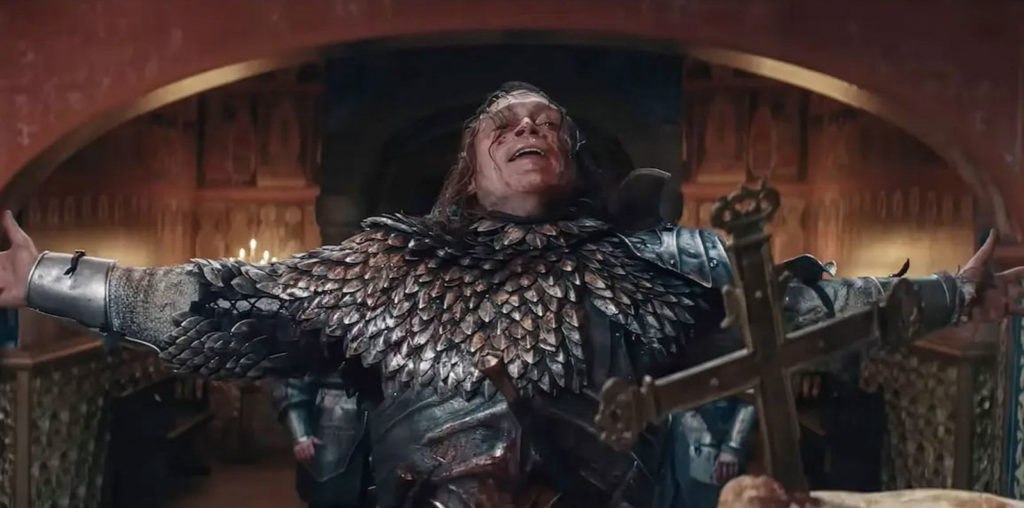
Cecil Peachtree (Malcolm McDowell) is a proper, fastidious schoolmaster stepping out of his comfort zone. Armed with strict grammar, refined decorum, and an unwavering faith in civilized society, he is bound for the remote frontier town of Fortune to begin his next chapter as an educator. When he loses his life savings and misses the last train to Fortune, he finds himself marooned in an unforgiving landscape with nothing left to lean on. His situation deteriorates even further when he crosses paths with Jedidiah Dooley (James Paxton), a scrappy, illiterate outlaw who attempts to rob the destitute traveler at gunpoint. Relying strictly on his fast-talking wits and formal vocabulary, Cecil manages to talk Dooley out of pulling the trigger, bargaining for his life by promising the drifter his entire first paycheck from the schoolhouse if he escorts him safely across the perilous terrain.
Director Adam Rifkin (The Dark Backward, The Last Movie Star) brings a warm, character-driven charm to his 18th feature behind the camera in Last Train to Fortune. Conceived over thirty years ago, the film carries a rich, poignant history behind the scenes. Originally developed in the 1990s as a vehicle for McDowell and the late Bill Paxton, the project was resurrected decades later with Paxton’s son, James Paxton, stepping into the boots intended for his father. This generational passing of the torch infuses the central pairing with genuine emotional resonance, transforming an odd-couple Western road trip into an affectionate tribute to family and the power of unlikely friendship. Co-written by Rifkin and original screenwriter Robert Carl Cohen, the script showcases the director’s signature fondness for bittersweet outsiders and aging legends, trading cynical genre deconstruction for earnest, character-first dialogue that honors classical frontier storytelling.
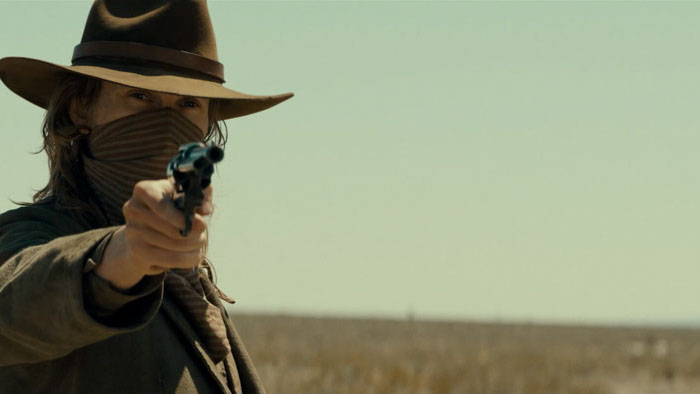
Jedidiah Dooley (James Paxton) holds a traveler at gunpoint on the open prairie in Last Train to Fortune.
“When he loses his life savings and misses the last train to Fortune, he finds himself marooned in an unforgiving landscape with nothing left to lean on.”
Malcolm McDowell charms as Cecil Peachtree, a stuffy intellectual forced to navigate the lawless frontier. He’s matched perfectly by James Paxton as the scrappy drifter Jedidiah Dooley, who conveys a rough-hewn grit forged by life on the trail. McDowell turns in a delightful, weathered performance that trades menacing villainy for pedantic vulnerability, while Paxton brings an earthy, unvarnished charisma to Dooley. Stepping into a role originally conceived for his late father, Paxton commands the screen with a charismatic, leading-man confidence that honors Bill Paxton’s legacy while proving he can firmly stand in his own light. Together, their generational chemistry is the beating heart of the journey, turning Cecil’s sheltered intellect and Dooley’s raw instincts into a steady rhythm of genuine humor and emotional resonance. The supporting cast is anchored by an ensemble of beloved veterans, highlighted by a welcome reunion between McDowell and Hollywood royalty Mary Steenburgen (Miss Maybelle) decades after 1979’s Time After Time. Donning frontier prairie dresses with effortless grace, Steenburgen evokes the timeless Western charm she famously brought to Clara Clayton in Back to the Future Part III, while Broadway legend Bernadette Peters (Annie Get Your Gun) brings a spirited, luminous wit to Miss Lily that rounds out the ensemble with infectious, rabble-rousing fun.
Cinematographer Chase Bowman captures the journey with a wide-angle naturalism that stretches every dollar of the film’s modest independent budget, maximizing practical, sun-baked Santa Clarita backcountry locations. Rather than relying on synthetic digital backdrops, the production embraces a gritty Old West authenticity born of real sweat, dust, and sweltering heat. The production design feels remarkably grounded and lived-in; weathered wooden saloons, creaking boardwalks, and rustic homesteads look genuinely worn by decades of wind and grime. Bowman’s visual framing accentuates this physical reality with harsh golden-hour flares, contrasting Peachtree’s stiff, high-collared wool suit against miles of cracked dirt and sun-bleached brush to turn the desert into an active antagonist.
Beyond its scenic vistas and comedic banter, the story moves with the classic pulse of vintage frontier storytelling while steering clear of modern cynicism. Rifkin strikes an engaging balance between old-fashioned heart and rousing adventure, peppering the trail with close-call shootouts, rugged escapades, and an unexpected undercurrent of sweet frontier romance that keeps the stakes personal and lively. At its core, the film thrives on the timeless, endearing bond of an unlikely brotherhood forged through sheer survival and shared grit. Last Train to Fortune is a warm, spirited ride that proves some journeys are worth the wait, and I highly recommend it.

"…a warm, spirited ride that proves some journeys are worth the wait..."