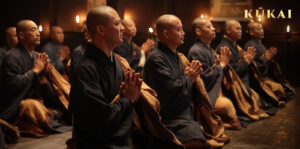
Ye’s journalism background is fully on display, as Kūkai has a supreme wealth of deep research in it. This is higher than evening news report-level information; it is even denser than PBS mini-series level. The super high level of precise information found in the documentary would rival even an academic book on the subject. For this level of detailed history found in Yaoming’s scholarly narration, you usually have to go back to the scrolls themselves. I won’t pretend that all of this knowledge at once wasn’t intimidating or overwhelming, like when you pick up the Bible and start hitting the “begat who begat who begat” parts real hard. However, if spiritual history could be quickly absorbed and understood, then people wouldn’t be spending their lives studying it (Master Kukai practiced Buddhism for 41 years himself). However, the splendor and majesty are plainly on display. You catch what you can of the details while basking in the awe.
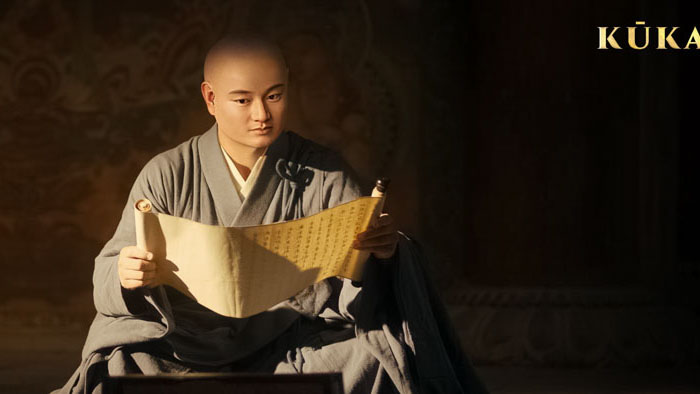
Master Kukai studies a sutra scroll in a scene from Kukai.
“The cinematography by Zhang Huajun and Ji Yuan is mesmerizing to the point you don’t know where reality ends and imagination begins.”
The imagery Ye uses to illustrate the in-depth narration by Xu Tao is extremely beautiful. Ye uses a mixture of ancient location shots, historical paintings, and VFX visuals to create a gorgeous tapestry. The cinematography by Zhang Huajun and Ji Yuan is mesmerizing to the point you don’t know where reality ends and imagination begins. The details caught are intricate beyond measure, with lots of the power of legends to be felt. The VFX supervised by Li Zhiyong are so delicious-looking you want to eat them. Over and over again, Kūkai paintings are brought to life with computer animation, with lots of digital architecture of celestial wonderment. The computer-generated head replacement on Master Kukai’s body takes a little getting used to. At first it plays a lot like the mask Gosling wears at the end of Drive, with the frozen features of a China doll. However, when you see a picture of a sculpture of Kukai, it is really remarkable how well the likeness is.
In the final third of Kūkai, after Master Kukai attained Nirvana and entered the eternal samadhi, it ramps up the cosmic splendidly. I am talking full 2001: A Space Odyssey finale cosmic, with the sky filled with buddhas floating in glowing globes. If you are versed in Western practices of herbal relaxation, you are going to especially like these sequences. Trippy seems like an appropriate, inappropriate word to use, but it gets them in the seats on this side of the globe. We also find out nuts-and-bolts things, like how Master Kukai built the largest reservoir yet in Japan. He also brought over from China to Japan advanced methods of bridge building, road making, and mining. And he taught the Japanese what the Chinese had discovered about how to use coal and petroleum. But it was Master Kukai’s spreading in Japan of Esoteric Buddhism, which is essentially Chinese, that bore the most fruit. Kūkai is a radiant portrait of a figure so great that the screen can’t contain him. It isn’t for everyone, but if it sounds like it’s for you, it is.
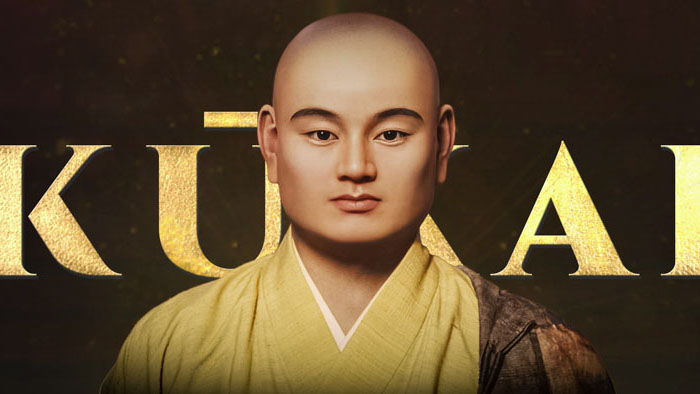
"…a radiant portrait of a figure so great that the screen can't contain him."
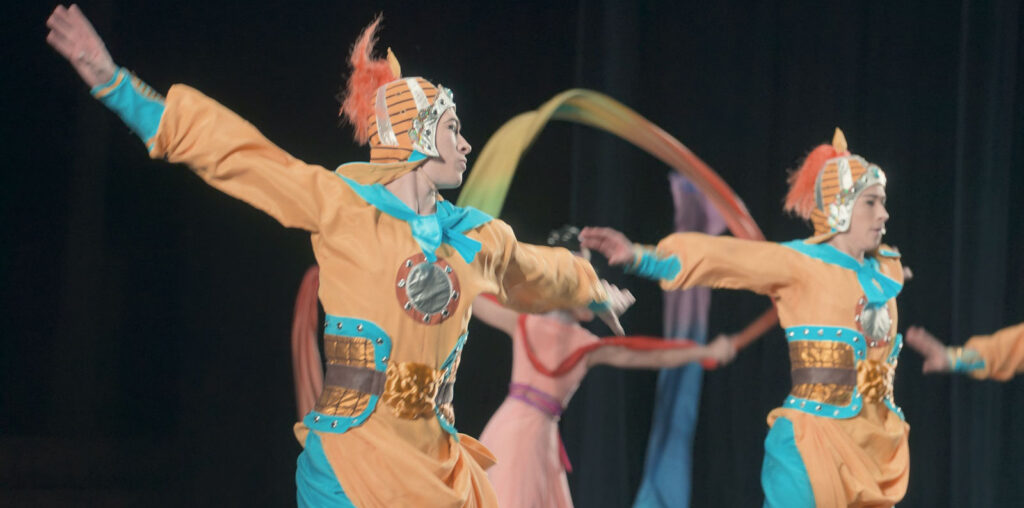
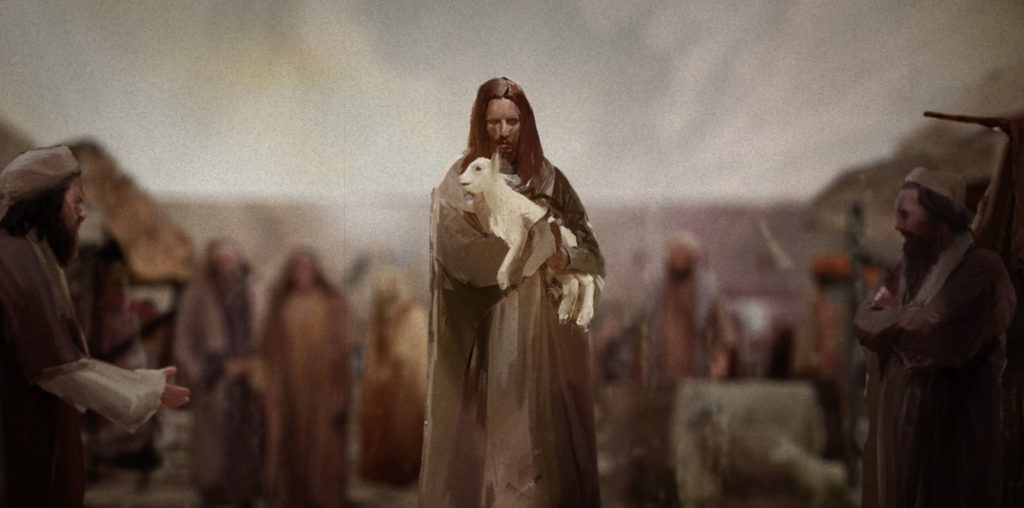


The cinematography of the film is extraordinarily beautiful, yet this beauty is not empty decoration. It is a visual language full of life and tension, one that perfectly breaks through the boundaries of the frame and carries a spiritual significance that transcends the image itself.