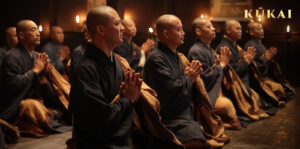
If you are looking for a lotus that you will surely notice, get ready to absorb the mystical historical documentary Kūkai, directed by Yue Ye and written by Long Yaoming. After a perilous journey by sea that lasted 80 days, on August the 10th, 804 A.D., Japanese monk Kukai arrived in Tang, China, to study Esoteric Buddhism and later bring it back to Japan. Master Maha Acharya Huiguo had already promised in his previous lifetimes to instruct the young monk, and had been expecting his arrival. After teaching him the wisdom of Esoteric Buddhism, copies of the sutras were made to be smuggled out of China. Master Huiguo saw the writing on the wall of the practice’s eventual end in China, so he told Kukai to teach the secret Dharma he brought back to Japan “to spread the teachings widely and cultivate the merits of living beings”. Kukai accepted the three-pronged vajra, a ritual object passed down from Nagarjuna Bodhisattva, and departed in 806 A.D., even though he took a huge risk by returning to Japan before a decade in Tang, China was up. A few decades after Master Huiguo’s death, Chinese Emperor Wuzong of Tang launched the Great Anti-Buddhist Persecution. The Buddhist schools were all laid to waste, wiping Esoteric Buddhism off the face of China.
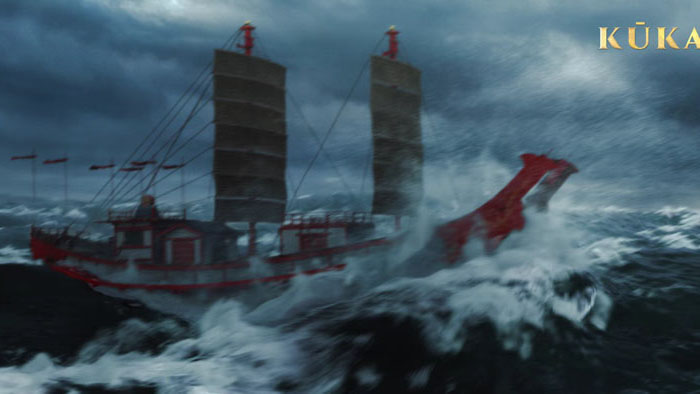
Kukai’s ship crosses stormy seas on the voyage to Tang China in Kukai.
“While hiding out on a mountain by the sea, Master Kukai threw the three-pronged vajra toward the waters.”
However, thanks to Master Kukai, the practice was brought to Japan. Master Kukai couldn’t go straight back into the capital because he faced punishment for early return from the Tang. While hiding out on a mountain by the sea, Master Kukai threw the three-pronged vajra toward the waters. Instead, the sacred object flew up into the purple clouds and disappeared. After a glorious five-pronged crown revelation presented to the Japanese emperor, Master Kukai’s Shingon School for Tang Esoteric Buddhism flourished as it entered a golden age. As Master Kukai built his bodhimanda on top of Mount Koya, the three-pronged vajra came back down from the heavens, landing in the pine tree where he stood. This unearthed a five-shake sword along with a scroll of sutra, with the sword appearing from the sky whenever a Buddha needs it. For the remainder of the documentary, Master Kukai’s life and legacy of teaching Esoteric Buddhism in Japan is thoroughly explored with animation, paintings, and endless light.
Let’s bust some assumptions. Even though I am writing a review of Kūkai, I myself am not a Buddhist. I was brought up Quaker, and that sticks pretty hard as you head down the road. However, my wife is a Buddhist, so I do have some skin in the game. Another assumption buster is I assumed that as Master Kukai is such a fundamental figure in Japanese Buddhist history that Kūkai must have been made in Japan. Turns out it is from China, where Master Kukai learned everything about Esoteric Buddhism. It makes a lot of sense, as this lotus sprang up from Chinese soil, so it makes sense that a Chinese journalist like Ye would spend close to five years making this documentary on this Japanese master. The biggest assumption is that everything will be spoon-fed to the casual viewer. Very wrong, as the information isn’t watered down at all. A lot of what is presented is so vast, it can be hard to grasp. However, if it was easy to grasp, no one would be inspired to reach further for it.
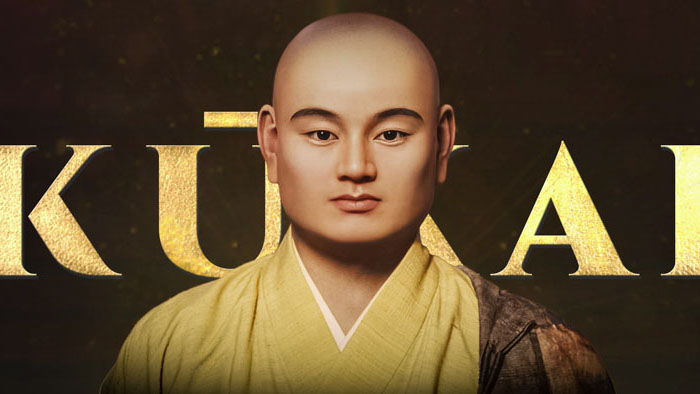
"…a radiant portrait of a figure so great that the screen can't contain him."
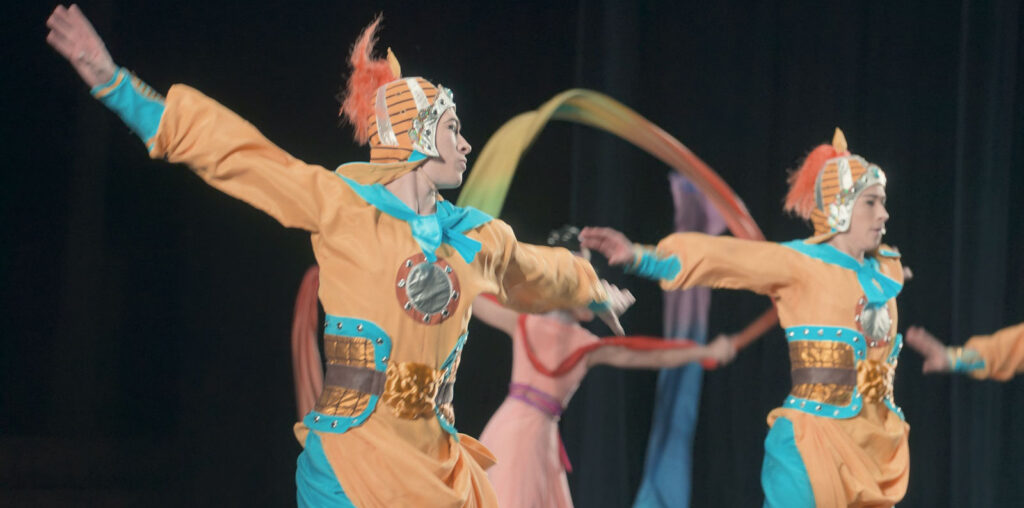
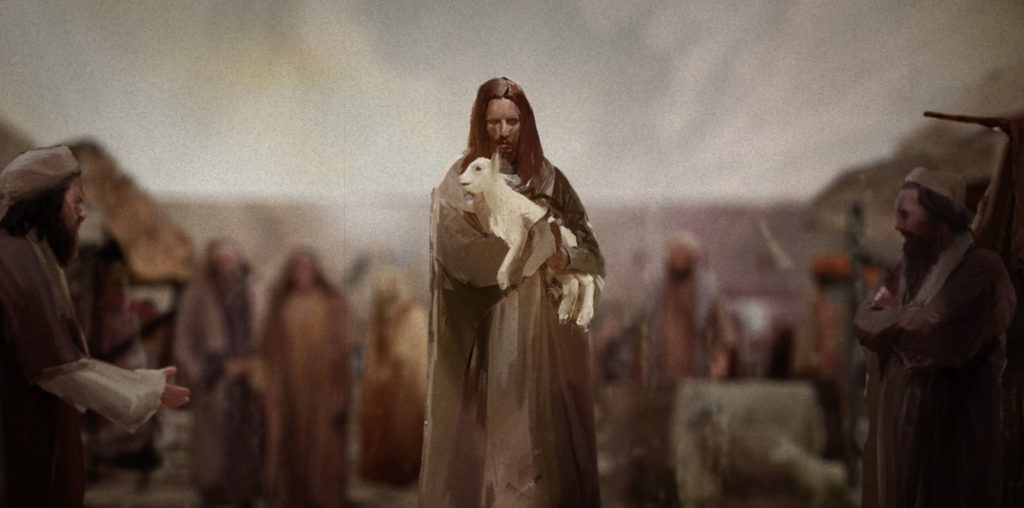


The cinematography of the film is extraordinarily beautiful, yet this beauty is not empty decoration. It is a visual language full of life and tension, one that perfectly breaks through the boundaries of the frame and carries a spiritual significance that transcends the image itself.