The power of cinema in the 21st century isn’t always about box office numbers, revenue, new technology, warring studios, or the glamorization of celebrities and influencers. It can still educate, inform, and raise awareness, and serve as a vehicle for change, reaching global audiences. Those behind the dramatic film Impure embrace film’s ability to drive change through beautiful storytelling, in which simplicity becomes a catalyst for understanding a subject the world needs to act on.
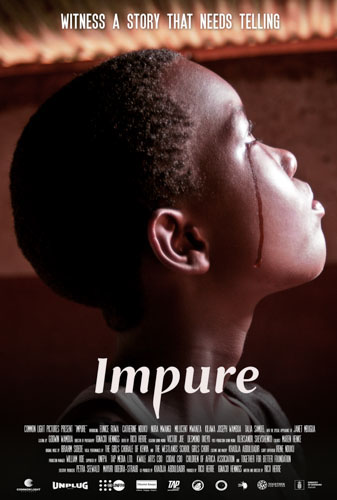
Impure tells the story of June (Eunice Ruwa), a twelve-year-old Kenyan girl who, after experiencing her first menstruation at school, grapples with the harsh realities of ignorance, exclusion, and shame. Director and writer Rico Herre created the film based on a real event and in memory of Vicky Jackline Chepngeno, who died by suicide at age 12 after getting her period in class and being publicly ridiculed by her teacher for staining her uniform. She was called dirty and thrown out of the classroom.
Bringing life and advocacy to Chepngeno’s incident, Impure is set in a rural Kenyan village in Sub-Saharan Africa. When we first meet June, her sister Kimya (Millicent Mwanza), and friend Pendo (Talia Samuel) playing in a lagoon, something is happening to June. Rushing home to say goodbye to their father, Aleeke (Kilawa Joseph Wambua), who works in a mine for weeks at a time, June and Kimya learn that their mother, Inaya (Catherine Nduku), is pregnant.
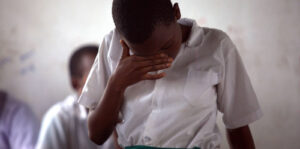
Complaining of stomach pain, June’s condition worsens. While at school, aptly called the Child Development Center, June gets her period, and it stains her uniform. Her teacher, Mrs. Nyankwe (Nura Mwangi), sends her home for soiling her uniform, amid laughter and humiliation from her classmates. Unfortunately, June is unaware of what is happening to her and does whatever she can to stop it, using cloths and socks. She is worried about making her pregnant mother sick, so she leaves home. Inaya, recognizing something is amiss, quickly realizes that Mrs. Nyankwe caused a terrible situation and that June needs to be told the facts of life. Mrs. Nyankwe addresses the situation to the class, revealing that cause is an important part of education and that she should have been more considerate.
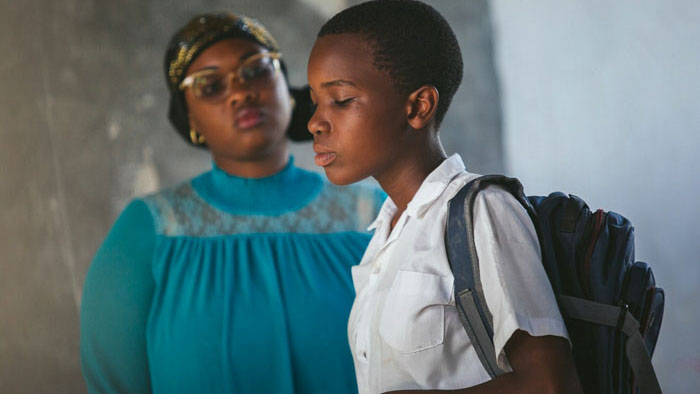
June’s teacher, Mrs. Nyankwe, looks on as June carries her backpack home in a scene from Impure.
“…a twelve-year-old Kenyan girl who, after experiencing her first menstruation at school, grapples with the harsh realities of ignorance, exclusion, and shame.”
A coming-of-age incident becomes a visual experience in Impure with an interpretation of time and place, where beauty and connection to land and sky coexist with ignorance and shame. From farm animals and elephants to a pregnant mother and a schoolyard of girls and boys, the cycle of life and connection to nature are ever-present. Impure is told with beautiful camera work and a captivating soundtrack, set against severe poverty in a world that feels far removed from thriving economies. The acting is simple but clear and purposeful, deepening appreciation for the story while reinforcing the underlying theme that we need to understand beauty in nature.
Period shaming and period poverty are widespread issues in parts of the world, including Africa, Nepal, India, and other impoverished regions, where global advocacy organizations such as UNFPA work tirelessly to address them. However, because feminine hygiene products are expensive, many young women stay home from school and face stigma, leading to social isolation, teen pregnancy, and mental illness. Considered a basic human right, natural processes are not dirty, and women should have access to what they need.
Even though Impure premiered over two years ago, the topic remains important and timely. This socio-economic issue centers on recognizing that menstrual health is not just a hygiene issue. Poor menstrual health and lack of access to safe products, facilities, and information can limit a person’s ability to attend school, work, or participate in society.
Herre and those who support Impure are contributing to a movement to bring a very important issue into the mainstream, and it will never go away. Women will menstruate, and period poverty should no longer be an overlooked issue of our time. Ending this vicious cycle and breaking the taboo should be a basic human right.
Get all the links to discover more on the Impure official site.
"…we need to understand beauty in nature..."

What a good lesson 🤭👏 👌