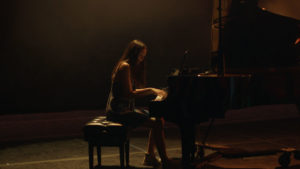
A black grand in the corner of a living room tells an audience something about money and family expectations before anyone on screen says a word. An upright with a cracked lid in a rented apartment tells a different story, and a battered spinet in a church basement tells yet another. Filmmakers have leaned on that shorthand for decades. The instrument keeps turning up in thrillers and quiet character studies, sometimes as a prop that never makes a sound and sometimes as the voice of the entire score.
The Grand as a Set Piece
On a film set, a piano is a heavy and expensive object, which makes it an odd thing to build a scene around. Production designers usually start with what the character would plausibly own. A retired concert pianist might have a nine-foot grand squeezed into a living room that is far too small for it, and that awkward fit can say more than a page of dialogue. A teenager practicing scales after school is more likely to sit at a modest upright or a digital keyboard pushed against the wall.
Budget shapes these decisions quickly. When an art department prices out the bosendorfer piano cost for a single scene, buying a premium European grand rarely survives the first budget meeting on an independent production, so rentals and loans from private owners or local schools fill the gap. A piano on screen also needs to be tuned on location and protected from hot lamps and crew traffic. Specialist piano movers have to be scheduled for the load-in and the load-out, and on a short shoot that coordination can quietly eat most of a day.
Camera crews have their own opinions about the instrument. The polished lacquer on a black grand reflects everything, including boom poles and the occasional crew member standing where they should not be. Cinematographers frequently use that reflection on purpose, framing a face in the curved lid or catching a candle flame in the fallboard. When the shine becomes a problem, the usual fix is dulling spray or careful flagging, since replacing the piano is rarely an option.
Continuity adds another layer of fuss. The script supervisor tracks whether the lid was open or closed, which sheet music sat on the stand and how high the bench was set, because any of those details can change between takes shot hours apart. A piano that drifts out of tune over a long day can also create a problem in the edit if the actor plays a few live notes in one take and not in another.
When the Piano Actually Has to Play
The piano that appears in a scene and the piano the audience hears are often two different instruments. Many productions shoot actors miming to a pre-recorded track, because recording live piano on a busy set brings in camera noise and the hum of generators. The performance is then laid in during post-production from a cleaner studio recording. Actors who cannot play are coached on hand positions, and editors cut around the moments where the fingers clearly do not match the notes.
Productions that care about authenticity sometimes go the other way. When a story is about a musician, directors may cast a performer who can actually play, or bring in a hand double whose fingers appear in close-ups. Some films record the piano live on set with careful microphone placement, accepting a bit of room noise in exchange for performances where the timing and touch belong to the moment. Sound mixers who have done this describe it as one of the harder jobs in location recording, because a piano is loud and physically wide, and the room it sits in becomes part of the sound whether anyone likes it or not.
Choosing a Piano by Its Sound
Composers and music supervisors tend to think about pianos in terms of character. Some instruments have a bright, crisp attack that cuts through dialogue and sound effects. Others sound darker and rounder, with a long sustain that suits slow, mournful cues. The difference between a concert grand in a large hall and a small baby grand in a dry studio is obvious even to casual listeners, and scoring teams choose deliberately based on the emotional temperature of the film.
The room matters almost as much as the instrument. A score recorded in a reverberant church will carry a sense of space and distance. The same notes recorded close-miked in a small treated room will feel intimate, almost as though the listener is sitting on the bench beside the player. Many modern film scores use that close, slightly mechanical sound on purpose, letting the audience hear the hammers and even the creak of the bench.
Digital Pianos in the Indie Score
A large share of piano music in independent film never touches an acoustic piano at all. Composers working on tight budgets often write and record in home studios, where a digital piano or a weighted MIDI controller connected to a sample library does most of the work. Sample libraries built from carefully recorded grands have improved enormously, and in a finished mix, with dialogue and effects layered on top, many viewers would struggle to tell the difference.
Money sets the limits here as well. For a composer turning a spare bedroom into a workspace, the cost of yamaha clavinova piano models and comparable home digital instruments usually decides how ambitious the setup can be. These instruments offer headphone practice at any hour and a direct connection to recording software, which matters a great deal in an apartment building where a full acoustic piano at midnight would end a lease quickly. The compromises show up in subtle ways, since a sampled piano can feel slightly too even and the natural interaction between strings and soundboard is approximated in software.
Some composers split the difference. They sketch and demo on a digital instrument, then book a few hours in a studio with a well-maintained grand once the director approves the cues. A single day of recording on a real instrument can give a score a warmth that is hard to fake, and many independent productions treat that session as one of the few places where spending a little more money is clearly audible on screen.
The Long Road to an Acoustic Grand
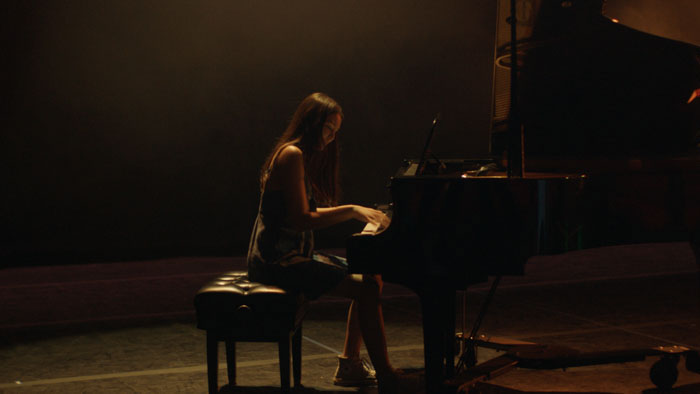
Plenty of working film composers spend years writing on digital instruments while hoping to own a real grand someday. Space is one obstacle, since a grand needs a room that can hold both its size and its sound. Cost is another, and the gap between an entry-level baby grand and a professional concert instrument is wide. A composer who has just landed a first feature may find a bookmark to https://greenemusic.com/all-pianos/new-grand-pianos/ sitting next to the folder of temp tracks, a reminder of the purchase that marks a career milestone.
Once a composer does own a good acoustic instrument, the way they write often changes. Players describe hearing overtones and resonances they had stopped noticing on headphones, and the physical response of a real action tends to encourage softer dynamics and longer silences. Those qualities have a way of ending up in the score, and directors sometimes notice the difference before the composer mentions the new piano at all.
Audiences rarely think about any of this while watching a film. They notice a melody that lingers over a final shot, or a grand piano sitting in an empty room that suddenly feels heavy with memory. Somewhere behind that shot, a person spent weeks getting a box of wood and wire to sound exactly right for a few seconds of screen time.