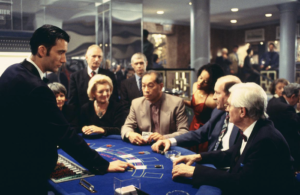
From Casino to Croupier and Ocean’s Eleven, these films use gambling floors to expose power, performance, obsession and control.
A casino floor gives filmmakers three assets before a character speaks: money in motion, constant surveillance and people performing confidence. The durable casino movies use all three. They are not memorable because a roulette ball lands on red or a hero turns over the winning card; they survive because the game exposes hierarchy, ego and faulty judgment. Searches for top movies 2026 may favor new releases, but the strongest work in this category still comes from directors who understood that the house is an institution, not decoration. Martin Scorsese, Steven Soderbergh and Mike Hodges built very different films from that idea, while later poker dramas moved the conflict inside the player.
Scorsese Filmed the Back Room, Not the Jackpot
Martin Scorsese’s Casino (1995) turns Las Vegas into an operating system. Robert De Niro’s Sam “Ace” Rothstein manages the fictional Tangiers with obsessive attention to odds, staff and appearances, yet he never truly owns the power he administers. The film’s dual narration makes control sound possible even as every relationship starts to rot.
Saul and Elaine Bass designed an opening title sequence that sends Ace through fire before the story explains his fall. Sharon Stone’s performance as Ginger earned the film’s only Academy Award nomination, for leading actress. The detail that lasts, however, is institutional: money moves from tables to counting rooms to unseen bosses, and everybody mistakes access for authority.
Ocean’s Eleven Makes Logistics Look Effortless
Steven Soderbergh’s Ocean’s Eleven (2001) treats the casino as a machine that can be reverse-engineered. Danny Ocean’s crew targets a vault serving the Bellagio, Mirage and MGM Grand, with the film placing $160 million behind layers of guards, cameras and misdirection. Each crew member solves one part of the system, so exposition becomes character comedy rather than homework.
That economy is why the movie remains a reference point among the best heist movies. The pleasure does not come from realism alone—the blackout device is pure caper logic—but from seeing a plan broken into visible tasks. When the reveal arrives, the audience can trace how the trick was built.
Croupier Puts the Camera Behind the Table
Mike Hodges’s Croupier (1998) removes the Vegas glow. Clive Owen plays Jack, a blocked writer who takes a London casino job and begins treating customers as material. His cool internal narration suggests mastery, but the point of the film is that observation does not make him immune to manipulation.
The British Film Institute describes Jack as a casino worker tempted into serving as the inside man on a robbery. That premise matters less than his posture: he believes emotional distance is a professional advantage. The film slowly reveals it as vanity.
The Rules Off-Screen Are Less Cinematic
Movies can skip licensing, account security and withdrawal procedures because paperwork kills momentum. Real digital play cannot afford that shortcut. Anyone asking what makes an online casino legit should verify the named operator, regulator, encrypted account access and published terms before placing funds. Game pages should identify the provider and explain RTP, volatility and bonus features without implying a short-session return. The boring checks are exactly what a thriller removes from the frame.
Screenwriters also compress sports wagers into one decisive ticket, one final possession and one clean payout. Actual markets contain an overround, settlement rules and prices that move when information changes. Reading online betting markets properly means converting decimal odds into implied probability and checking whether overtime, penalties or abandoned events count. A 2.00 price implies 50% before margin; it does not certify that the outcome is evenly balanced. That gap between price and probability is less glamorous than a movie montage, but more useful.
Slot mechanics create tension by repetition rather than character. JILI’s Super Ace removes winning symbols, adds new ones and builds multipliers across consecutive eliminations; Golden Cards can become Golden Jokers after they disappear. Trying the demo Super Ace shows how that cascade rhythm differs from the single, climactic hand favored by cinema. Demo play explains the rules without proving that a future sequence is due. Film edits create destiny; RNG does not.
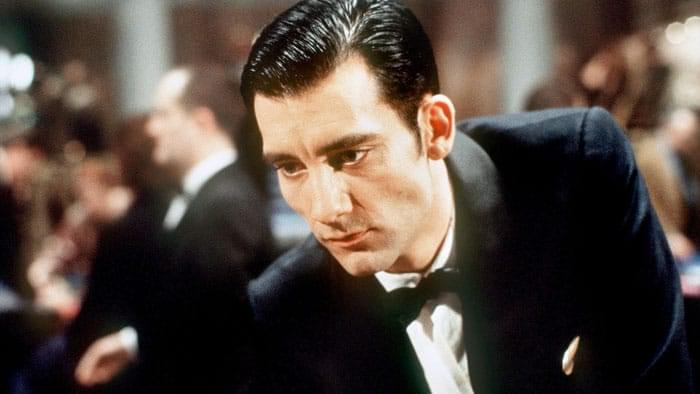
Poker Films Work When the Hand Reveals Character
Casino Royale (2006) rebuilds James Bond around a Texas Hold’em tournament against Le Chiffre in Montenegro. The cards matter, but Vesper Lynd’s control of the buy-in and Bond’s misreading of his opponent matter more. The game turns arrogance into a plot mechanism.
Rounders (1998) uses poker language to test loyalty and self-image, while Molly’s Game (2017) treats the table as a business network built from access, reputation and risk. In each case, strategy is credible only because the player has something personal to misjudge.
Pick the Pressure You Want to Feel
- Watch Casino for institutional power and the slow collapse of people who think they control it.
- Choose Ocean’s Eleven for procedure, ensemble timing and a heist that rewards attention.
- Start Croupier for a colder character study about watching and being watched.
- Use Casino Royale or Rounders when the psychology of one hand matters more than the building around it.
- Save Uncut Gems (2019) for a film that turns gambling debt and borrowed time into sustained physical anxiety.