Who doesn’t love trains? That little kid in all of us certainly does. In Trains, Maciej J. Drygas brings us an archival documentary about trains, specifically their role in the two World Wars.
Drygas opens with a Franz Kafka quote: “There is plenty of hope. An infinite amount of hope. But not for us.” It’s a fitting warning for what is about to follow. We start on a factory floor in the 1910s — men assembling a locomotive piece by piece, bolting together the engine, fitting the cars. The train is then sent down the tracks to collect soldiers headed for the First World War. Their first stop is boot camp for physical training, shooting drills, and gas mask preparedness. Back at the factories, women have taken over the assembly lines, building artillery that gets loaded onto train flatcars and hauled directly to the front. On the front, the trains swap out the weapons for the wounded.
The pattern holds into the Second World War. Hitler appears in the footage, but Drygas keeps his lens on the eerie pomp and circumstance as Hitler parades through the German countryside. As the war wages and countries are conquered and liberated, the same rail lines serve both sides — Allied and Axis alike, each running their own operations on the same tracks. SS officers ride in polished leather compartments. Civilians evacuate their bombed-out cities. Jews are moved in the opposite direction to camps for the nightmare ahead of them. The trains don’t distinguish. The footage of the camps is unflinching. Bodies overflowing from freight cars. American soldiers picking through the wreckage of the liberation.
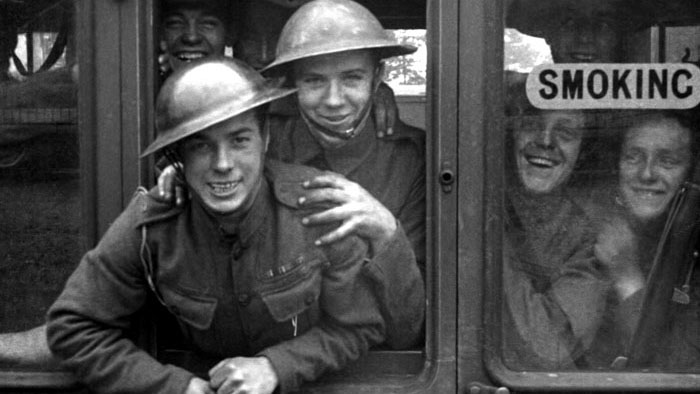
“SS officers ride in polished leather compartments. Civilians evacuate their bombed-out cities. Jews are moved in the opposite direction to camps for the nightmare ahead of them.”
The film is without dialogue — no narration, no interviews — and draws on 46 European wartime archives. It opens on a bright note as we observe trains being assembled, then transitions to the darker theme of war. Drygas does an incredible job not only telling the story of the train’s role in the “war to end all wars” but also masterfully managing its tone throughout. This is not a nostalgia trip or leisurely train ride. Instead, it is a somber obituary to a world at war.
One of the film’s heroes is the score composed by Paweł Szymański, “Compartment 2, Car 7,” along with the sound design by Lithuanian artist Saulius Urbanavicius. Urbanavicius seamlessly incorporates Szymański’s piece into the overall story, then adds atmosphere to Trains, including train (obviously), factory, battle, and crowd sounds, building on the silent films and archival footage. Like any good sound design, it is heard but not noticed.
Whether you’re a railfan or not, Trains is an engaging documentary that traces the world at its darkest hours and the role the railroad played in both its survival and liberation.
For more information, visit the Trains official Instagram page.
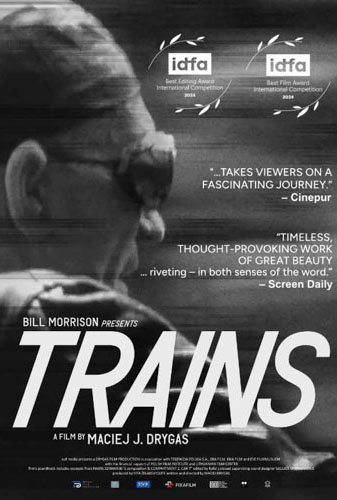
"…not a nostalgia trip or leisurely train ride. Instead, it is a somber obituary to a world at war."