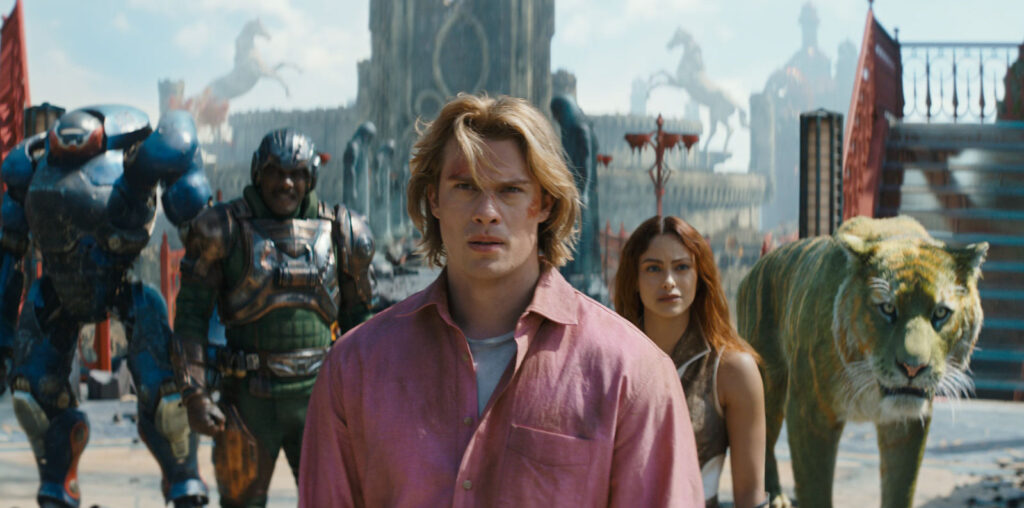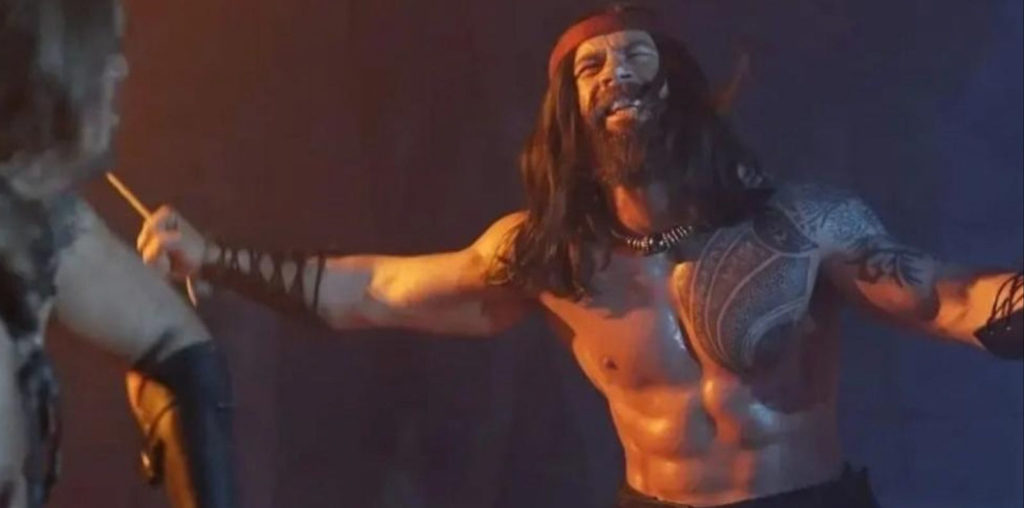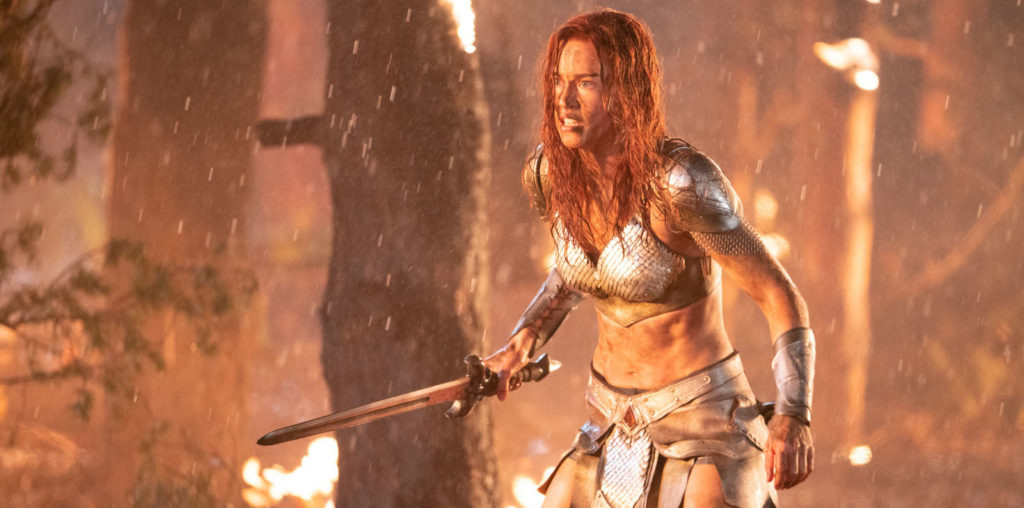
Then there is the dialogue. Sword-and-sorcery has never required Shakespearean eloquence, but it does require personality, rhythm and a certain relish for the absurd. Think of the Italian Hercules and Sampson films, author Piers Anthony and his fantasy writing, where wit, wordplay and irreverence can give even the most ridiculous magical predicament its own character. A good fantasy adventure understands that a little humor can make the surrounding darkness more effective. Without that spark, grand declarations and talk of demons, blood stones, and enchanted weapons can become monotonous rather than entertaining when they come from a human source.
The problem is not that Tower of Sorcery is an independent production. Independent cinema has produced remarkable work with limited resources. Nor is the problem simply that AI tools have been used. Technology has always influenced filmmaking, from optical effects and rear projection to computer-generated imagery. The distinction is that successful filmmaking requires artists to make deliberate choices, exercise control, and understand why a particular image or performance belongs in a scene. Rear projection, for all its limitations, still involved performers, cinematographers, editors, and technicians working together to create a coherent result. The technique served the production. It did not replace the need for direction.
That is the distinction worth considering here. Having access to a tool capable of generating images is not the same as possessing the judgment required to direct a film or write a film because you can. The difficult work lies in selection, continuity, timing, performance, sound design, editing, and knowing when something simply does not work. It is also in selling that film, working to get it shown. If the result looks like a sequence of enhanced video-game cut scenes, the technology has not yet become cinema. It has become a shortcut to something that resembles cinema from a distance.
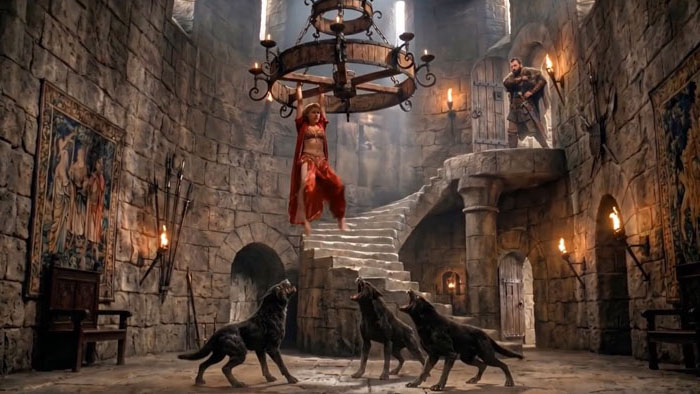
A woman in red clings to an iron chandelier as demon dogs circle below and a warrior watches from the stairs in Tower of Sorcery.
“Fantasy asks us to believe in the impossible. It does not ask us to overlook the obviously implausible.”
And this is where the larger question arises. If this represents the future of Hollywood, there is reason for concern. Not because technology must be rejected, but because filmmaking is an art of human decisions. The audience does not merely want to see an image of a warrior holding a sword. It wants to feel the weight of that sword, the exhaustion of the warrior and the danger of the encounter. Those qualities emerge from a combination of performance, direction, sound, movement, and visual storytelling. They cannot be supplied by enthusiasm alone.
To be fair, Tower of Sorcery is a feature-length project with little regard for the tools. Completing a 70-minute production requires persistence, and its creator’s affection for old-school fantasy is evident in the material’s ingredients. There may be an audience willing to embrace it as an experiment or a curiosity, particularly viewers interested in seeing what AI tools can accomplish, or not accomplish. Look at the inflated film series called Avatar or the controversial experiment for the time of the original Disney film Tron. Is this the same? Not by a long shot, because humans were hired; perhaps there is in this work, yet no credits were found in the work or online.
An experiment should also be judged by what it reveals about the limitations of its methods. Tower of Sorcery offers a glimpse of what these tools can produce, but also of how far they remain from consistently reproducing the physical credibility, atmosphere and personality that distinguish accomplished fantasy cinema. Having the means to make a film is not the same as knowing how to make one. In fantasy, as in every other form of cinema, the magic is in the execution. When Love of Fantasy Isn’t Enough. Does the end justify the means? A question of conscience, of which there is too little in these vulgar days.
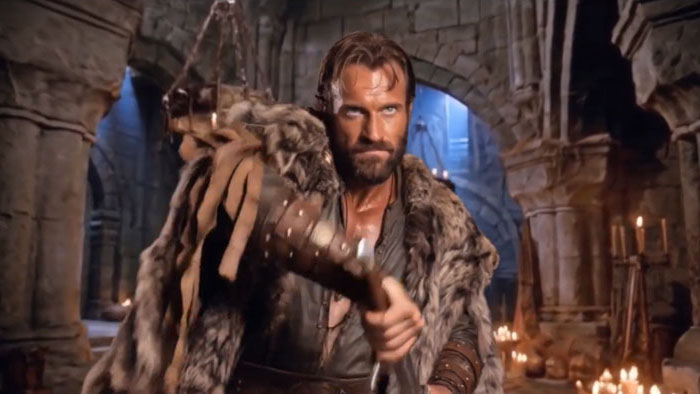
"…love of a genre and the ability to translate that love into convincing cinema are two very different things."