Sword and Fantasy films are usually about quests . In this case, Texas writer and novelist Jack Conner, a filmmaker, set out to make a sword-and-sorcery film called Tower of Sorcery. The genre has a long tradition of grand ambitions, strange creatures, ancient evils, magical weapons, and warriors wandering through worlds where danger lurks behind every mountain. Jason and the Argonauts, Moments from Star Wars: The Empire Strikes Back, and Legend, starring Tom Cruise, and countless others from big screen to matinees all demonstrate how fantasy cinema can create worlds that feel larger than the resources used to bring them to life. They also demonstrate something equally important: imagination needs craft, and spectacle needs substance. The human touch in a magical world to make the unbelievable believable
Tower of Sorcery is a seventy-minute fantasy film made with modern AI filmmaking tools, in the words of a Facebook post by Jack Conner on the Contemporary Sword And Sorcery page. This person clearly comes from someone who loves the genre. Its premise involves a blood heart jewel to conjure H.P. Lovecraft creatures , demon dogs, a sword, and a battle against a demon with buddies battling together who were once enemies. These are familiar ingredients, drawn from the great cauldron of sword-and-sorcery fiction. There is nothing wrong with that. Fantasy has always borrowed, recycled, and reinvented its myths; in this case, I wonder about feeding plot lines, as the script is very derivative. The question is not whether a film uses familiar elements, but whether it can make them feel alive.
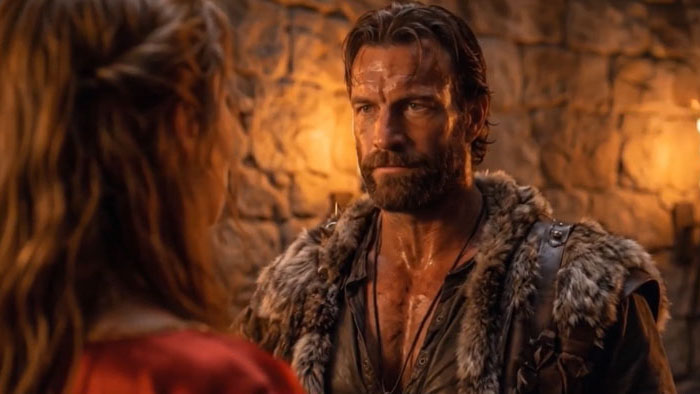
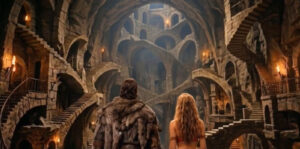
A battle-worn warrior in a fur vest stands face to face with a woman in a torchlit chamber in Tower of Sorcery.
“…a blood heart jewel to conjure H.P. Lovecraft creatures, demon dogs, a sword, and a battle against a demon with buddies battling together who were once enemies.”
Unfortunately, love of a genre and the ability to translate that love into convincing cinema are two very different things.
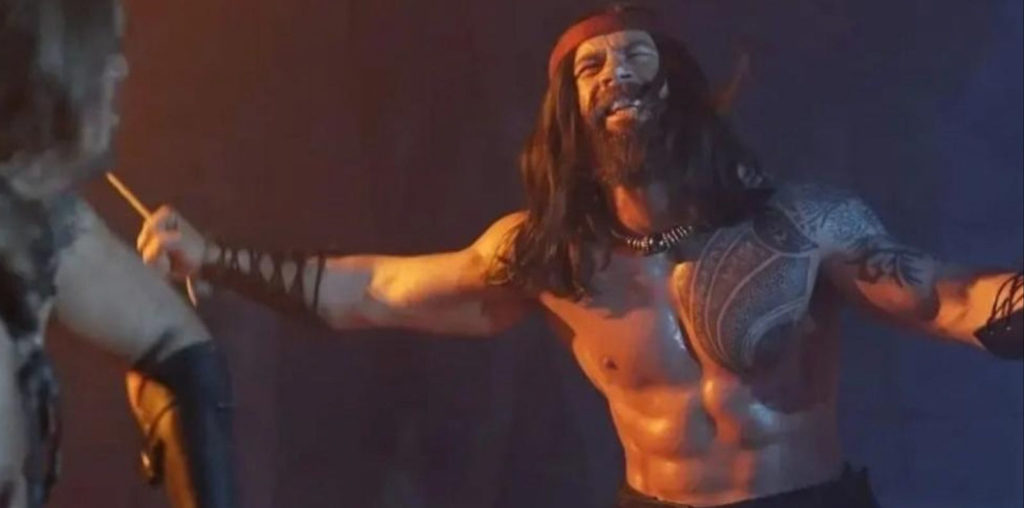
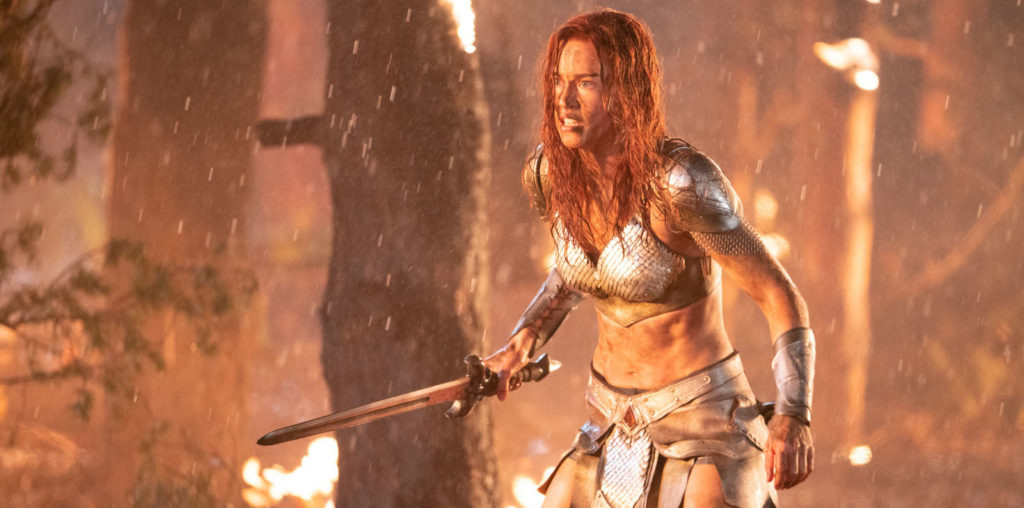
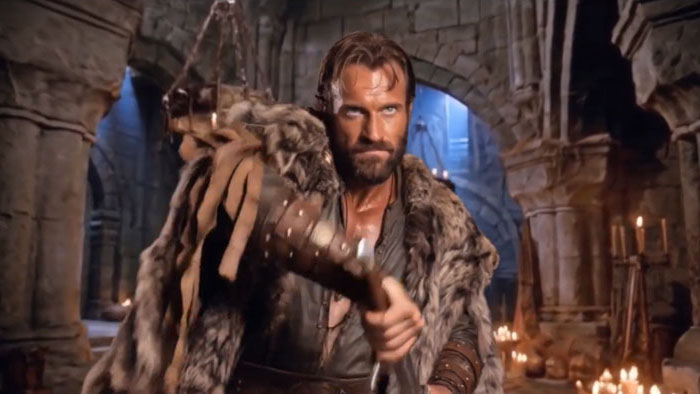
The film’s most immediate problem is the artificiality of its images. Blood can resemble waves of water, which I have seen before in another production. A warrior woman’s abdominal muscles may change from one shot to the next. Characters run with the peculiar rhythm of somebody exercising on a treadmill rather than fleeing for their lives. Water fails to produce convincing sound when someone splashes into it. These are not merely technical quibbles for an audience of perfectionists. They are interruptions that destroy.
Fantasy asks us to believe in the impossible. It does not ask us to overlook the obviously implausible.
A dragon need not exist, but its movement must possess weight. A sword fight need not be historically accurate, but the combatants must appear to occupy the same physical space. When bodies change shape, movement feels mechanical, and the environment refuses to behave like the real world, the audience becomes conscious of the machinery producing the image. The spell is broken.
"…love of a genre and the ability to translate that love into convincing cinema are two very different things."