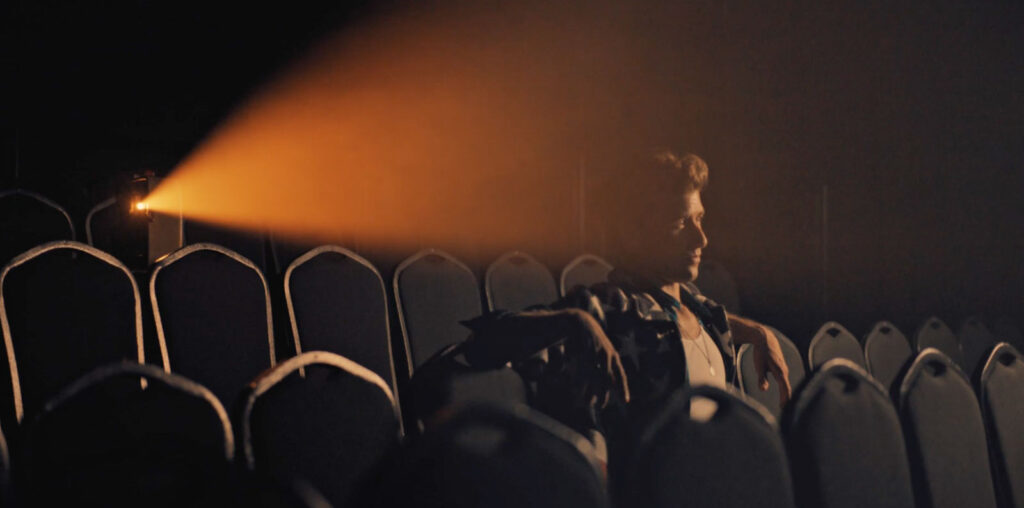
At first William David Caballero’s TheyDream might seem like a vanity project; in a certain way it is, with one important difference. It’s the vanity and regret of memory and how one must come to terms with actions you can control and events you cannot. Instead, it emerges as an intimate, visually inventive and personal work about family, death, grief and the complicated business of accepting where we come from. Caballero understands that cinema can do something more than preserve the past through images. It can reconstruct it, challenge it and, perhaps most importantly, reclaim it.
Born in Brooklyn and raised in a Puerto Rican family in Fayetteville, North Carolina, Caballero returns to his childhood home to spend time with his ailing mother, Milly. These are not actors but real people photographed not in the “found footage.” In fact the work brings to mind the French New Wave film transforming the landscape of visual culture through art, photography, and graphic design, in this case animation.
From this starting point, he begins an examination of his family history, revisiting the people, conversations he recorded and experiences that shaped him. What follows is less a conventional documentary than an elaborate exercise in an epiphany as one attempts to confront the emotional burdens inherited from previous generations.
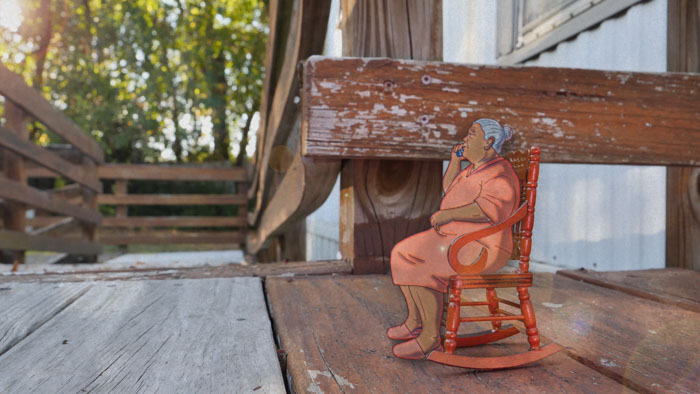
An animated woman talks on the phone in a rocking chair on a trailer porch in TheyDream.
“His father’s declining health, diabetes and refusal of treatment leading to eventual kidney failure cast a long shadow over the household.”
Rather than relying solely on interviews and archival footage, he combines home movies, voice recordings, handcrafted miniatures, puppetry, 2D and 3D animation, and motion-capture technology. The result is a distinctive cinematic language in which memory becomes something tangible, almost theatrical. Moments when he dresses and acts like his father for his mother are almost therapy moments for both, much like Michael Gandolfini mentioned he did with his father, the late James Gandolfini, in The Many Saints of Newark.
The miniatures are particularly effective. Reconstructing the family trailer where he spent his childhood, Caballero creates a world that allows him to revisit experiences that were difficult to understand at the time. His father’s declining health, diabetes, and refusal of treatment leading to eventual kidney failure cast a long shadow over the household. The weekly dialysis treatments and the emotional exhaustion surrounding his father’s illness left a young William searching for somewhere to escape. His refuge became creativity. He enrolled in practically every after-school artistic activity available, finding in the act of making things an alternative to the increasingly difficult atmosphere at home. On the other side, he turned his back on his home, seeking refuge in the creative world of music, film, and other pursuits.
Caballero’s relationship with his father, which affects males more, particularly if you are an only child, and his inability to come out as gay. His father’s prejudices towards the LGBTQ+ community created a distance that the filmmaker continues to examine. These are uncomfortable memories, but Caballero refuses to turn his father into a convenient villain. He recognizes the limitations of the generation that raised him while acknowledging the damage those limitations caused.
Animation becomes an important means of expressing these complicated feelings. In one sequence, his mother walks away from a painful family exchange, eventually disappearing into an increasingly dark background. It is a simple but remarkably effective visual representation of emotional isolation. Elsewhere, multiple screens within the frame suggest the distance between family members, turning conversations into visual expressions of misunderstanding and unresolved trauma. These techniques occasionally feel overly illustrative, but they offer possibilities that conventional documentary footage could never quite achieve. The passing of the family pet, who was adored, is handled with dignity, as they are part of one’s life with their unconditional love that humans sometimes withhold.
The film also becomes a collaboration between mother and son. Milly gradually participates in the creative process, recreating memories and confronting her own feelings of guilt, particularly surrounding the deaths of her parents. Caballero encourages her to use the camera and miniature sets as instruments of reflection. In these moments, filmmaking becomes a form of shared therapy, allowing both of them to approach memories that have remained difficult to articulate.

“…its courage, inventiveness and emotional honesty make it difficult to dismiss.”
There is a particularly touching dimension to Caballero’s portrayal of his mother. His affection is unmistakable, and his decision to provide her with a proper home, allowing her to leave the deteriorating trailer where she has lived for so many years, carries an emotional significance beyond the gesture itself. It feels like an attempt to acknowledge sacrifices that perhaps went unrecognized for too long.
At times, however, TheyDream struggles with its own stylistic enthusiasm. The sentimental narration and occasionally insistent musical score threaten to dictate emotions that the images already communicate. The transitions between animation, live footage, and different visual techniques are not always entirely seamless. Some passages feel a little too carefully arranged to produce an emotional response. Nevertheless, these reservations never undermine the sincerity of the undertaking.
TheyDream has an understanding that remembering is not necessarily an exercise in nostalgia. The work is not just the Latino experience in America with its inherent troubles and joys. Caballero is not interested in polishing the past or pretending that family relationships were happier than they actually were. He wants to understand them, including the anger, prejudice, disappointment, and affection that existed alongside one another. The work makes the past visible, giving physical form to memories that might otherwise remain buried. His film is an act of resurrection, but also one of reconciliation: not necessarily with those who are gone, but with the person he has become.
TheyDream may occasionally wear its heart on its sleeve, but its courage, inventiveness and emotional honesty make it difficult to dismiss. More than simply documenting a family, Caballero reminds us that we all carry histories that deserve examination. One can never leave where you have come from, your personal “point of origin,” and sometimes the only way to move forward is to return to where we began. Not everyone comes from a “good home.” Someone once said, “Never meet your Heroes,” yet they could be right in front of you.
For screening information, visit the TheyDream official website.
"…His film is an act of resurrection, but also one of reconciliation..."