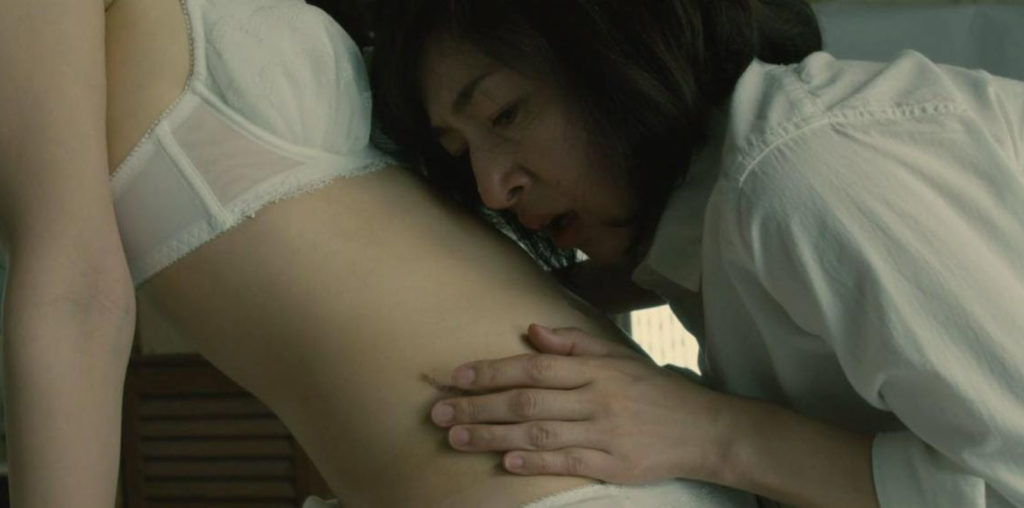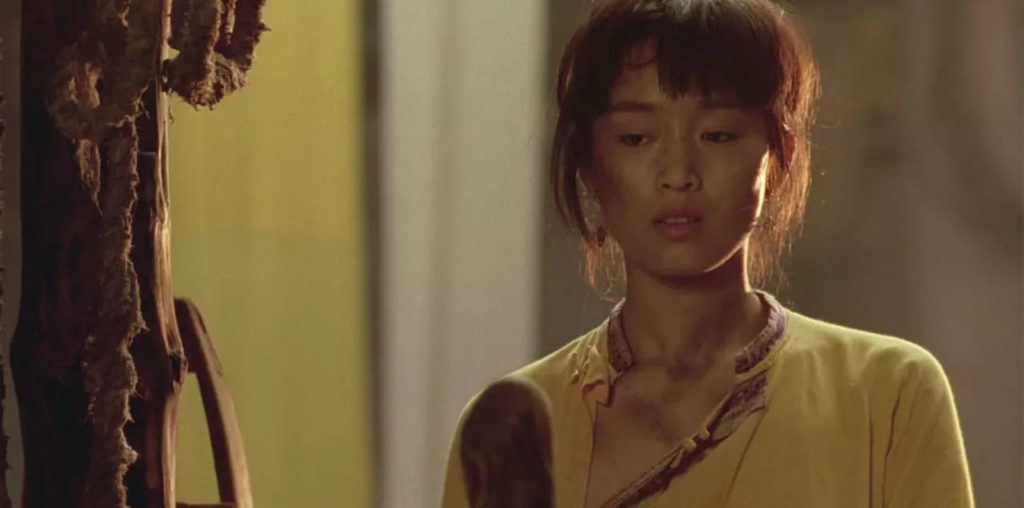
The film’s visual design with darkness, walls, and single rooms works well with the small budgets associated with Nikkatsu’s Roman Porno productions. The Watcher in the Attic is much like the early Hammer Horror work, with its period of twenties Japan setting looking substantial, while the carefully controlled interiors become almost theatrical spaces of confinement.
Classical music adds another layer of oddity, plus singing of translations of the American songbook. Beautiful, refined music accompanies imagery and situations that are psychologically disturbing. The effect is not merely provocative; it creates an unsettling collision between elegance and depravity, much like the one-time notion of enjoying a lustful evening accompanied by Maurice Ravel’s piece Bolero on the record player.
The film’s greatest achievement is the way it implicates the viewer. The spectator is given Saburo’s perspective, peering through openings into private worlds, only to find that the act of watching has itself become part of the story. That distinction interesting as. Watcher in the Attic isn’t simply asking whether voyeurism is wrong. It asks what exactly the voyeur wants from seeing, unlike many of the ‘found footage” pictures, when it’s all laid out for one purpose.
“Junko Miyashita is equally compelling, bringing an extraordinary mixture of vulnerability and erotic confidence to her performance.”
The controversial Michael Powell-directed British film Peeping Tom, with its voyeuristic point-of-view murders as seen through a camera, and Alfred Hitchcock’s Rear Window, where the device is binoculars, are heavy influences. In both presentations, you are observing females and death while not believing what has happened. In The Watcher in the Attic, you know what’s happening and are meant to feel a guilt that doesn’t matter in the tasting of the forbidden fruit
And then there is the ending, which is disturbing, unexpected, and perfectly suited to the film’s desire and obsession. By the final moments, watching and being watched have become almost indistinguishable.
The Watcher in the Attic is an unconventional pink-film masterpiece: slow, strange, beautifully photographed and deeply unsettling. The film takes the erotic cinema of the 1970s and transforms it into something closer to psychological horror and literary decadence. Beneath the sensationalism lie themes of loneliness, fantasy and the human need to be desired. The attic may be where Saburo hides, but ultimately it is also where the film places the viewer, spectators, voyeurs and unwilling participants in its dark theatre of desire.

"…Nobody...is entirely innocent as the work refuses to reduce these people to simple victims and predators"