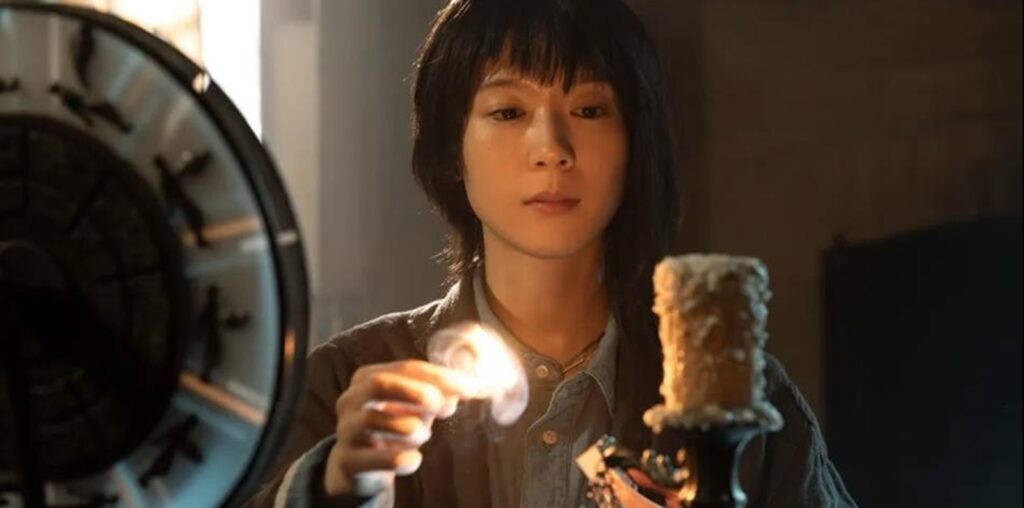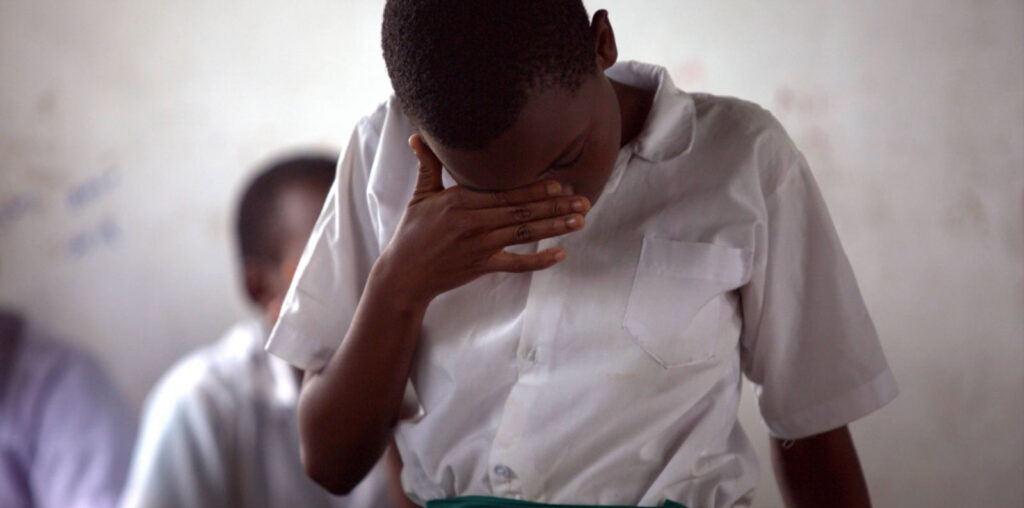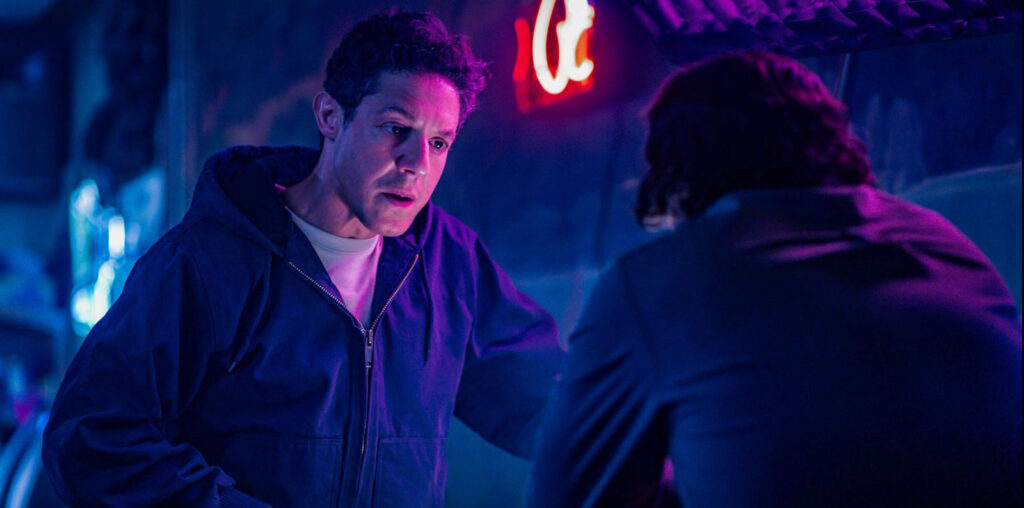
Jiacheng Wang’s The Eyeire is a highly crafted, visually rich experimental film that explores an existential emotional state and the philosophy of being, reflecting on adversity, authority, and beauty. As director, writer, creator, and lead actor, Jiacheng Wang uses her role as Synesthesia to reveal male domination and subordination, the challenges women face as objects of beauty in society, and the inability to think freely or achieve justice.
“…Jiacheng Wang uses her role as Synesthesia to reveal male domination and subordination…”
Wang layers The Eyeire with neutral spaces, skeleton actions, and monotone dialogue to create a “Buddhist dystopia.” Here, thought and emotion are clearly directed, controlled, manipulated, and reduced to a very simple existence to please a god-like authority. Synesthesia, considered an empath in this unusual yet intriguing world, endures a form of sexual abuse, which she is told was her doing. Unable to understand this reaction, Synesthesia seeks answers and discovers a childhood mate, Anesthesia (Tara Lederman), who tells her to run from the isolation and control.
The use of specific colors, including blue, white, and red, is intentional. The Eyeire’s purpose, along with creative mandala-inspired designs and additions, voices, chanting, and Buddhist prayer, crafts the film’s absorption as a piece of art, as intended. An interesting connection to mythological gods and implied power also contributes to the dystopian or post-apocalyptic setting and its intellectual approach. However, The Eyeire’s ability to share a linear story rooted in childhood and deliver it non-linearly to an adult situation keeps this approach relevant to contemporary issues, making this short film fascinating while also revealing Wang’s many talents.
The Eyeire premiered at the LA Shorts International Film Festival on August 12, 2026
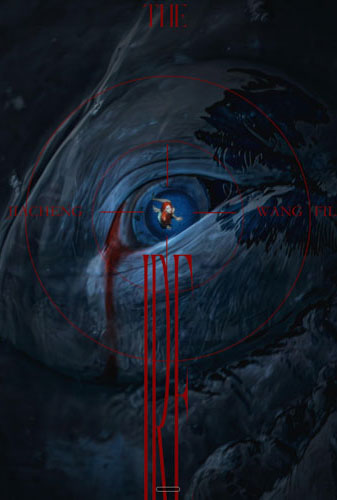
"…a highly crafted, visually rich experimental film..."