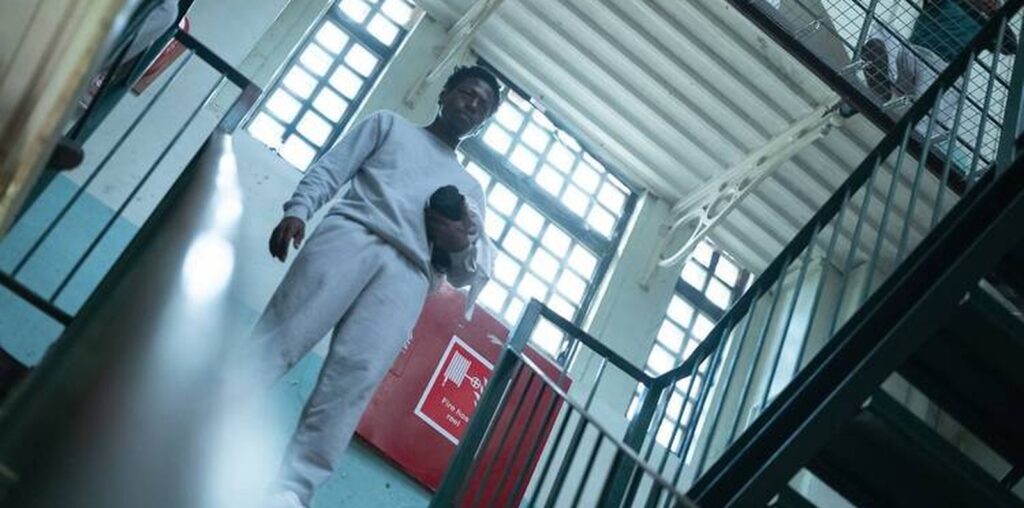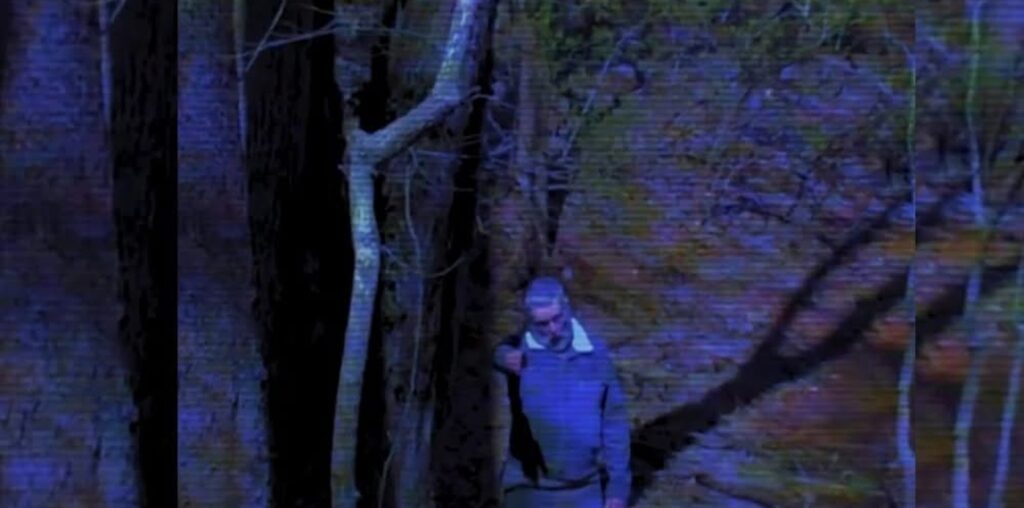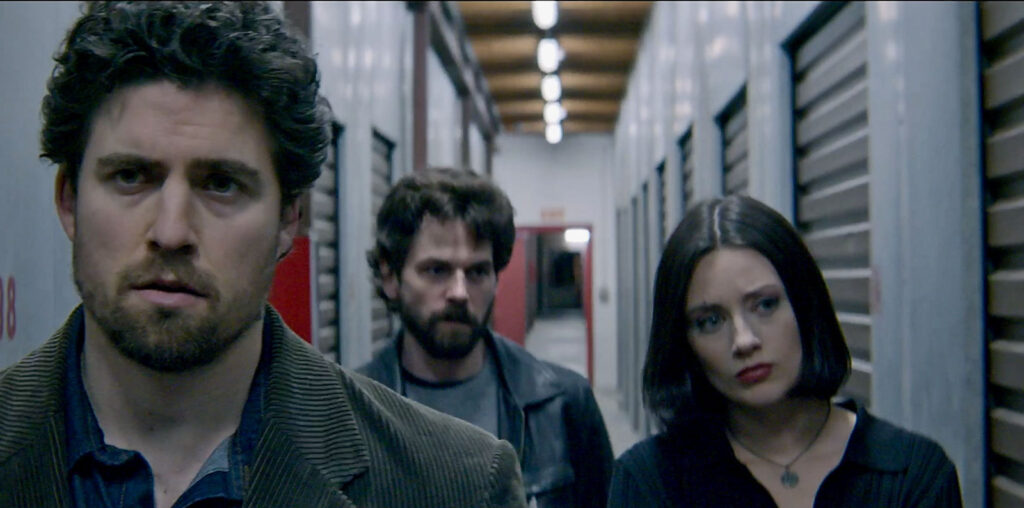
The End of Isolation is a documentary about a busload of theater activists—many of them formerly incarcerated—who traveled 8,000 miles across America in the summer of 2022 performing The Box, a brutally honest play about solitary confinement. Led by Sarah Shourd, a playwright and activist who was herself held in solitary confinement as a political hostage in Iran, the touring company brought the play to ten U.S. cities where the prison system is particularly brutal: Arkansas, Missouri, Pennsylvania, and beyond. They performed at outdoor venues, community centers, and even a circus tent with next to no funding, driven only by sheer will.
One part of the play tells the story of a man who takes his own life in solitary confinement, his ghost moving from cell to cell as a haunting witness to the system that killed him. Over 122,000 people are currently held in solitary confinement in America—a form of torture that shrinks neurons, drives people to suicide, and disproportionately targets Black prisoners. One valued member of the touring company is Emile Suotonye DeWeaver, a San Quentin lifer turned community guide, who helps audiences understand that while prison is meant to “rehabilitate,” solitary confinement is not justice—it’s control dressed up as torture.
The formerly incarcerated activists in this film refuse despair. Emile argues that you could release half the people in prison right now and they will not re-offend—the system itself created the conditions for their crimes. Others speak to the need for accountability: they took responsibility for their actions; now the system must do the same for the incarcerated. They challenge the religious origins of the penitentiary—supposed to be a last resort—and expose solitary confinement as what it truly is: torture without calling it torture. At its core, The End of Isolation is an indictment of a system built on the assumption that locking people away makes us safer, and a call to audiences to imagine, fight for, and build a world beyond prisons.
Sarah Shourd created this film as an antidote to isolation—a fifteen-year project shaped by letters, visits, and relationships with people inside prison. The film grows from trust, dialogue, and ethical collaboration, grounded in a belief that art can be a tool for social change. She says that at a time of rising authoritarianism and expanding incarceration, The End of Isolation refuses despair and insists that resistance is not only possible—it’s already happening.
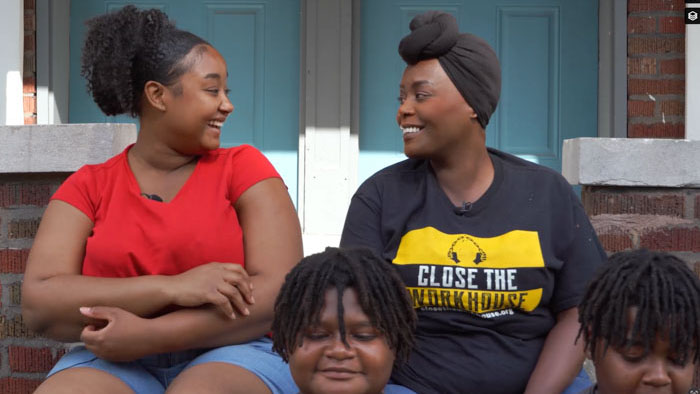
Inez Bordeaux shares a moment with family members on the front porch in The End of Isolation.
“Over 122,000 people are currently held in solitary confinement in America—a form of torture that shrinks neurons, drives people to suicide, and disproportionately targets Black prisoners.”
I’ll be honest: I don’t necessarily agree with the film’s politics, but I do agree with its subject: solitary confinement. The research I’ve done on the subject matches up with what The End of Isolation presents. You cannot put a person in a box, deprive them of human connection, or of their ability to know what is happening in the outside world, particularly regarding the Sun’s position relative to Earth’s rotation. It’s torture, and there are plenty of studies that have shown the adverse effects of solitary confinement to know it’s not right. YouTube is littered with experts and influencers subjecting themselves to it. Here you hear it from the incarcerated themselves.
The film delivers on solitary confinement, but the rest might feel like a bait-and-switch to some. It’s a divisive issue, to say the least. Here in California, we’ve battled the concept of cashless bail and the need to empty our prisons. Depending on who you ask, they’ll say it was either a total success or a complete failure. Shourd will say it was a success.
As someone who leans the other way on the issue, I’m not willing to just do away with the prison system, but what is painfully clear is that it needs reform. The End of Isolation makes clear that the incarcerated are human beings; all worthy of respect—otherwise the idea of rehabilitation is thrown out the window. During their time served, the system should be working to ensure they don’t return. Treat the drug, alcohol, and anger issues, and give them a chance to build a life once released. One side is not right, and the other is wrong; the answers lie somewhere in the middle.
As I step off my soapbox, watch The End of Isolation with an open mind. There is light at the end of the tunnel for the incarcerated, and we can increase the odds that they wind up like the subjects Shourd spotlights. If anything, I’m much more motivated to end solitary confinement once and for all.
For screening information, visit the The End of Isolation official website.

"…There is light at the end of the tunnel for the incarcerated."