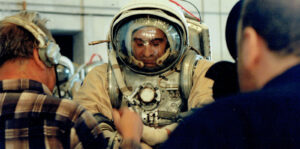
Polish documentary filmmaker Maciej J. Drygas has made a career out of digging through archives that most people would rather leave buried — and State of Weightlessness is no exception. This time, he turns his lens on the Soviet space program, letting the cosmonauts themselves tell you exactly what toll it took on them to reach the stars.
Drawn from interviews and archival film and recordings, this documentary features prominent Russian cosmonauts who take us through the Russian space program from their perspective. State of Weightlessness pieces together what it felt like for many of these cosmonauts to have fulfilled their dreams by leaving Earth’s atmosphere.
One man describes it as a dream come true. He stood atop a mountain as a young man, staring at the sky, wondering whether his dream would ever come true and what it would be like to go to space, as if overcoming a major weakness in his life were the ultimate act of self-improvement. They wanted to see the stars and be amongst the stars. Ironically, even looking down on Earth from space, they couldn’t help but feel that someone even higher above was looking at them.
The cosmonauts then discuss the practical realities of life in orbit: sleeping, eating, and going to the bathroom in complete weightlessness are different and definitely not glamorous. There’s also footage of one taking a shower in zero gravity, and they even tried to raise chickens. It was quite sad watching them try to figure out which way was up. One cosmonaut talks about just how being in space cleansed him: he quit smoking, drinking, and women.
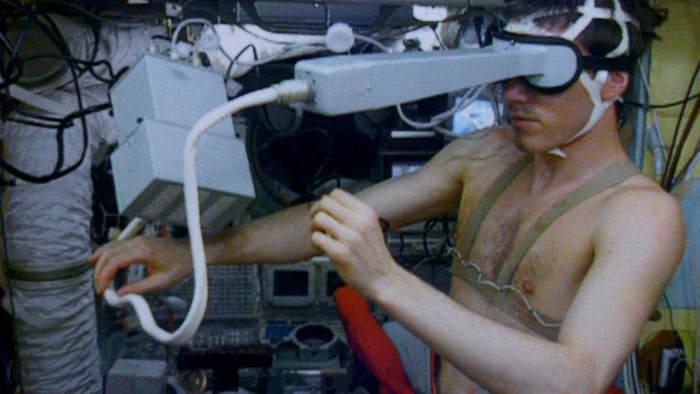
“…this documentary features prominent Russian cosmonauts who take us through the Russian space program from their perspective.”
There is also a dark side to the story. For a lot of these men who dreamed of flying and going to space, the Russian government started conducting experiments on them. One man talks about how he and eight others were divided into three groups and given anesthetics. His anesthetic numbed his pain while leaving him conscious. He described it as being in a real-life out-of-body experience. The experiments had a lot of emotional and psychological ramifications, as many of the subjects lost their families, lost their loved ones, and became permanently disabled.
I have a father who was part of the engineering team that helped send the Apollo missions from Earth to the moon. As a result, I had access to many documentaries about the NASA space program. Similar to his documentary Trains, the director Maciej J. Drygas simply pieces together a massive amount of archival footage and interviews with participants in the Russian space program to bring us State of Weightlessness. To me, the idea of going through stacks of archival footage and trying to tell a story from it genuinely excites me. Drygas does exactly that: he tells a compelling story from the clues and evidence he’s been given.
Drawn from the testimonies of Soviet cosmonauts Gherman Titov, Georgi Grechko, Valeri Polyakov, Aleksandr Laveykin, Vladimir Solovyov, and others, we learn that the Soviet cosmonauts were not that different from their American counterparts. But what we do find out is their training was different, and the death rate as “test pilots” was much higher than the Americans’. The Americans also were not basically guinea pigs for Russian psychological experiments.
In the end, the benefit you’ll get from State of Weightlessness is seeing the space program from a Russian perspective. There’s just as much similarity and commonality in the experience as there are differences. If you’ve ever been curious about what it was actually like on the other side of the Space Race, Drygas gives you a front-row seat — and it’s more human than you’d expect.
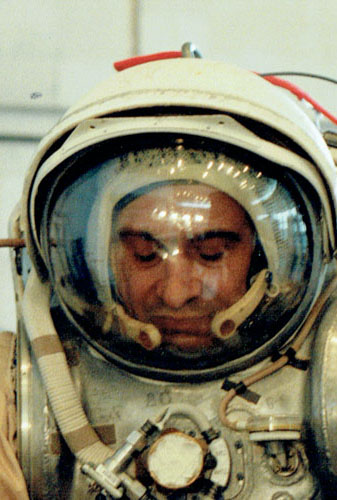
"…tells a compelling story from the clues and evidence he's been given."