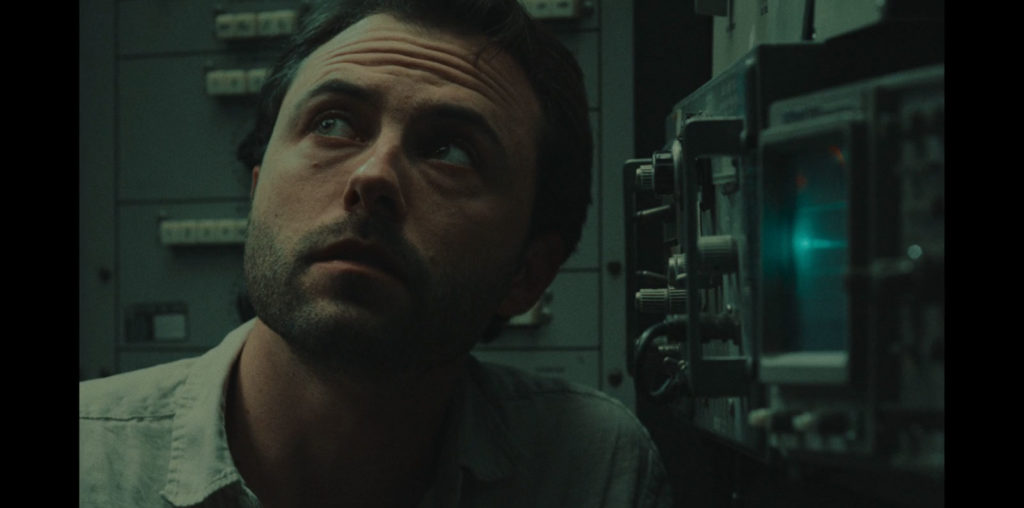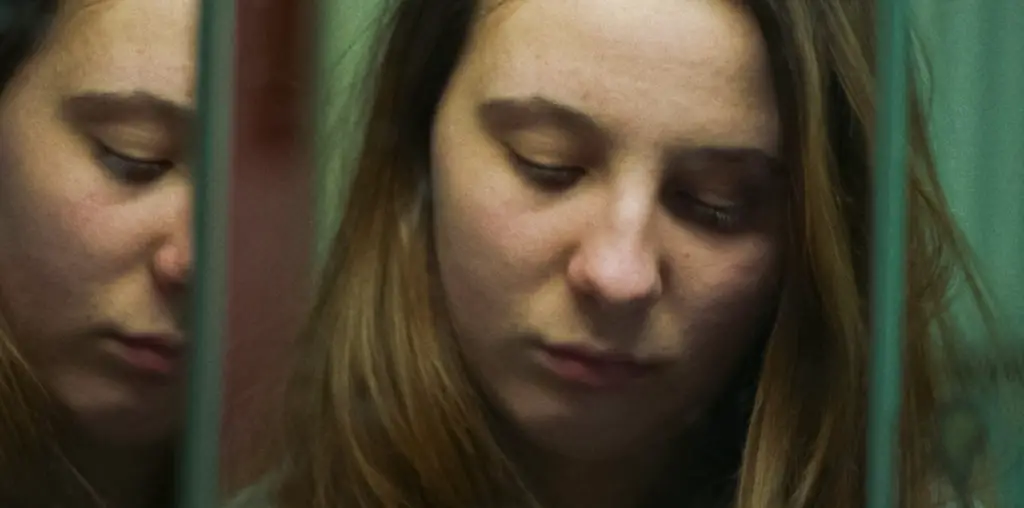
In writer/director Sven Bresser’s Reedland, a Dutch reed cutter named Johan (Gerrit Knobbe) comes across the raped and murdered body of a young woman after a day’s work. The incident saddens and shocks the community, and soon Johan plays amateur sleuth, much to the chagrin of the local authorities, trying to uncover the culprits responsible for this vicious act.
Johan, our avatar into the land of reeds, is a solemn yet magnetic, fourth-generation reed cutter who we experience at his trade, toiling from early morning to near dark, harvesting his quarry and burning off the mowed ground to assist in seasonal regrowth. He goes about his business with the ease of experience and the strength of persistence. He is a man from a time when being a survivor is a way of life, not merely a TV show.
Johan’s life is simple, no excitement, no surprises. He cuts the reeds. He tends to his farm and horse, and he cares for his granddaughter. But Johan isn’t making enough money as the motorized industry threatens to bring an end to his family’s practice of mowing the reeds by hand.
In between, we see the world and the life that drifts around Johan. His family, friends, and fellow reed cutters come and go with the winds, the smoke, and the seasons. Though a man of few words, Johan is arresting when he interacts verbally, often speaking out against injustice or his distaste for the notion. The rest of the time, he squints at the surrounding land with the eyes of a no-nonsense individual who has lived a life centered on practicality and purpose.
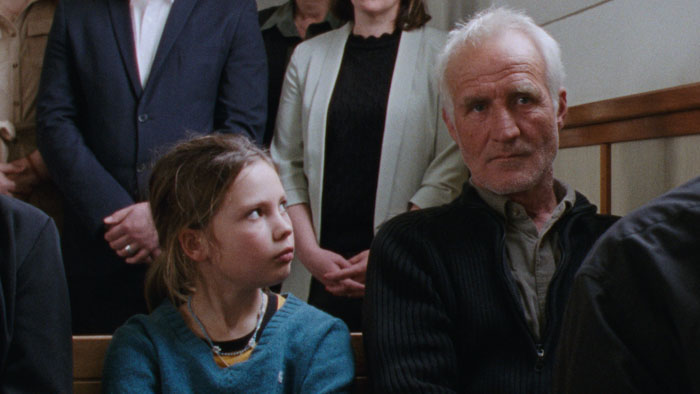
“…a Dutch reed cutter named Johan comes across the raped and murdered body of a young woman…”
Still, the ever-changing nature of life has brought conflict and turmoil into Johan’s peace. He is forced to move and act with resolution as he shelters his granddaughter, sees to her needs and education, tends to his trade, and also slowly closes in on the heart of the secret behind the murdered girl.
Reedland floats across the screen with a similar visually balletic grammar as was invoked by Terrence Malick in Days of Heaven. Bresser flash-fries this cinematic poetry with moments of shocking small community brutality, which sits in the same arena as Robert Connolly’s solid murder mystery, The Dry.
Knobbe carries this movie with his casual and effortless performance. Holding the attention of the scene with looks and simple gestures until he stops, redirects, and retaliates, sometimes with unexpected consequences. Bresser’s unlikely hero, who moves through this moody yet melodic film with the same stealth as the wind through his reeds, is a bold, effective choice.
Reedland is a picture that engulfs you with its silent majesty. The depth to be found in the landscapes of these people and places, easily dismissed for their commonplace quality, is a hidden wonder as the characters and the world open partially, but not completely. Bresser gives you just enough to allow your mind to fill the cracks of this sophisticated, psychologically oriented whodunit.
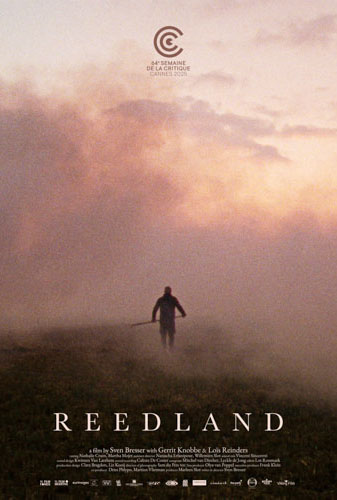
"…engulfs you with its silent majesty."