From director Antoine Fuqua and screenwriter John Logan, the Michael biopic could have gone horribly wrong. But then again, we’re talking Michael Jackson, the King of Pop. History has proven that Michael’s music will stand the test of time. At least, the party at my theater seems to say so.
Michael Jackson (Juliano Krue Valdi) grows up in Gary, Indiana, the fifth of many children in a household held together by his mother, Katherine (Nia Long), and ruled by his father, Joe (Colman Domingo). Joe is hard, his word is law, and he’s unsparing with the belt — but he hears something in his boys, especially in little Michael, and he turns the family living room into a rehearsal space. The Jackson 5 are born, and Michael is the one out front, the kid who stops a room cold before he’s even a teenager. When talent manager Suzanne de Passe (Laura Harrier) brings the group to Berry Gordy’s attention, everything changes overnight.
The Jackson 5 blow up, and so does Michael. As he grows into a young man (Jaafar Jackson), he begins to pull away from his brothers — and particularly his father — to pursue something bigger. He describes it like the ideas are already out there in the universe — it’s his job to tune in and receive them. He fills notebooks with phrases and melodies, workshopping sounds with collaborators and visionaries until Thriller becomes the biggest album anyone has ever made.
Michael is ultimately the story of one man’s drive to break free from his father and become the King of Pop on his own terms. Again, all set to the most killer soundtrack of all time.
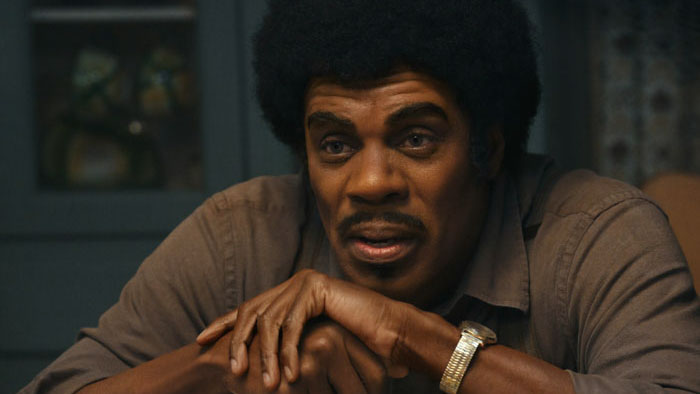
Colman Domingo as Joe Jackson in Michael. Photo Credit: Courtesy of Lionsgate
“…one man’s drive to break free from his father and become the King of Pop on his own terms.”
Let me be honest with you — I really liked Michael, but probably not for the reasons Antoine Fuqua intended. The main reason is that Michael has the best soundtrack of any film I’ve seen in a very long time. I caught it at my local theater, the one nobody goes to, and the place was packed. When the credits rolled, people were still dancing in the aisles. I couldn’t stop wondering why today’s music is so painfully forgettable by comparison. Michael Jackson’s catalog is the answer to a question we’ve stopped asking. Forty percent of this movie is music, and that alone is worth the price of admission.
As a biopic, Michael is exactly what you’d expect — and in a mostly good way, but that’s also its biggest weakness. The story’s structure is uninspired. This happens, then this happens, then this happens…oh, and don’t forget this moment and that moment. 75% of all biopics follow this structure, and it’s noticeable. If you want to see it done right, check out Song Sung Blue.
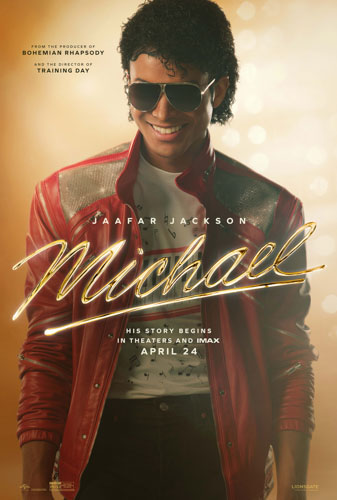
Jaafar Jackson doesn’t sing a note (nor should he), but he’s got his uncle’s moves locked in cold, and there are moments where you genuinely forget you’re not watching the real thing. Colman Domingo as Joe Jackson is flat-out frightening — the man commands every scene, and the movie actually plays down how bad Joe was, which is saying something.
Speaking of story, it’s a first-half story — the rise — and it’s deliberately, unapologetically positive. This is nothing but the good stuff, and honestly, I was fine with that. If they make the second half of Michael’s life, I’m not sure I want to watch it.
What stuck with me after leaving the theater had less to do with Michael the movie and more to do with Michael the idea. Fuqua’s film cuts to stadium crowds — diverse, joyful, completely united — and I kept thinking, ‘Where did we go wrong?’ There was a time when Michael Jackson was one of those rare forces that actually brought people together, regardless of age, race, or gender. Michael brings that feeling. Critics have been savage on Michael. Clearly, they were reviewing the movie they didn’t get — the warts-and-all fall from grace, Michael. What Fuqua delivered instead is a celebration of humanity, and the audience in my theater responded to it on their feet and dancing. See it with a crowd.
"…forty percent of this movie is music, and that alone is worth the price of admission."