
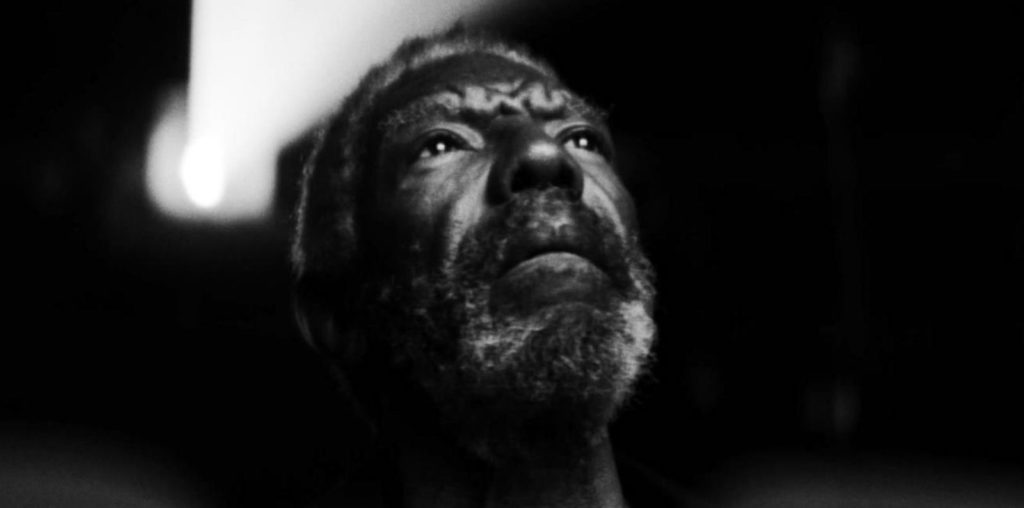
One of the film’s more unusual supporting figures is Jason, played by Josh T Ryan, who lives below them. Similar in effect to Victor Buono’s Edwin Flagg in What Ever Happened to Baby Jane? Buono’s Edwin is physically distinctive because of his imposing size and has an almost mother-bound, overgrown-boy quality. Jason is visually marked in another way by his eye patch. Both men sit at the heart of the conflict within the family while still becoming drawn into it as they both want affection. They also carry hints of alternative lifestyles and personal eccentricity.
Christina Beck’s performance is what keeps all these influences from overwhelming the film. In the tradition of film noir now called neo noir, the ensemble matters because everyone plays off everyone else: a look, a pause, or a seemingly harmless remark can shift the balance of power in a scene. Lizzie Peet and Kenny Johnston give Beck something substantial to work against, and the tension feels shared rather than manufactured by a single performance. Brilliantly acted and edited with some small pacing moments through the film for an independent film in name only. More authenticity and truth on screen here than in many of the big budgets.
“More authenticity and truth on screen here then in many of the big budgets.”
Theatrical asides come off well as Ruby does monologues, name-checking Sam Shepard. Shepard grew up partly in Southern California, but his writing and acting persona became strongly associated with the American West: families with buried resentments, masculinity, loneliness, failed dreams, and people who don’t quite say what they mean. As a playwright, he wrote characters who often circle around the truth rather than state it, and he acted in much the same fashion.
Ruby can be seductive, funny, damaged, and manipulative within the same scene, while the reactions of the people around her make us continually reassess her. Beck never gives us an easy answer about whether Ruby is consciously using everyone around her or simply surviving through the only skill she truly trusts: acting. Lovely drunken moments with dancing that conceals motives. Ruby and Jason out on a date, with Ruby basically giving “the world a finger” as she greets dining customers, tries to seduce her date in the car, who wants no part of it.
If the film has a weakness, it is that I sometimes wanted it to push Ruby’s eccentricities even further. The psychological mystery is compelling enough that a few stranger moments might have deepened the noir atmosphere. Moments like finding ashes in a bag right out of Sam Shepard’s play Buried Child. The ending works very well, as one sees an actor kicking off the shackles of role onto a new life, not caring what had to be done.
Still, Hancock Park works because it understands that family can be more dangerous than strangers. Its real suspense comes from sisters, inheritance, aging, sexual jealousy, and the need to be seen. Somewhere between Norma Desmond and Baby Jane Hudson stands Ruby Lewis: a fifty-year-old who refuses to accept that Hollywood, her family, or time itself gets to decide when the performance is over.
Now available to stream on Amazon and Tubi.

"…a neo-noir drama built less on twists than on conversation, family tension"


Loved this movie. Tour de force by Christina Beck!