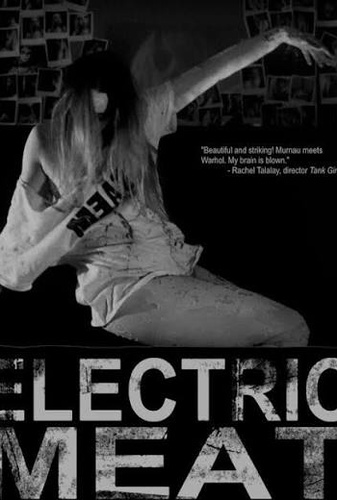
If the disjointed storytelling of Eraserhead and Mulholland Drive were chopped into pieces, then soaked in buckets of Cronenberg’s psychosexual stage blood, you might get something resembling Electric Meat—where death is merely an inconvenience of torment, anguish, and insanity.
Dan Schaffer’s Electric Meat follows a failed photographer (Caspian Faye) in a surreal black-and-white modern reality. He pays the bills cutting meat as a butcher, and fills his evenings receiving rejection letters about his gory erotic photos. When he discovers one of his models murdered in an alley, his response is spectacularly odd, opting to keep the body rather than report it. Soon, he becomes convinced she occupies an impossible space between corpse and living woman, increasingly unwilling to remain posed.
As inspiration mutates into paranoia, his dead muse seems to transform from passive object into vengeful revenant. Enter his noisy and volatile landlady (Emily Booth), suffocating with her own baggage, and his already fractured reality begins collapsing completely.
Dialogue-free and shot in expressionistic black-and-white, Electric Meat turns flesh, photography, sexuality, obsession, and artistic failure into a cold-sweat, dirty nightmare. Moralities and sanity are constantly in question as we effortlessly shift between The Butcher’s deepest fantasies and harsh realities.
“… death is merely an inconvenience of torment, anguish, and insanity.”
The oozing practical blood and grisly effects are wet, tactile, and unapologetically gruesome. The film leans into wild moments amplified with VFX, like raunchy escort ads coming to life in a phone booth. But in a genre increasingly tempted to digitally manufacture every splatter, there’s something deeply satisfying about seeing practical carnage present in the frame.
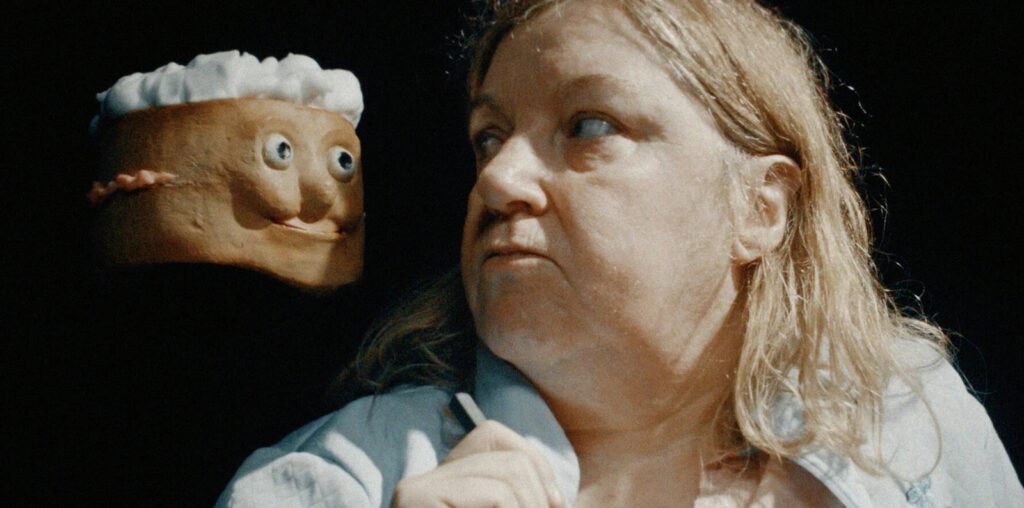
It’s a slow burn that takes its time setting up the scenes, and relies a bit heavily on repetitive slo-mo shots, but what I enjoyed most was the film’s stop-motion-like visual rhythm during its dreamlike moments. Human movement can feel deliberately jerky and unnatural, as though we’re watching flesh transformed into puppets one frame at a time. It gives the movie a wonderfully handmade quality—the cinematic equivalent of something dead suddenly twitching.
Electric Meat feels less like watching a conventional narrative and more like stumbling across a lost transmission of an experimental horror film playing endlessly on a television. While the film isn’t exactly a new go-to for me, I appreciate the art behind the blood. Schaffer understands that sometimes the texture of a nightmare matters more than explaining it.
"… less like watching a conventional narrative and more like stumbling across a lost transmission..."