Independent cinema just walked into the lion’s den and walked out with the crown.
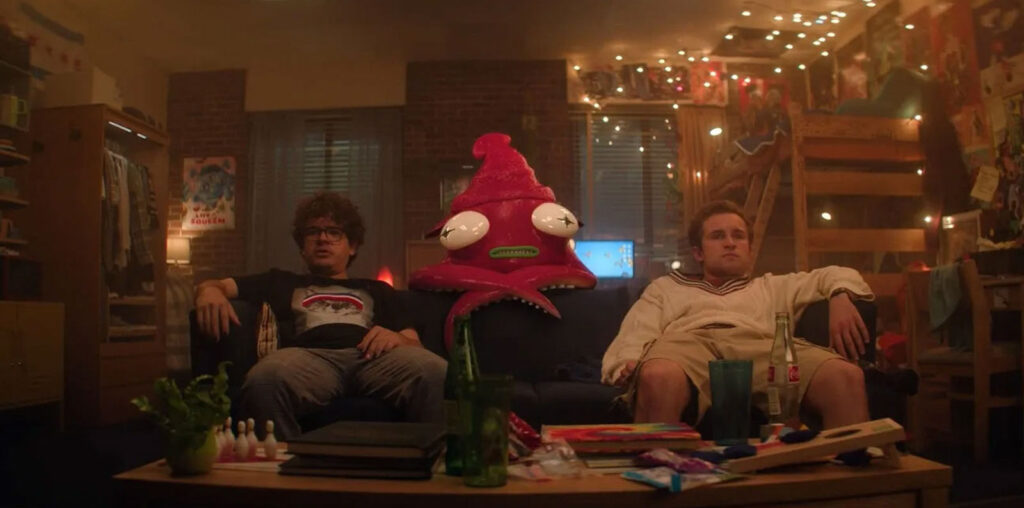
If you look at the box office charts over the last few consecutive weekends, a quiet revolution is playing out in the multiplex. Micro-budget horror is eating the top five’s lunch, and alternative distribution models are pulling blockbuster numbers for niche properties. The definitive exclamation point on this shift arrived when Glitch Productions’ The Amazing Digital Circus: The Last Act (which I have covered extensively) shattered estimates by pulling in over $36 million globally over its opening weekend. It is an undeniable, historic triumph for creator-led, independent art.
But as I walked out of that theater, past the packed rows of a younger generation completely moved by what they had just witnessed and scanning the end credits’ QR code for merch, I didn’t find myself thinking about the box office metrics. I found myself thinking about the tools we use to tell our stories, and how easily the culture forgets its own history.
Seeing Glitch scale this project to the silver screen reminded me of the late 80s and early 90s, back when computer-generated imagery (CGI) first began creeping onto the scene. Back then, digital tools were widely decried as the ultimate, soul-killing “enemy” of the craft, a sterile mechanical threat prophesied to eradicate human talent and ruin the medium forever. Yet, decades later, those very same digital tools have been completely democratized. The creators at Glitch not only embraced CGI; they took a relatively simple, low-poly 3D aesthetic, a style that the mainstream industry never really took all that seriously, and used it to tell a profound, deeply personal story that is now doing historic numbers. Hollywood could never have predicted it, because they’ve lost the imagination to even consider the possibility of something outside of their scope.
“The software is treated as a threat to the art, rather than an extension of it.”
It is a beautiful cycle, but it stands in stark contrast to a dangerous misunderstanding taking root in our modern cultural discourse.
Today, we are watching a literal rerun of that exact same technological panic. The second a modern filmmaker integrates an LLM, a diffusion model, or other machine learning into their pipeline, the utopians and the anti-AI crowd unite in a shared, short-sighted reflex to slap a reductive label on them: “AI Filmmaker.” (Also see: AI Broes, AI Slop, etc.) Just as before, the software is treated as a threat to the art, rather than an extension of it.
I am not an AI filmmaker. I am a filmmaker who uses AI.
And it is worth noting here: Glitch and many of the creators leading this theatrical charge are explicitly not on board with generative AI tools. They view them with deep suspicion. And you know what? That is completely okay. Because their stance, and my stance, isn’t actually the point. The debate over the means and media is a distraction from the real work of excavation.
The distinction isn’t semantic; it’s a fundamental definition of craft. For thirty years, I have operated as a mixed-media artist, working in everything from publishing, VFX, and showing at galleries, treating every new tool not as a medium unto itself, but as a brand-new type of lens to be incorporated into a much larger, highly personal visual dialect.
In his seminal book Understanding Comics, author and theorist (and former neighbor of mine) Scott McCloud laid bare a foundational rule of graphic storytelling: a medium’s visual vocabulary, its deliberate choice of lines, shapes, and iconic abstraction, is not just a passive container for the narrative. The vocabulary is the story. When an artist understands this, the tool never dictates the aesthetic boundaries; the artist’s intent bends the tool to fit their unique psychological universe.
My own visual vocabulary hasn’t been a straight line. It has evolved through four distinct, tactile eras, each building on the last to handle increasingly complex human landscapes:
The journey began in the 1990s underground zine culture. This was an era of raw, cut-and-paste DIY philosophy. My work relied on the beautiful physical friction of ink comics, photocopy textures, and layering physical textiles onto the glass of a Xerox bed. Materials like delicate lace, fishnets, and meticulously placed Zip-A-Tone sheets, which were those classic dry-transfer shading screens used before digital gradients existed, were chosen precisely because of how they would render under the harsh, scanning light of a copy machine. It was a visual vocabulary built to express isolation and construct an aesthetic armor for a counter-cultural generation. It was pretty damn cool, and as someone who still loves goth culture, I intend to revisit those methods very soon.
“My visual vocabulary is not a celebration of algorithms.”
From the copy bed, I moved onto cold-pressed art boards, pushing into a deeply organic, physical form of painting. I began mixing coffee into watercolor washes, trying to emulate artists like Alex Ross and David Mack, layering acrylics and charcoal, and pouring thick coats of clear resin to permanently seal found objects collected on hikes: shells, bones, dried bugs, and even sun-dried animals that had died naturally in the wild, trying to also emulate artists like Dave MacKean and H.R. Giger. It was an admittedly morbid palette to some, but it was driven by an intense preservationist instinct: a desire to capture real, physical remnants of life and freeze them inside a frame to protect them from disappearing. (A personal journey that heavily informs the themes of my own upcoming creative works).
Then came the digital frontier. Entering the independent film space, I discovered Adobe platforms like Photoshop, After Effects, and Premiere. But rather than abandoning the physical, I used the software to composite all those things I was already working with from the tangible world together. This was an era of green screens, puppets, and extensive, forced-perspective miniature set building.
This philosophy was fully realized when I collaborated with Emmy-winning actor Bill Oberst Jr. on his acclaimed one-man stage production bringing the words of science fiction author Ray Bradbury to life. Instead of relying on sterile, flat digital backdrops, we built a physical, forced-perspective tabletop jungle using real branches and a hand-painted sheet lit by halogen bulbs to ground Bradbury’s sci-fi world in tangible reality. The computer was simply a compositor for human hands, and a place where details could be refined or added that I otherwise could never do. That exact practical-meets-digital philosophy became the bedrock of my freelance VFX career, ultimately culminating in the subterranean, Lovecraftian world of my ‘Award This’ winning feature, The Quantum Terror, which led to me getting to write for you here on Film Threat.
Which brings us back to the present day: the AI era.
My current work utilizing advanced neural rendering pipelines is not a departure from the previous three eras. It is the ultimate, long-sought synthesis of them. For decades, I have wanted to tell sprawling, animated stories, uncensored and raw, but was limited by the hyper-prohibitive financial and technical walls of traditional animation studios. The biggest trap of the indie filmmaker is that while people will applaud your ability to do amazing things on a budget, they still see it as cheap, which will forever be reflected in your returns. It’s a ghetto of praise. Subjugation by the illusion of artistic integrity.
The current machine learning array is simply a new compositor. It can, for example, take live-action video-to-video performance capture, real, highly specific human theatrical choices, facial micro-expressions, and emotional vulnerabilities, and allows me to map them cleanly onto vivid, highly stylized characters. It is the fulfillment of my preservationist instinct. The machine isn’t generating the art; my hand-guided, thirty-year curation of texture, framing, and human performance is driving the machine.
This is exactly why The Amazing Digital Circus can be recognized as a masterpiece even if one disagrees with its surface philosophy or its creators’ views on technology. I have literally shed tears over this project because Gooseworx managed to achieve a historic cinematic feat by understanding (whether aware of it or not) the McCloud principle flawlessly.
“The real magic only happens when the machine is forced to submit to the human soul.”
On a purely technical level, the series utilizes a deceptively simple, low-poly early-3D CGI aesthetic. But because the creator understands visual vocabulary, that specific simplicity becomes a devastatingly effective conductor for feelings of alienation and deep psychological angst. The blocky geometry, flat textures, and saturated colors evoke the suffocating nostalgia of 90s edutainment software, creating a perfect aesthetic mirror for the internal entrapment and identity crises of the characters, digging deep into a simple medium to tell a universal story that speaks to an entire generation’s unaddressed desperation.
Every storyteller on the modern frontier needs to understand this, regardless of which side of the tech aisle they stand on. You cannot let the technology define your value. The “human moat” as I call it, the unique, multi-disciplinary soul of the artist, is the only thing that separates enduring cinema from disposable digital noise.
We do not dig into these mediums for the sake of showing off the technology or fighting over software updates. We dig to uncover the human heart. My visual vocabulary is not a celebration of algorithms; it is a lifelong weapon used to fight for the preservation of our collective souls.
I use these tools to build stories that encourage people to form stronger, more resilient bonds in their real-world relationships. I use them to craft narratives about the endurance of deep friendship, the renegotiation of broken trust, the beauty of profound, romantic connections, and the absolute necessity of keeping the door open for forgiveness and redemption.
The frontier is wide open, and the tools have never been more powerful. But as we step forward into this permissionless studio future, let us remember that the pencil has never written the poem. The camera has never lived the life. When people come after your methods, they’re not trying to de-legitimize them, they’re trying to de-legitimize you, because they know you, as a human being, as a driving force behind the tools, have something better to offer than they do. Master those tools, expand your visual vocabulary, and never forget that the real magic only happens when the machine is forced to submit to the human soul. That’s you. Now, go tell your story.
Christopher Moonlight is an animator, special effects artist, and the director of the ‘Award This’ winning movie, The Quantum Terror. His upcoming animated sci-fi adventure, Escape From Planet Omega-12, combines traditional film-making special effects with AI to create something never seen before in independent film. You can follow the behind-the-scenes, including tutorials, tips, and tricks, on his YouTube Channel, Substack, and christophermoonlight.productions website.