Ask ten working indie filmmakers how they pay rent between projects and at least seven will give you a version of the same answer: somebody else’s story. Weddings for a while, maybe. Then a testimonial for a software company. Then an executive interview, a conference, a brand film. The corporate gig is the indie world’s worst-kept secret, and it deserves a more honest conversation than the one it usually gets, which is either embarrassed silence at festival bars or breathless LinkedIn posts about building a six-figure video business. The truth lives in the middle, and it is more interesting than both.
The stigma is old and mostly dead. The generation that grew up on Kickstarter and DSLRs figured out what the previous one learned quietly: the skills are the same skills. Roger Deakins shot commercials between features. David Fincher shot hundreds of them and has spent his career defending the format as a laboratory. Nobody’s indie credibility survives on instant ramen alone, and nobody’s craft ever got worse from shooting more days.
What the corporate set actually buys
Here is what surprises filmmakers who cross over. Corporate clients are not buying your gear list, your color science, or your laurels. They are buying your ability to make a nervous person forget a camera exists.
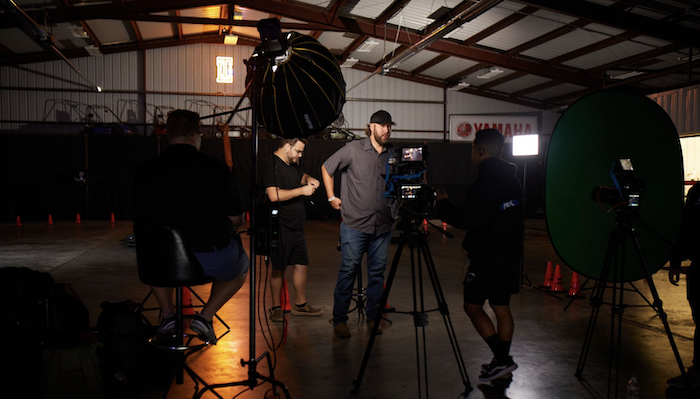
Sem Maltsev, who founded the Dallas studio Image Media Lab in New York in 2013, has spent over a decade producing an interview series for a major medical journal, sitting some of the most decorated scientists alive down in front of a lens. His observation about executives applies to documentary subjects everywhere: the first five minutes decide everything. “The title on the door does not matter. A CEO in front of a camera is a first-time actor. Your job is the same as any director’s job: make the room safe, then make the room disappear.”
That is directing. It is the same muscle you use on a non-actor in a micro-budget feature, and corporate work lets you train it every single week, on someone else’s invoice.
The craft transfers in both directions
The traffic between indie sets and corporate video production runs both ways, and the corporate side teaches discipline that indie sets desperately need.
The one-day shoot is a masterclass in decision-making. A brand film often gets a single day at a client’s headquarters. You scout on Street View, you light in twenty minutes, you get the interview, the b-roll, and the safety takes before lunch, and you walk out with a finished film in your hands. Do that for a few years and your indie shooting ratio drops to something your editor will write you thank-you notes about.
Sound discipline. No corporate client in history has accepted “we’ll fix it in post” for a CEO interview. Indie films die on bad audio more often than they die on bad images, and corporate work makes clean dialogue an unbreakable reflex.
Deadlines with consequences. Festivals forgive a late cut. Marketing departments with a launch date do not. The habit of finishing sticks, and finishing is the rarest skill in independent film.
Working with non-actors at scale. A testimonial shoot is a documentary interview with higher stakes and less time. Every technique you develop for putting a customer at ease, the pre-roll small talk, the question behind the question, the silence you let hang until the real answer arrives, walks straight back onto your documentary sets.
What the indie side sends back is taste. The corporate films that actually get watched, the ones that feel like short documentaries instead of commercials, are almost always made by people who spend their nights and weekends on their own work. Clients can tell the difference even when they cannot name it.
The honest math
The money is real but it is not magic. Productized corporate packages in mid-size American markets run from roughly $2,500 for a single-interview piece to five figures for multi-day event coverage. A filmmaker who books two corporate projects a month is funding a short every year, maybe a feature every few years, without writing a single grant application or handing a producer final cut.
The trap is letting the day job eat the calendar. The filmmakers who make the arrangement work treat it the way a fighter treats sparring: scheduled, contained, and in service of the real fight. Block your own project time first, in ink. Charge properly so you need fewer gigs. And put your name on the corporate work, because pride is a quality-control system that no client note can replace.
Landing the first one
The work finds you faster once you stop hiding from it. Put a corporate reel on your site next to the narrative work; clients read the narrative work as proof of taste, not as a distraction. Price in packages rather than day rates, because businesses buy outcomes, not hours. And treat every shoot as an audition for the referral, because corporate work compounds in a way festival submissions never will: the marketing director you make look brilliant changes companies every two years and takes your number along. Most working studios are built on five relationships doing exactly that, quietly, for a decade.
Stop apologizing for it
The French New Wave shot commercials. The music video generation took over Hollywood. The corporate video generation is already producing festival work, and the only people still embarrassed about the day job are the ones not booking it.
Somebody has to film the giants of medicine, the founders, the conferences, the testimonials. It might as well be someone who knows where to put the camera.