Shooting on the Casino Floor: The Permits, Surveillance Rigs, and Dead Zones DIY Filmmakers Don’t Warn You About
Ask a first-time director how the casino scene went and you’ll usually hear one of two answers. Either they never got in, or they got in and lost half a shooting day to things nobody warned them about. Not actors. Not weather. Infrastructure.
Casino floors are some of the most tightly surveilled commercial spaces in the country. That’s exactly why they look so good on camera, and exactly why getting a camera onto one legally is harder than scouting a diner or a parking garage. The lighting rigs are already built in. The crowd dynamics are free production value. But the building was engineered to watch you, not the other way around, and that changes everything about how you plan the shoot.
This is the part of DIY filmmaking nobody puts in the behind-the-scenes featurette. Permits that take six weeks. Surveillance systems that flag your gear before your first take. Wireless dead zones that kill your video assist mid-scene. Here’s what actually happens when a small crew tries to shoot practical footage on a working casino floor, and what to check before you file a single form.
Why Permits Take Longer Than You Think
Most indie productions treat location permits as a formality. A phone call, a certificate of insurance, a signature. Casinos don’t work that way. Gaming floors fall under state gaming regulations in addition to normal municipal filming rules, and that second layer is the one crews forget to budget time for.
New Jersey’s gaming code, for instance, spells out exactly how entertainment, filming, or photography requests inside a casino facility get reviewed, weighing security posture, surveillance coverage, and gaming integrity before anyone approves a shoot. That’s not a studio executive you’re negotiating with. It’s a compliance officer who answers to a state gaming commission, and their incentive structure has nothing to do with your shot list.
The practical effect: a casino permit request can take four to eight weeks longer than a standard commercial location, and it often requires floor plans, a defined camera path, and sometimes a surveillance liaison present on set. Budget for that liaison. Crews that don’t are the ones scrambling on day one.
If your production is scouting New York specifically, this is where market research matters more than enthusiasm. New York’s gaming floors vary wildly in how they handle outside production crews, some are flatly closed to anything beyond a tripod in the lobby, others have worked with film crews before and have a process. Before you file anything, read the full review on New Game Network, which breaks down venue by venue what the access and operational realities actually look like on the ground. It will save you a permit application to a property that was never going to say yes.
Gambling carries real risk. If you or someone on your crew is affected by problem gambling, BeGambleAware.org and 1-800-GAMBLER are there to help.
The Surveillance Problem Nobody Mentions
Here’s the part that surprises even experienced location managers. Casino surveillance isn’t a few cameras bolted to the ceiling. It’s a dense, overlapping sensor grid designed to catch things human eyes miss, and your production gear reads as noise in that system.
Wireless video assist, wireless timecode, wireless focus pullers. All of it transmits on frequencies that can trip alerts on a surveillance network tuned to detect unauthorized signal activity. One DP I worked with in Atlantic City had his entire wireless follow-focus rig flagged within eleven minutes of power-up. Security didn’t know it was a camera accessory. They just knew something new was broadcasting on the floor, and their job is to investigate exactly that.
The fix isn’t complicated, but it requires planning you won’t find in a standard location scout checklist. Hardwire what you can. Disclose your RF frequencies to the surveillance liaison in advance, in writing, with manufacturer spec sheets if they ask. Expect a slower rehearsal process because every new piece of gear needs a visual sign-off from someone watching a bank of monitors you’ll never see.
Dead Zones Will Ruin Your Monitor Feed
Even once you’re cleared, the physical building fights you. Casino floors are built with dense concrete, metal structural framing, and a staggering density of connected devices, slot machines, point-of-sale terminals, security cameras, guest phones. That combination is brutal on wireless signal.
Industry analysis of Wi-Fi performance in multi-story casino properties points to exactly this mix of structural interference and device congestion as the reason casino floors generate persistent dead zones, areas where a signal that worked perfectly at the entrance just stops at gate 40 feet in. Your video village wireless monitor doesn’t care that you already got the permit. It just goes dark.
Walk the floor with a signal strength app before you commit to a video village position. Not during prep week. During an actual high-traffic hour, because signal density changes with crowd load. If you can’t hardwire your monitor feed, have a backup plan for directing off the operator’s eyepiece alone. It happens more often than anyone admits.
When the Permit Falls Through
Sometimes it just doesn’t work out. The property says no, the timeline doesn’t fit your shoot dates, or the surveillance review flags something your budget can’t accommodate, extra security staffing, insurance riders, whatever it is. This is where a lot of DIY crews quietly slide into guerrilla filmmaking instead, grabbing handheld footage without formal clearance and hoping nobody stops them before the shot is in the can.
I won’t pretend it never works. Plenty of scrappy festival favorites have a casino hallway shot that was never cleared. But understand the tradeoff going in. Casino security response times are fast, often faster than a city street, and a confrontation mid-shoot can cost you equipment, footage, or worse. If guerrilla is genuinely your only option, scout exits before you scout angles.
The better path, if your schedule allows it, is building permit lead time into pre-production from day one rather than treating it as a line item you’ll deal with later. Film Independent’s permitting primer breaks down real costs and timelines for commercial permits generally, and while it’s framed around Los Angeles, the lesson transfers everywhere: permits are cheaper and faster the earlier you start, and brutal the week before your shoot date.
Picking the Right Floor for Your Scene
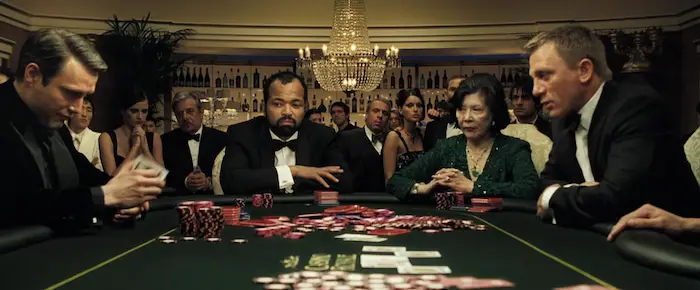
Not every casino location serves the same story. A sprawling, chandelier-lit main floor reads completely differently on camera than a cramped, neon-lit slot section, and your script should dictate which one you’re fighting to access. Don’t default to whichever property answers the phone first.
Think about sightlines too. Surveillance-dense properties often restrict camera placement to specific zones precisely because those sightlines overlap with their own monitoring coverage. That can actually work in your favor if your scene calls for a voyeuristic, watched feeling. Some of the strongest practical casino sequences in recent indie features lean into that constraint rather than fighting it, shooting through pit-boss sightlines instead of around them.
FAQ
Do I need a different permit for a casino than for a regular commercial building? Yes. Beyond standard municipal filming permits, casino floors typically require clearance tied to state gaming regulations, since gaming areas are treated differently from general retail or hospitality space under most jurisdictions’ codes.
Can I use wireless video assist on a casino floor? Sometimes, but disclose your RF equipment to the surveillance team in advance. Unannounced wireless signals can trigger security investigations mid-shoot, costing you far more time than the disclosure paperwork would have.
How far in advance should I start the permit process? Start at least six to eight weeks before your intended shoot date. Casino permitting layers gaming-compliance review on top of standard location approval, and that review alone can take several weeks.
What if the casino won’t grant a permit at all? Some crews shift to guerrilla-style shooting without formal clearance, but response times from casino security are typically fast. Weigh that risk against your budget for reshoots or lost equipment before deciding.
Why does my monitor feed keep dropping on the casino floor? Dense concrete, metal framing, and heavy device congestion from slot machines and POS terminals create wireless dead zones. Hardwiring your video village connection where possible avoids the worst of it.
A casino floor can be the best production value your indie budget ever bought, built-in lighting, texture, and atmosphere no art department could replicate on a soundstage. Just don’t walk in treating it like any other commercial location. The building was designed to watch everyone in it, including your crew, and the productions that plan around that get the shot. The ones that don’t lose the day.