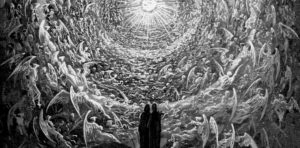
This phenomenon, where the medium itself becomes an active participant in shaping the message, is what philosopher Marshall McLuhan famously articulated as “the medium is the message.” It suggests that the form of communication embeds itself in the content, influencing how it’s perceived and understood. Constraints, far from being barriers to creativity, often serve as catalysts. When artists are compelled to work within specific parameters, it forces them to look at things in new ways, to invent new techniques, and to discover novel forms of expression.
This historical pattern is not unique to Doré or the printing press. Think of Michelangelo, whose monumental figures on the Sistine Chapel ceiling were born from the grueling demands of fresco painting, applying pigment to wet plaster, section by labor-intensive section, against the clock before the plaster dried. The medium forced him to simplify, to monumentalize, to imbue his figures with a powerful, three-dimensional presence visible from far below.
“…the form of communication embeds itself in the content…”
Consider Ray Harryhausen, the visionary behind cinematic creatures from the Cyclops to Medusa. His iconic work was forged in the painstaking discipline of stop-motion animation, manipulating models frame by agonizing frame, integrating them with live action through ingenious, labor-intensive techniques like “Dynamation.” The very slowness and physical manipulation of the medium gave his creations a unique weight and deliberate motion that defined a genre.
Or take Ansel Adams, whose stark, majestic black-and-white photographs of American landscapes are instantly recognizable. Stripped of color, his mastery lay in translating the vibrant world into a precise symphony of grays. He achieved this through rigorous discipline, co-developing the Zone System to meticulously control light, exposure, and darkroom printing, shaping the final image with unparalleled precision.
In each instance, the artist’s genius wasn’t diluted by the medium’s discipline; it was sharpened by it. The “limitations” became the fertile ground for new forms of brilliance. As we confront the advent of AI, we stand at another such crossroads, and to view it solely as a threat to creativity is to ignore a fundamental lesson of artistic history. The real conversation isn’t whether AI can be creative, but what new, unprecedented forms of human creativity it will enable. And that is a conversation we’ll continue in Part 2.
Christopher Moonlight is an animator, special effects artist, and the director of the ‘Award This’ winning movie, The Quantum Terror. His upcoming animated sci-fi adventure, Escape From Planet Omega-12, combines traditional film-making special effects with AI to create something never seen before in independent film. You can follow the behind-the-scenes, including tutorials, tips, and tricks, on his YouTube Channel and Substack.
"…the real conversation isn't whether AI can be creative, but what new, unprecedented forms of human creativity it will enable."