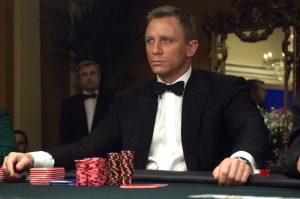
You have reached the gambling scene in your script. The scene looks right, yet it still feels flat. The likely problem is that the audience does not know what the wager means to the person making it.
Viewers do not need to understand every poker hand, roulette payout, or betting option. They need to understand why this character cannot walk away. Once that is clear, the game becomes a pressure chamber. Every bad decision reveals character.
Decide What Is Really Being Wagered
Money is rarely the most interesting stake on screen. A character may technically risk $500, but dramatically they could be risking rent, custody, sobriety, friendship, or the last evidence that they are still in control.
Before choosing the game, finish this sentence:
If the character loses, they will have to admit that ________.
That blank is the scene. A proud card player may have to admit that their reputation is manufactured. A desperate parent may have to admit that the “quick solution” has made the family’s problem worse. A wealthy executive may fear public humiliation more than financial loss.
This prevents a common mistake: increasing the money while leaving the emotional stakes unchanged. Ten million dollars can feel weightless. A wedding ring pushed into the pot can feel unbearable.
Teach One Rule, Not the Whole Game
Writers often over-explain gambling because they worry viewers will get lost. Ironically, the explanation is what loses them.
Give the audience only the rule required to understand the immediate decision.
Compare two versions:
Mechanics-first: “A straight beats three of a kind, but he could still have a flush.”
Character-first: “If you call, your brother finds out where the money came from.”
Photograph the Decision, Not Just the Equipment
Casino scenes love objects: cards snapping onto felt, wheels turning, chips forming towers. Those details create atmosphere, but they cannot carry the scene alone.
Build the visual plan around behaviour. Show the character checking the exit before betting. Let their hand hover over the chips while a voicemail from home goes unanswered. Hold on the opponent who notices the hesitation. Cut away from the result and watch relief turn into the desire to risk it again.
A useful model is Uncut Gems. Its tension comes less from teaching sports betting than from keeping Howard Ratner’s compulsion, improvisation, and self-belief in constant collision.
For every insert shot of the game, plan a reaction or behavioural shot showing what the result does to the person.
Make the Interface Compete With Real Life
Digital gambling creates a filmmaking problem. A phone screen is small, private, and visually repetitive. Recording every tap may be accurate, but accuracy is not automatically drama.
Put the tension outside the device. A character is supposed to be listening during a job interview. Their child is waiting to be collected. A partner asks a direct question while the character hides a notification. Whether the prop shows a sportsbook app, a poker lobby, or a slot online interface, the dramatic question is not which button gets pressed. It is what the character ignores in order to press it.
Sound can help. Let ordinary life fade beneath the electronic noises, then snap the room back into focus when someone says the character’s name. The screen has not become exciting; the divided attention has.
Let Every Bet Reveal a Pattern
A strong gambling sequence is a compressed version of the character’s larger behaviour.
The cautious character tests a small wager, loses, and becomes reckless because caution failed. The arrogant character mistakes one lucky result for proof of superior judgement. The ashamed character wins enough to leave but stays because leaving would require an explanation. Each bet should intensify a pattern already present elsewhere in the film.
That is why The Killing of a Chinese Bookie remains a useful character study. Criterion’s essay describes Cosmo Vitelli as a man maintaining an invented persona while debt pulls him deeper into consequences. The gambling is not a detachable thrill sequence. It attacks the identity he has built.
If the scene could be transferred to another character without changing, it is probably about the game. Rewrite until the choices could only belong to this person.
Show Consequences Before the Result
Do not wait for the final card or spin to introduce consequences. Place them in the room from the beginning.
A debt collector watches from the bar. A friend agreed to wait five minutes and is still there twenty minutes later. The character promised not to touch an envelope of cash. A casino employee recognises them. A phone battery is nearly dead, along with the last believable excuse.

A Character-First Scene Check
Before locking the script, try describing the scene without mentioning the rules of the game. A viewer should still be able to explain what the character wants, what losing will cost, and why walking away feels impossible.
Next, examine what changes with each wager. A new bet should expose a choice, flaw, lie, or shift in control. Repeated shots of chips, cards, and spinning reels may create rhythm, but they cannot replace character development. Reaction shots should matter more because the audience is watching the person’s confidence, panic, or self-deception evolve.
The dialogue deserves the same test. Any line that exists only to explain rules should be reconsidered. The audience rarely needs a complete lesson. It needs enough information to understand the immediate decision and its consequences. A single warning from a friend, a glance toward borrowed money, or an unanswered phone call may communicate more than a paragraph about probability.
Finally, consider what happens if the character wins. A loss naturally creates consequences, but a win can be even more revealing. It may encourage another reckless wager, deepen a lie, or convince the character that luck has erased the underlying problem. The strongest version of the scene makes both possible outcomes dramatically dangerous.