An independent film’s storyline tends to feature huge ideas, but there’s hardly any music budget, right?
Getting a composer or licensing the perfect bit of music is not always feasible – so that’s why a lot of filmmakers rely on AI music generators.
Remember— AI isn’t replacing composers!
These AI tools will allow filmmakers to generate original soundtracks in minutes and assist them in working out various moods or in developing ideas before any money is spent on a proper score. They will not replace a composer’s creativity and skill, but it is very likely that composers working with AI tools will get the results quite quickly and have a greater variety of options.
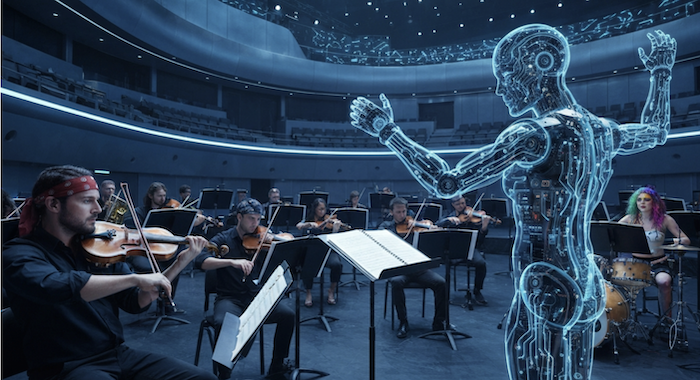
This guide will outline how AI is changing music scoring for indie filmmakers and where it still lacks.
The Traditional Cost Problem
For many indie filmmakers, music is one of the biggest budget challenges. Hiring a composer typically costs around $500–$5,000 for a short film, $5,000–$50,000 for a mid-budget film, and $50,000–$100,000+ for a feature film. Those costs are often beyond the reach of smaller productions.
Sometimes licensing music is not cheaper at all. The price of high-end stock music libraries is usually based on a per-track or per-project basis, so the total costs rise when you order more tracks or wider usage rights.
Fine artists usually go for temp music for editing. Though the use of background music allows them to capture the essence of the story, changing them at later stages results in loss of creative ideas, more revisions, and potential legal matters if the final sound is too similar to the original placeholder music.
What AI Music Composition Tools Actually Do
The AI music tools generate tracks from text prompts incorporating features like mood, genre, tempo, and instrumentation. For example, a filmmaker could ask for “a slow, tense piano score for a lonely nighttime scene” and get a musical starting point without writing the score manually.
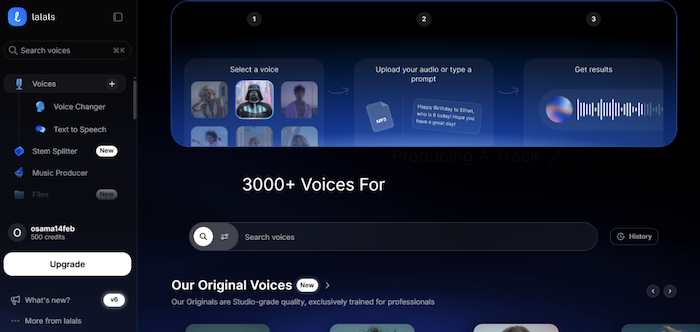
In addition, platforms such as Lalals AI Music Composer can offer more than 3,000 diverse and high-quality voices for making music. This means creators will have even more freedom and choice when a project calls for vocals or voice-based elements in addition to a musical backing.
Yet, AI is limited to a certain extent. It can have difficulties with minor emotional changes, recurring character themes, and developing a musical idea coherently across the length of a film. It can work well for a particular scene, resulting in a movie not being fully captured.
AI, in such a case, becomes a scoring assistant more accurately than a complete replacement for a composer, particularly for indie filmmakers under pressure of time and budget.
Case Use: Temp Scores and Pitch Decks
One great use for AI generated music is temp score creation. Instead of using copyrighted songs for editing which may lead to infringement issues, directors can simply and instantly come up with their own original songs for editing the film, making the trailer, and giving investors a pitch presentation.
When using AI-created music, it also prevents the chance of having copyright problems on sites such as YouTube or in case online festival submissions were to be made with the use of unauthorized temporary tracks that can bring up the issue.
Probably the largest benefit is time saving. Suppose a part of the film seems too long, too stressful, or there is no emotional reaction; a new track can be instantly generated within minutes instead of waiting for the composer to produce a finished score, which may take several days. Hence, it will be easier for the filmmakers to try different options without fear of having to redo the whole thing if a final selection does not meet their requirements.
Beyond the Score: AI Voice Tools in Indie Sound Design
Not stopping at background music — AI is pushing limits further into voice-driven sound design. Today, directors have a chance to try out theme songs, voice acting that’s stylized as well as characters singing their lines through the camera before they hire a voice talent and record on tape.
Creative software like Lalas allows for easy experimentation with AI voice tech, for instance, AI voice cloning, which is great when you want to create demo vocals and see which vocal style suits.
A great practical example is an independent director who wants to come up with vocals as a first step for a scene. They can make a vocal track which can be used as a guide when hiring a professional voice-over artist.
Flexibility is the main asset. Instead of waiting to get a vocalist recording to the last minute, it’s time of the production, filmmakers can test their vocal ideas in the very beginning and make more creative decisions.
The Rights and Ownership Question
Independent filmmakers must first look at the license terms of that AI song generator before they use it in their film. Some of them do offer full rights for commercial purposes; most would only license you very small rights or ask you for explicit permission.
But it is important when a film is about to be released beyond YouTube or the like. Festival submissions, streaming deal negotiation, and commercial distribution usually involve thorough checking of the rights holder, so filmmakers are advised to figure out exactly the rights they have at hand through the release process.
Where AI Still Falls Short
AI can certainly come up with a very good 30-second music cue. But to make an emotional musical score that would play throughout the 90-minute film, you would face a much bigger challenge.
Also, the lack of collaboration is another problem. A composer can take feedback such as “please make this scene feel more hopeful, but still uneasy” and creatively reinterpret it in the score. Most AI applications today can still be very limited when it comes to that kind of collaboration.
There is also some disagreement within the film and music industry. A few music composers feel that AI may make their job difficult or even deprive them of it, while others view it as yet another creative means. The underlying point is whether machines can capture the nuances and the soul of a human artist in producing a soundtrack.
A Realistic Workflow for Indie Filmmakers Today
An efficient path most indie filmmakers could follow is to take help from AI but not go to the extent of replacing the composer.
Music generated by AI can help filmmakers at very early stages with temporary scores, musical mood references, and pitch materials. Once the vision is crystallized a little bit, one composer can be hired whose fee would get used to enhance the final scoring of the music or, in cases when a music composer has got to be replaced due to additional money constraints, a filmmaker may just resort to AI-based music as well.
There are three aspects that a filmmaker should be mindful of before incorporating AI-generated music in a final movie:
- Commercial Licensing — Does AI technology permit a film and its distribution with monetization?
- Ownership Rights — Does the filmmaker really own the soundtrack or just enjoy the user permissions?
- Platform terms — Is there any restriction in terms of film festivals, streaming platforms, or commercial releases?
A filmmaker doing a quick rights check earlier in the production pipeline can avoid major problems later down the road.
Conclusion: A New Meaning of “No Budget”
Taking serious indie film scoring still away from the domain of composers is far beyond the capacities of AI tools. They, however, are enabling filmmakers with low resources to envision things creatively and gradually realize their creative ideas.
By making such AI-driven processes as music creation and voice design widely available, tools like Lalals enable indie creators at home to try out a wide range of things like different music tracks, different kinds of vocals and sound without needing a fully equipped recording studio. Whether you’re creating a temporary score, doing a demo, or exploring early versions creatively, Lalals can get the work done in minutes.
Future prospect
Indie scoring in the coming years will probably involve a human-machine collaboration: one where directors deploy technology for the initial trial and errors yet concentrate their budget and team efforts only on the scenes that demand emotional human performance the most.