
Few settings translate to film as naturally as a casino floor. The lighting, the tension between strangers at the same table, and the sense that a fortune can shift in the time it takes to flip a card, all of it plays out on screen the way it plays out in real life, minus the house edge working against the characters in the background. Some of these films dig into the business behind the glamour, others turn a heist into pure entertainment, and a few strip away the lights entirely to look at what gambling does to the people caught inside it.
|
Film |
Year |
Category |
|
Casino |
1995 |
Crime epic |
|
Ocean’s Eleven |
2001 |
Heist |
|
Croupier |
1998 |
Character study |
|
Molly’s Game |
2017 |
Character study |
|
Rounders |
1998 |
Skill-based |
|
21 |
2008 |
Skill-based |
|
Uncut Gems |
2019 |
Addiction drama |
|
The Card Counter |
2021 |
Addiction drama |
|
The Gambler |
1974 |
Addiction drama |
|
Casino Royale |
2006 |
Espionage |
Crime epics: when the casino runs the show
Martin Scorsese’s Casino remains the benchmark against which most other films on this list get measured. Robert De Niro plays Sam “Ace” Rothstein, a casino operator working under mob supervision in Las Vegas, while Joe Pesci brings the menace, and Sharon Stone delivers one of the performances that redefined her career. The film runs close to three hours and treats every detail, how money gets counted, how the back rooms actually function, as worth getting right rather than glossing over for pace.
Casino’s back half traces exactly that shift on screen, corporate money slowly pushing the mob out of Las Vegas, a shift in oversight that echoes, on a much larger scale, how the wider gambling industry has moved from unregulated backroom deals toward today’s licensed environment, where operators competing for the title of best-rated online casinos answer to regulators rather than to men like Rothstein.
Heist films: the fun side of the felony
Where Casino treats the business with weight, Ocean’s Eleven treats it as an excuse for style. George Clooney leads Danny Ocean’s crew through a plot to rob three Las Vegas casinos simultaneously, backed by an ensemble that includes Brad Pitt, Matt Damon, and Julia Roberts. The film doesn’t pretend to be a deep character study, and it doesn’t need to be, since the pleasure here comes from watching a clean plan executed with just enough friction to stay interesting.
What makes the heist formula work?
A handful of ingredients separate a memorable casino heist film from a forgettable one, and Ocean’s Eleven checks most of them:
- A crew with clearly defined, complementary skill sets rather than interchangeable tough guys
- Dialogue sharp enough to carry scenes that aren’t actually about the heist itself
- A plan complicated enough to surprise the audience without losing internal logic
Those elements explain why the formula has been imitated so often since 2001, even if few sequels or knockoffs matched the original’s chemistry.
Character studies: the people behind the tables
Not every casino film needs a con or a crime at its center. Some of the strongest entries in the genre focus on one person’s psychology rather than a plot mechanism, using the casino as a backdrop rather than the point of the story.
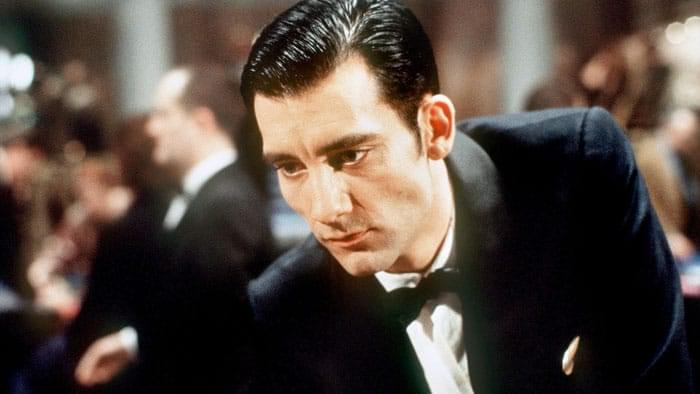
Croupier
Clive Owen stars as Jack Manfred, a struggling writer who takes a job dealing cards to fund his ambitions, only to get pulled into a scheme that violates the very code of conduct his job depends on. The film moves at a deliberately cold pace, matching the emotional distance of its lead character rather than chasing tension for its own sake.
Molly’s Game
Based on a true story, this one tracks the rise of an underground poker operation built on real buy-in tiers and seat lists, drawing on federal case material that shaped its own timeline. The result reads less like a gambling movie and more like a business biography that happens to be set around card tables.
Skill-based stories: outsmarting the house
A separate strand of casino cinema skips the criminal angle almost entirely and focuses on players who win through skill, not luck or theft. These films tend to appeal to audiences who actually play the games being depicted, rather than viewers drawn purely by spectacle.
Rounders follows a law student drawn back into underground high-stakes poker, built around performances that turned it into a cult favorite among actual poker players long after its theatrical run ended. 21, inspired by real events, follows a group of MIT students who master card counting well enough to take Las Vegas casinos for millions before the operation unravels.
Modern takes on addiction and obsession
Recent entries in the genre have leaned harder into what gambling costs the people who can’t step away from it, trading glamour for something closer to anxiety. Adam Sandler’s role in Uncut Gems marked an unusual dramatic turn for him, playing a New York jeweler whose gambling debts push him into increasingly dangerous deals; critics rated it far higher than general audiences did, a split that says something about how uncomfortable the film is willing to get. The Card Counter takes a quieter, more psychological route, following a former convict whose disciplined casino routine masks a plan built around revenge rather than profit.
The genre’s original addiction study still holds up decades later. The Gambler, released in 1974 with James Caan in the lead, built its entire structure around the psychology of a man chasing his own losses rather than any external threat, a template a 2014 remake with Mark Wahlberg revisited for a newer audience without changing the core premise.
Where espionage meets the poker table
Casino Royale rebuilt James Bond around a Texas Hold’em game rather than a shootout, with Daniel Craig’s debut bringing a rougher edge to the character than previous entries had allowed. The film’s central sequence, set at a fictional casino in Montenegro, pits Bond against Le Chiffre in a hand of poker with global stakes attached to the outcome, proof that the genre still has room for spectacle even after decades of grittier alternatives.