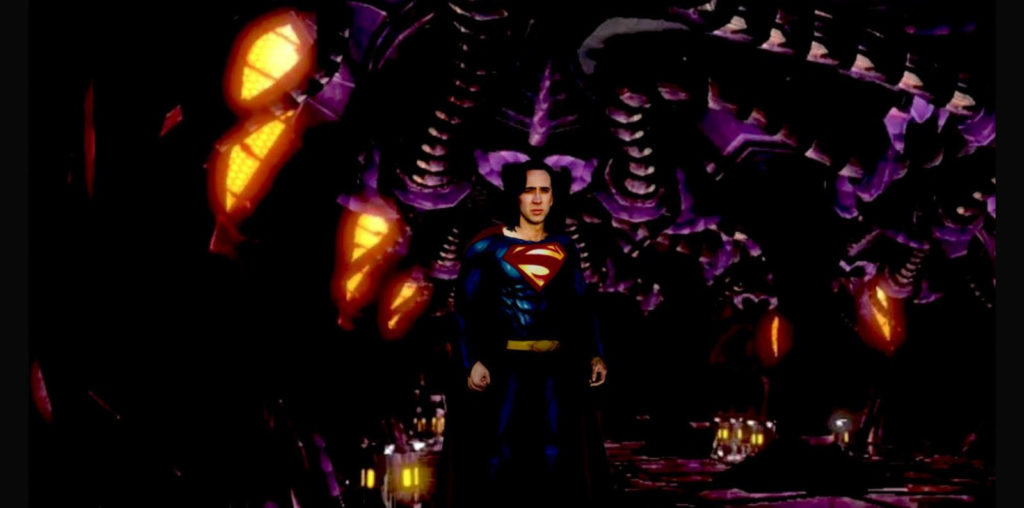
We all have an image of ourselves that we want the world to see. Social media makes maintaining that image more important than ever, rewarding people for being interesting, unique, attractive, or even controversial. But what happens when the image we present becomes our entire identity? When attention depends on being the next big thing or the next hottest person, how much of ourselves are we willing to change to keep up? Clayface explores this question through Matt Hagen, an actor whose disfiguring injuries leave him desperate to restore his appearance. What begins as an attempt to recover his former life soon becomes something far more destructive.
People can become celebrities almost overnight. One funny video or particularly photogenic moment can attract millions of views and turn an ordinary person into a recognizable face. But attention can also become tied to appearance. People compare themselves to others and change how they look based on what they believe audiences want to see. Some pursue cosmetic procedures, while others experiment with their clothing, hair, or personal style. Changing your appearance isn’t inherently a problem. But when acceptance depends on maintaining a particular image, self-improvement can become an exhausting cycle. The question becomes whether we’re changing ourselves because we want to or because we’re afraid of what happens if we don’t.
Matt’s situation takes this pressure to an extreme. He believes his looks are everything, even though his injuries don’t necessarily erase his potential as an actor. People in his life remind him that his career doesn’t have to be over, but he struggles to imagine a future in which he doesn’t look like the person he used to be. After the mob attack, Matt tells his lawyer to do whatever it takes to bring those responsible to justice, even putting his apartment up as collateral. But his pursuit of justice comes at a devastating cost. As he pursues legal action and attempts to restore his appearance through surgery, he loses his financial security and much of the life he once had. By the time he turns to experimental therapy, he is desperate for a way back. Instead, the treatment sets him on a path that makes recovering his old life increasingly impossible.

Matt Hagen lies in a hospital bed, his face wrapped in bloodied bandages, in Clayface.
“Matt is now free to become almost anyone or anything, yet he has lost the people and the life that once gave him a reason to be someone at all.”
Meanwhile, the same mobsters who disfigured Matt begin a smear campaign, twisting the facts and fabricating stories to turn the public against him. While Matt is still recovering in the hospital, his attackers are already shaping how the world sees him. As he struggles to recover physically, they undermine his reputation, making it harder for him to rebuild his career even if he manages to restore his appearance. It’s a familiar pattern on social media, where rumors can spread rapidly and damage someone’s reputation regardless of whether the claims are true.
The consequences become painfully personal when people sneak pictures of Matt’s disfigured face to share, and teenagers call him a freak. He wants to be recognized as an actor, not reduced to the man whose face was destroyed and whose reputation was ruined. His appearance becomes something for others to gawk at rather than a part of a person whose life has been turned upside down. Even if Matt can restore his face, he can’t simply erase the stories told about him. The film draws a distinction between changing how you look and changing how the world sees you. One may be within Matt’s power, but the other is much harder to control.
That distinction raises a difficult question about the relationship between appearance and identity. If Matt can recover his face but not his former reputation, has he really gotten his life back? The person we present to the world isn’t always the person we understand ourselves to be, and changing how we look doesn’t guarantee that we’ll recover whatever we feel we’ve lost. For Matt, the desire to reclaim his former self gradually becomes inseparable from his need to punish the people who wronged him. The film links his shapeshifting to this pursuit: as revenge becomes the purpose around which he organizes his life, his physical form becomes increasingly difficult to separate from the person he is turning into. Revenge promises to give him back a sense of control, but it cannot restore the people he has lost or undo the damage to his life. Instead, his pursuit of retribution pushes him further away from the person he wants to recover.