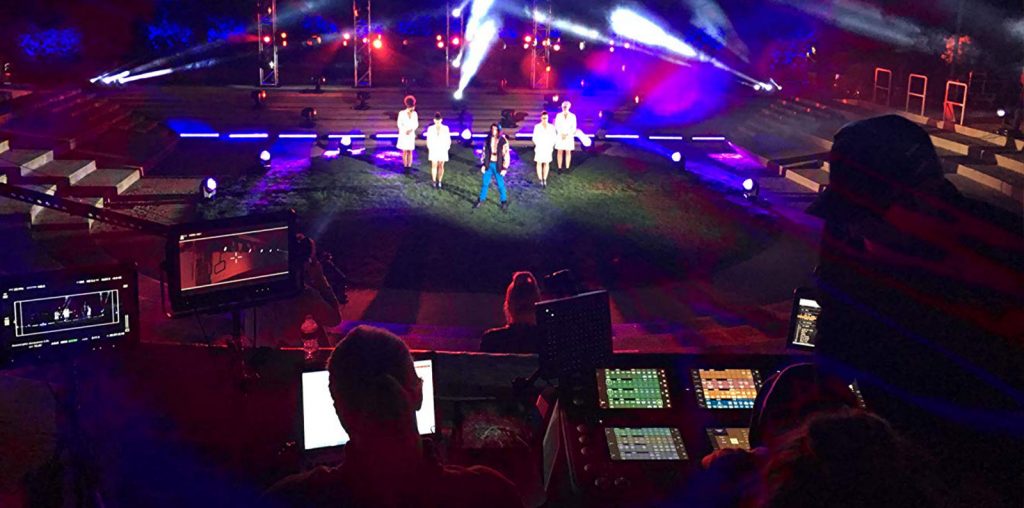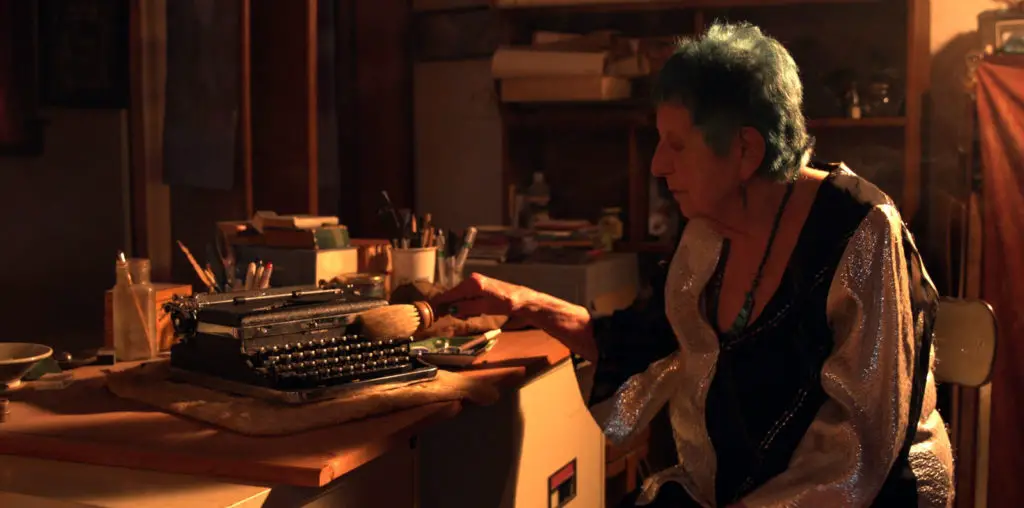
Every behind-the-scenes interview covers the creative challenges: the weather that almost ruined the shoot, the lens the DP fought for, the location that fell through two days before principal photography. Nobody talks about the port-a-potties.
Whether you are running an indie shoot in a remote location or managing a drive-in screening series, event portable restrooms are one of those invisible systems that, when they fail, become the only thing anyone remembers about the day.
On-Location Film Shoots: What Production Coordinators Have to Plan For
A remote-location shoot has none of the infrastructure that a soundstage takes for granted. Production coordinators are building a temporary micro-city for cast, crew, and equipment, and sanitation sits on that list right next to power and craft services. Crew size, shoot duration, and the unit’s distance from the nearest town all factor into the plan.
A two-day shoot with a twelve-person crew needs a different setup than a six-week location shoot with eighty people rotating through departments. Get it wrong, and it is not a minor inconvenience: it is a production delay when half the crew is standing in line instead of on set.
Outdoor Film Festivals: Scaling Sanitation for Multi-Day, Multi-Stage Events
Festivals raise the stakes considerably. Multi-day, multi-stage events with public attendance need sanitation planned around peak crowd flow, not average attendance, and across multiple venues that may each require their own setup rather than a single central bank of units. A festival that under-plans for its biggest night, the headline screening or the closing gala, ends up with the exact scenario every festival producer dreads: long lines, frustrated attendees, and a logistics failure that has nothing to do with the films themselves.
The Difference Between Basic Portable Units and Restroom Trailers on a Professional Set
Not every production needs the same setup. A small crew on a short shoot can usually get by with standard units. Larger productions, longer shoots, or anything with VIP or talent access tend to upgrade to restroom trailers: multiple stalls, running water, climate control, and a considerably better experience for anyone spending twelve hours on location. It is a small line item relative to the rest of a production budget, but it is one of those details that separates a shoot that runs smoothly from one where crew morale quietly erodes over a multi-week schedule.
ADA Accessibility at Outdoor Screenings and Festival Venues
Public-facing events carry accessibility obligations that a closed set does not. Outdoor screenings, festival grounds, and any venue open to ticketholders need accessible units alongside standard ones, not as an afterthought added after a complaint. This is one detail worth building into the site plan early, rather than fixing once the festival footprint is already staked out.
How Event Portable Restrooms Get Specced for a Production – a Quick Primer
Specifying sanitation for a production or festival comes down to a few variables: expected peak headcount, event duration, venue layout, and whether the event is open to the public or a closed set. From there, it is a matter of matching unit count and type- standard, upgraded, or trailer- to those numbers, and placing units where people will actually use them without disrupting sightlines, crew paths, or emergency access. Satellite Industries supplies the equipment behind many productions and festivals that never mention it in the credits, built for exactly this kind of high-turnover, short-duration use.
The Vendors You Never See in the Credits
Every production has a list of vendors who make the whole thing possible without ever appearing on screen or in the program. Sanitation is near the top of that list, right alongside the generator rental company and the catering truck.
It is unglamorous, rarely mentioned in a behind-the-scenes featurette, and one of the few production line items where a failure becomes instantly and universally noticeable. The productions that plan for it well are the ones where nobody thinks about it at all, which, on a film set or festival ground, is exactly the point.