Artificial intelligence has moved from technical demonstrations into serious conversations about filmmaking. During the 2026 festival season, that shift became difficult to ignore. Venice hosted films that used generative systems as part of their production process and also became a meeting point for filmmakers working directly with AI. Telluride brought a different side of the same discussion into focus, as directors, performers and industry figures considered what these tools could mean for authorship, employment and documentary credibility.
The debate also reflects a much broader change in digital entertainment. Audiences now move between cinema, streaming, interactive media and online games during the same week or even the same evening. Services such as rollambia casino belong to the online gaming side of that activity, where adults interact with digital casino games through software-based interfaces. Searches for the best online сasino form another part of that sector. Cinema operates through a very different creative process, yet filmmakers now face a related technological question: how much work should software perform, and how clearly should creators explain its role?
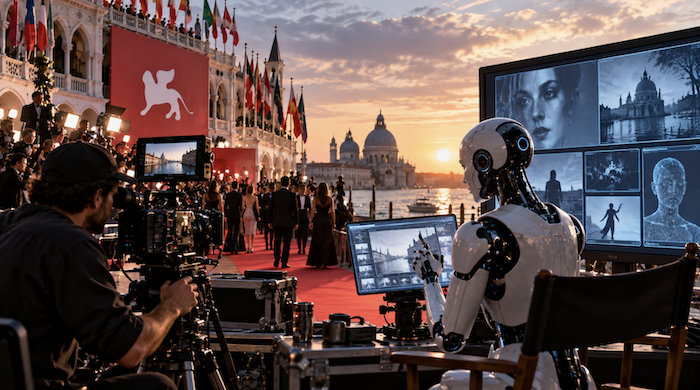
Venice made that question especially visible in 2026. An AI-focused film festival held alongside the Venice Film Festival attracted more than 3,000 submissions from 76 countries, according to Reuters. At the same time, AI-assisted productions entered discussions around established cinema rather than remaining limited to experimental technology events.
That development does not mean conventional filmmaking has disappeared. Cameras, actors, editors, writers, designers and directors still shape cinema. What has changed involves the number of production tasks that generative systems can now assist with.
Venice Put AI Cinema in Public View
The Venice Film Festival has long given filmmakers space to test new forms and production methods. In 2026, artificial intelligence became part of that tradition in a much more direct way.
One of the projects that drew attention used AI techniques within documentary production. The discussion around the film focused not only on what appeared on screen but also on how filmmakers created individual elements and what those choices meant for documentary standards.
That distinction matters.
Audiences usually approach documentaries with an expectation that the images and sounds maintain a meaningful connection to real events. Editors have always shaped documentaries through selection, sequencing, music and narration. Re-enactments also have a long history.
Generative AI introduces another possibility. A filmmaker can create images that look photographic even though no camera recorded the depicted event.
The technology therefore forces directors to answer a basic question: when does reconstruction become synthetic representation?
Venice did not settle that issue. It made the issue much harder for the film industry to ignore.
Telluride Shifted Attention Toward Human Work
Telluride also became part of the AI conversation, but discussions there highlighted concerns about creative labour and the future of production.
Those concerns did not appear suddenly in 2026. Writers and performers had already spent several years discussing how studios might use generative systems. Contracts and labour negotiations increasingly addressed digital replicas, synthetic performances and machine-generated writing.
The latest tools have made those concerns more concrete.
AI can now assist with tasks across several stages of production. A filmmaker can use software to generate concept images, alter backgrounds, test visual ideas, create temporary voices or modify individual shots.
Each application raises a different question.
Using software to remove an unwanted object from a frame does not create the same labour issue as generating a synthetic performer. Creating temporary storyboard images also differs from replacing a commissioned artist in the final production.
The debate becomes difficult when people discuss all these practices under one term.
“AI Filmmaking” Covers Very Different Practices
The phrase “AI film” can describe projects that share almost nothing in production terms.
One director may use a generative tool for a few seconds of footage. Another may create most visual material through prompts and digital compositing. A documentary team might use AI to reconstruct unavailable historical material. An editor could use automated software for a technical correction that viewers never notice.
That range makes simple labels inadequate.
A more useful discussion separates AI use by function:
- pre-production work such as storyboards and visual concepts;
- synthetic images or video that appear in the finished film;
- digital voices and performance modification;
- editing and post-production assistance;
- restoration or reconstruction of archival material;
- translation, dubbing and accessibility tools;
- script analysis and production planning.
Each category carries different creative, legal and ethical concerns.
A festival can therefore gain more from asking how a filmmaker used AI than from asking whether a production qualifies as an “AI film.”
Documentary Cinema Faces the Hardest Questions
Fiction gives filmmakers broad permission to invent. Documentary filmmaking works under different expectations.
When audiences watch a fictional drama, they know actors perform events for the camera. When they watch documentary footage, they may assume that a camera recorded something that actually happened.
Synthetic imagery can weaken that distinction if filmmakers fail to identify it clearly.
Suppose a documentary tells the story of an event from 1975 but lacks footage of a key moment. A director could use photographs, interviews or a traditional dramatic reconstruction. Generative tools now add another option: create moving images that resemble archival footage.
Technically, that process may work.
Editorially, it creates several problems.
Viewers need to know whether they see historical evidence or a modern reconstruction. Researchers need to understand the source. Future filmmakers may also reuse material without realizing that software created it decades after the original event.
Disclosure therefore becomes central to documentary practice.
A director can still experiment with synthetic imagery while making its status clear. The problem grows when realistic generated material appears without enough context.
Actors Face Questions About Digital Identity
Performers have another concern: control over their appearance and voice.
Film production has used digital effects for decades. Studios can alter faces, create doubles and modify performances during post-production. Generative systems can expand those techniques because they can reproduce visual or vocal characteristics from source material.
That raises questions about consent.
An actor may agree to appear in one project but not want a studio to reuse a digital version of that performance elsewhere. A background performer may accept one day of work without expecting the production to create a reusable synthetic replica.
The central issue does not concern whether computers participate in the process. Modern film production already depends heavily on computers.
The issue concerns who controls the resulting material.
Clear agreements can define what producers may scan, modify, reproduce and retain. Without those rules, technological capability can move faster than contractual protection.
Writers See a Different Set of Risks
Screenwriters face less concern about physical replicas but more concern about authorship and training data.
Generative text systems can produce dialogue, summaries, outlines and variations of existing ideas. They can also process large quantities of written material quickly.
A filmmaker working with a limited budget might use such a system during early development. That can reduce the time required for administrative tasks or rough experimentation.
Yet writing involves much more than producing grammatically correct sentences.
Characters need consistent motives. Scenes need purpose. Dialogue needs to reflect relationships, context and individual voices. Writers also revise material in response to actors, directors, locations and production limits.
These decisions require responsibility.
If a filmmaker uses generated text, the production still needs someone who makes the final creative choices and accepts authorship of them.
The legal situation adds another concern. Courts and copyright authorities continue to examine questions around human authorship and machine-generated material. Producers cannot treat every generated output as equivalent to conventional commissioned work.
Independent Filmmakers Have Strong Reasons to Experiment
The debate carries particular significance for independent cinema.
Small productions often operate with limited crews and tight budgets. A director may also work as a producer, editor or designer. Tools that reduce repetitive technical work can therefore attract serious interest.
A small team could use AI during pre-production to test ideas before spending money on sets or effects. Software could help organize transcripts, identify footage or create rough visual references.
Those uses can save time without removing human authorship.
The situation changes when a production uses generated material to avoid hiring artists, performers or other specialists for work that appears directly in the finished film.
Cost then becomes part of the ethical debate.
Independent cinema has always found ways to work within financial restrictions. Filmmakers use limited locations, smaller casts, practical effects and unconventional production schedules. AI adds another method, but festivals and audiences will increasingly ask what creators gained and what human work they removed.
Copyright Remains Unsettled
Copyright may create the most persistent legal problem.
Generative models learn patterns from large collections of material. Artists, photographers, writers and filmmakers have challenged how developers collect and use copyrighted works for training.
Film producers face the issue from both directions.
They need to know whether generated material creates legal exposure. They also need protection against systems that may imitate or reproduce elements from their own films.
Questions can arise around:
- training data;
- ownership of generated footage;
- similarity to existing copyrighted works;
- synthetic performances;
- music and voice generation;
- credits and authorship.
A low-budget filmmaker may have less capacity to handle these disputes than a major studio.
That makes provenance important. Production teams need records of which tools they used, what material entered those systems and where generated elements appear in the finished project.
Good documentation may eventually become as routine as keeping music licenses and performer agreements.
Festivals Now Need Clear Policies
Venice and Telluride show why film festivals cannot treat AI only as a technical curiosity.
Selection committees increasingly need rules.
Should a filmmaker disclose every AI-assisted process? Should festivals distinguish between technical assistance and generated final footage? Can a documentary compete if it contains synthetic historical imagery? How should programmers describe such material to audiences?
Festivals already maintain rules about premiere status, running time, submission formats and rights. AI adds another category.
The strongest policies will likely focus on transparency rather than simple prohibition.
A festival could ask entrants to identify substantial generative use and explain where it occurs. Programmers could then assess the work in context.
Such disclosure would also improve public discussion. Instead of arguing vaguely about whether AI “made” a movie, critics could examine the actual production choices.
Critics Need New Questions Too
Film criticism will also have to change.
A critic normally evaluates what appears on screen: direction, acting, writing, editing, cinematography, sound and structure. AI introduces production information that may affect how critics interpret those elements.
If a film contains a synthetic performance, the critic may need to know that.
The same applies to generated documentary imagery or an artificial voice attributed to a historical figure.
Critics should not assume that every unusual image comes from AI. Nor should they treat machine assistance as automatic evidence of poor artistic judgment.
Instead, criticism can examine intent and result.
Why did the filmmaker choose the technology? Did the film disclose its use? Does the technique support the subject? Does it create confusion about what actually happened? Who performed the creative work?
Those questions fit traditional criticism because they concern choices and consequences.
Audiences May Demand Disclosure
Viewers will probably play a major role in setting expectations.
Some audiences may care little about technical assistance in post-production. Others may strongly object to synthetic actors, generated voices or artificial documentary footage.
Studios and independent producers cannot assume one response.
Clear disclosure gives audiences information without dictating how they should react.
Film credits offer an obvious place to start. Productions already identify visual effects teams, stunt performers, editors, sound departments and many other contributors.
They could also identify significant generative work.
That practice would not solve every ethical issue. It would at least create a factual basis for discussion.
The Debate Is Really About Creative Control
The most important question around AI filmmaking does not concern whether filmmakers will use the technology. They already do.
The harder question concerns control.
Who chooses the training material? Who approves generated footage? Who owns a synthetic voice? Who receives credit? Who takes responsibility when an artificial image misrepresents reality?
Venice and Telluride brought these issues into mainstream film culture because festivals place creative decisions under close public scrutiny.
A technology demonstration can focus on what a model can produce. A film festival asks a different question: does the result work as cinema, and can the creator justify the choices behind it?
That distinction will shape the next phase of the debate.
Cinema Still Depends on Decisions
Artificial intelligence can generate images, alter voices, organize information and assist with many production tasks. Those capabilities will continue to attract filmmakers, especially teams that need to work within strict financial or scheduling limits.
But tools do not determine why a scene exists.
A director still chooses what the audience sees. An editor decides when a shot ends. A writer determines what information a character reveals. Performers interpret emotion, physical movement and relationships. Producers decide which methods fit the project and its budget.
AI changes how people may execute some of those choices. It also creates new responsibilities around disclosure, consent, copyright and authenticity.
That explains why Venice and Telluride have become important sites for the discussion. The argument no longer belongs only to software conferences or speculative debates about future technology. Filmmakers now bring AI-assisted work to major cultural events, while actors, writers, directors and critics confront the consequences in real productions.
Cinema has faced major technical changes before, from synchronized sound and color to digital cameras and computer-generated effects. Generative AI differs in one important respect: it can participate directly in creating material that audiences might otherwise attribute to a human artist or a camera recording.
That ability makes transparency especially important.
The 2026 festival season has not produced a final answer about AI filmmaking, and no single festival could create one. It has done something more practical. It has moved the discussion toward specific questions about authorship, labour, evidence, consent and creative responsibility.
Those questions will remain relevant long after this year’s screenings end.