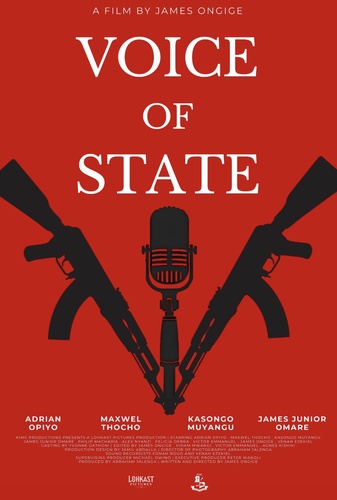
Based on the real events surrounding the 1982 attempted coup of the Kenyan government, James Ongige’s short film Voice of State recreates the takeover of the state radio station used to notify the country that the government had changed hands.
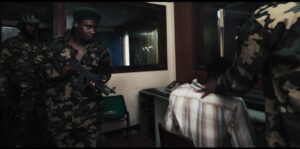
The film begins with archival footage from Kenya following the death of president Jomo Kenyatta, setting the scene for Daniel arap Moi’s presidency before launching into the story. It centers legendary Kenyan radio broadcaster Leonard Mambo Mbotela (Adrian Opiyo), who we first meet as he finishes his broadcast for the day. That night, under the veil of darkness, Hezekiah Ochuka’s (Maxwel Thocho) rebel forces move in, taking Mbotela from his home to the radio station. In a tense standoff, he’s forced to announce that Moi’s government has fallen. From there, it’s only a matter of time before those forces flee as the coup unravels and Mbotela is able to quell the concerns of listeners at home.
” … takeover of state radio, notifying people that the government of Kenya had changed hands …”
Opiyo’s performance as the beloved Mbotela is the real star of the show. In the limited runtime, not a lot of time can be spent developing the character, but Opiyo effectively brings Mbotela’s trademark charisma to life. You can see the fear on his face as he’s swept up in the coup but you can also feel his strength as he converses with his captor. The performances along with Ongige’s simple approach to the story immerses the audience into this historic moment. There are no frills, just the anxious moments that could have redefined a country’s history.
Ongige is less interested in hashing out the conditions that led up to the attempted coup or the politics of the revolutionaries than he is in examining how they tried to take power. They didn’t march on the palace, they came for the radio station. The approach finds modern relevance within a 40-plus-year-old story. The real power is in the hands of the media.
The film ends with a flurry of additional context and information about Mbotela and the fallout from the events. The archival footage that bookends the story makes the moments between feel like a historical reenactment typical in documentary filmmaking. Regardless, Voice of State is a stirring portrait of a lesser-known moment in history with lessons that still resonate today.
"…the anxious moments that could have redefined a country’s history"