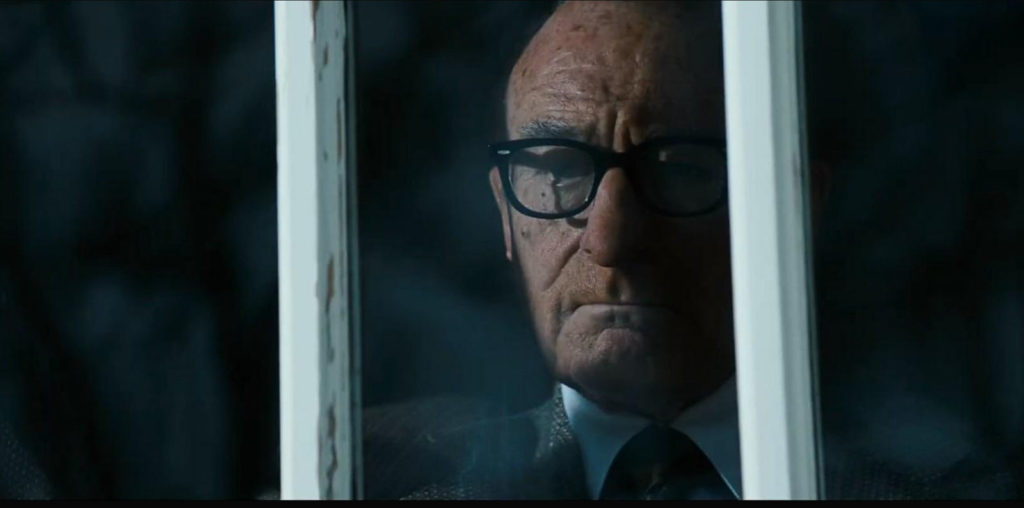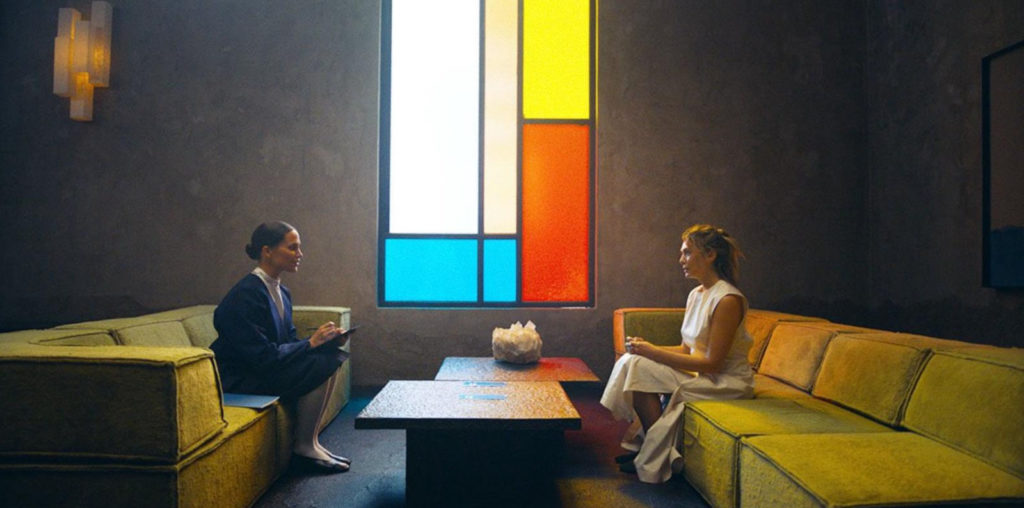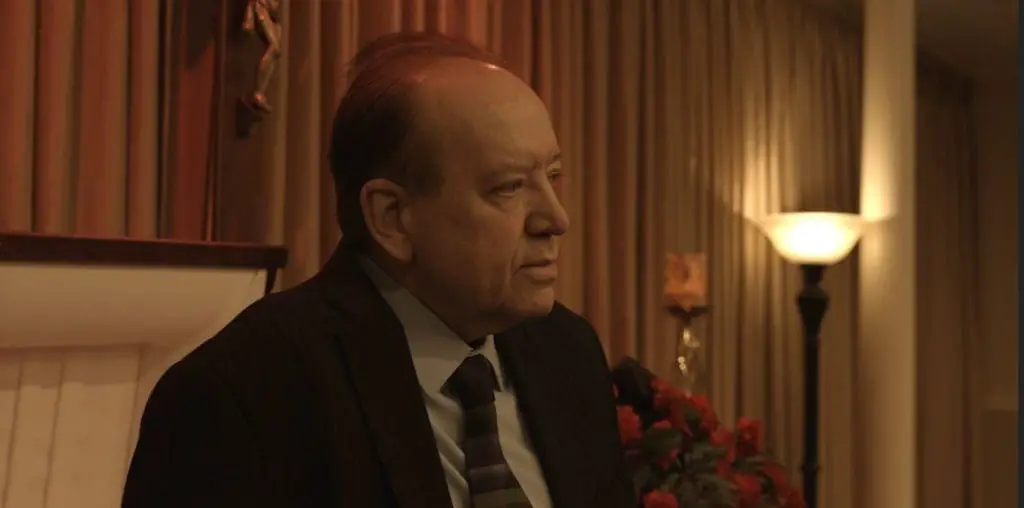
Pierre Harris’ gritty thriller, Village Uncut, is unlike any movie I’ve seen on the subject. He takes us to a small town in Arkansas where the town’s youth turn to drugs to pass the time. While the story is not new, the way in which it’s told is.
Our tale opens in the small town of Strong, Arkansas. Life is rough, and opportunities for the town’s youth are scarce. We meet a tight-knit group of young friends who have succumbed to the lure of dealing drugs—seeing it as their only alternative.
Soon, their activities draw unwelcome attention. A rival crew takes notice, sparking a potential turf feud. At the same time, Officer “OG Cop” – a veteran local policeman – is shaking down citizens to get more information on the drug crew. As time passes, the gang rivalry heats up with the bosses putting pressure on our crew to join them, while feeling the pressure of the police, who may or may not be on the up and up.
I’ll start right up front and say Village Uncut is not for everyone. The final product felt like thumbing through a coffee table book about drug gangs in the rural south. If you’re looking for a clearly defined narrative that takes you from point A to point B, Village Uncut is not for you. If you’re looking to step back and get the feel of a rural drug trade as if it were a movie painting, then you’re in luck. This film is like no other.
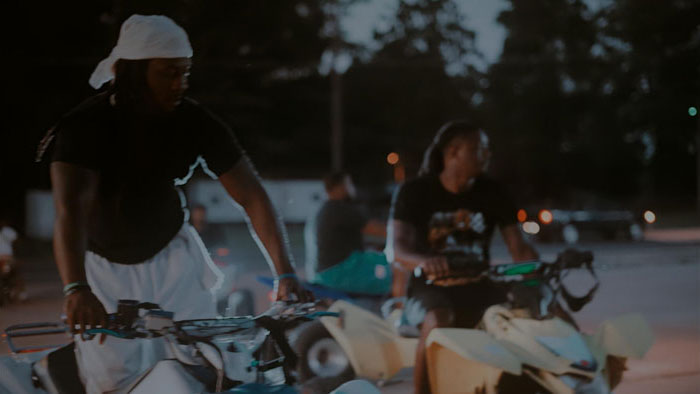
Riders cruise through the streets of Strong, Arkansas, in Village Uncut.
“…a small town in Arkansas where the town’s youth turn to drugs to pass the time.”
After seeing Village Uncut, I couldn’t tell you the name of any of the characters. The action merely happens on screen. The scene is captured in a pseudo-documentary style. The camera is essentially a distant observer of the action, moving in and out of the action. In addition, the color palette is gorgeous, emphasizing rich colors. Then the credits roll, presenting B-roll of the go-nowhere life of Strong, Arkansas, featuring young people hanging out on the street and admiring one another’s cars.
Then the story starts with our main characters navigating their way through the drug trade. OG Cop is stirring up trouble, and the leaders of the gang are getting their cut. For me, this film is all about the cinematography and how it captures the action. No scene is set up in the traditional Hollywood manner with the cameras locked down into place. Unlike a documentary, which seeks to frame action as it happens like a news story, here the camera floats around like a dream. I’m also a big fan of the car chases. It’s all staged to effectively look like a car chase, but under safe speeds and conditions that won’t damage any of the cars.
There is certainly room to criticize the “art” of Village Uncut. Most audiences want traditional cinematic storytelling, and this is a film that can be challenging at times. We want names for our protagonists, and a clear sense of direction. At the same time, we’re risking losing those who want traditional film for art’s sake. I get it, but if you’re looking for art and out of the ordinary, one notable aspect is that everyone in the film appears to be improvising their lines, some better than others. Village Uncut is worth giving a chance. When it’s over, you’ll swear you just left an art gallery themed on drug gang rivalry.
In the end, Village Uncut stands as a raw and unconventional snapshot of life in a forgotten corner of America. Pierre Harris isn’t interested in neat resolutions or Hollywood polish—he’s after an atmosphere, a lived-in authenticity that lingers long after the credits. It’s a film that invites you to experience its world rather than watch it, and that alone makes it worth the journey.

"…you'll swear you just left an art gallery themed on drug gang rivalry."