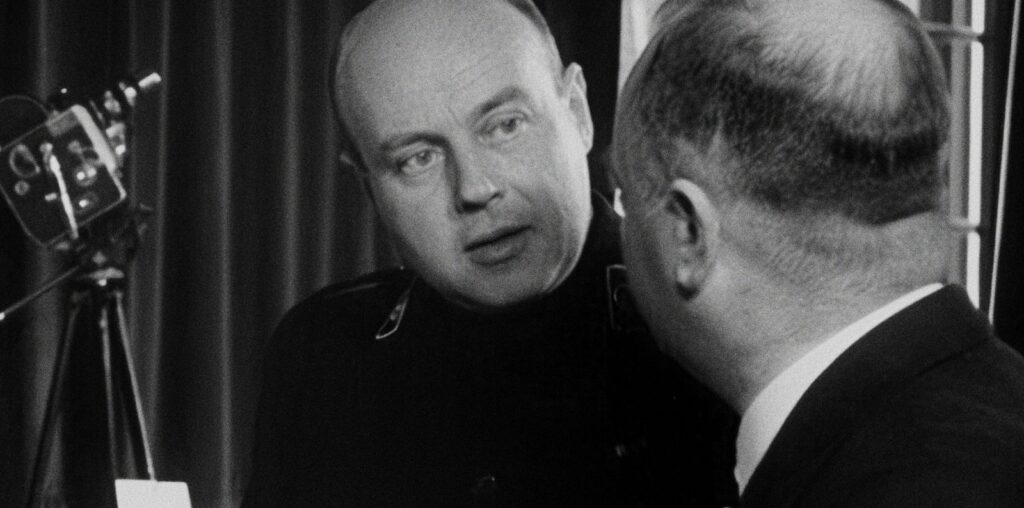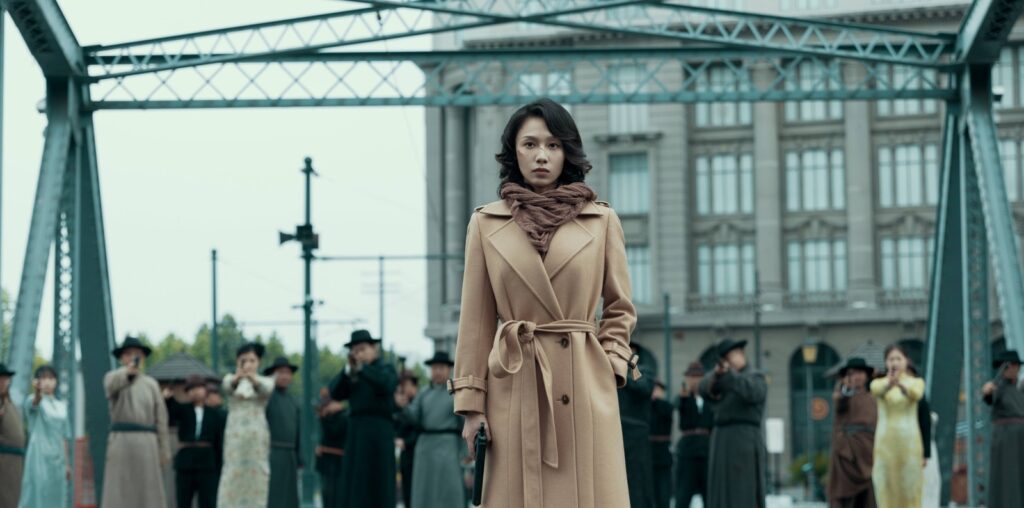
Latvian director Dāvis Sīmanis paints a picture of the simmering time bomb that would explode into World War I in his arthouse feature The Year Before the War. Hans (Petr Buchta), who sometimes calls himself Peter, is a doorman at a hotel in Riga in 1913. His life changes when an anarchist group sets the hotel on fire and Hans is blamed for it. He flees Riga, and stays on the run from Switzerland to London. In Switzerland he meets Sigmund Freud at a utopian retreat at Monte Verita, which features nude calisthenics, and later finds himself entangled with Mata Hari. He also encounters ghostly manifestations of key figures in the war. This may be a narrative conceit, but may also be Hans slipping into madness.
As his philosophy and ethos both evolve, Hans becomes convinced that violence is necessary. Europe is on the cusp of a war that will last four years and result in 22 million dead. Anarchist communists vie with fascists for cultural advantage. These ideals are deemed important enough to justify the killing and destruction. Then of course, once that subsided, the world did it all over again in 1939.
The atmosphere of the film is grim and heavy with the inevitability of the coming conflict. This was a time with limited communication of the reality of war. News accounts did not convey the horrors men saw in trench warfare in Europe. There was little understanding of PTSD, which was then called “shell shock.” As a result of this experiential distance, the politicians and citizens not directly involved in combat were more comfortable than we are in discussing the conflict in abstract terms. They were also quicker to commit men and supplies to a war supporting their “side.” They committed to the natural rightness of their own ideology, and spoke of glory in battle. As Hans is swept up in the cataclysm, we see firsthand the devastating results of this approach.
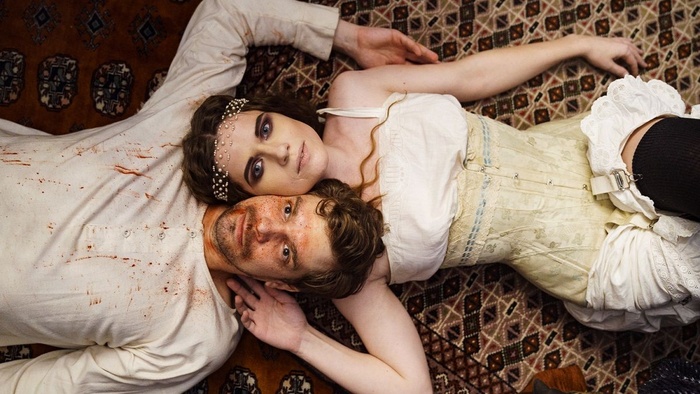
“… Hans is a doorman at a hotel in Riga in 1913…”
With dense dialogue in German, Latvian, French, and Russian, the viewer must track the subtitles closely to keep up with the progress of the film. Admittedly, however, even if one pays very close attention, it’s still all over the map and difficult to follow. The usual sequence of cause and effect has gone out the window in favor of fever-dream rumination on what conceptual constructs lead to war. The film’s flow of events makes about as much sense as the war itself. It’s less of a historical document and more of an expression of fist-shaking at the absurdity of rationalizing war.
The film moves through its charnel house ambience slowly. The cinematography sets the tone in muted colors and sharp angles, enhanced by the authentic costuming and sets. Buchta as Hans/Peter delivers a powerful performance as a man drawn into fanaticism for a cause. Given the historical subject matter of the script, the film will appeal to viewers who are well-versed in the history of WWI, and interested in what the individual experience was like in the time just before.
The Year Before the War is a Lynchian descent into violent madness as civility and sanity are traded for blood lust in the name of political principles. This goes far beyond “man’s inhumanity to man” and leaps right off the cliff of cold, wanton murder and mayhem.
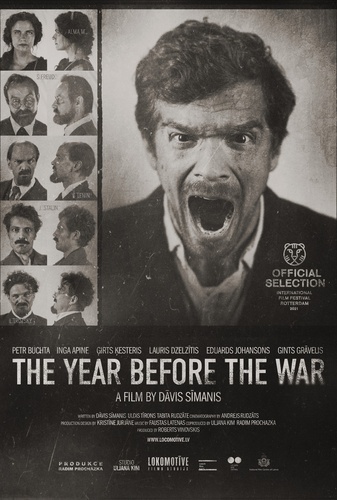
"…A surreal glimpse of life leading up to WWI"