Certainly relaying the struggle from the position of the oppressed is just and narratively satisfying, and I would agree it should be presented over and over again, in great numbers — there are an uncountable number of such stories that can never be exhausted. But to say that this is the only way of approaching this grievous injustice robs us of a certain perspective. We cannot only have a hero’s journey, or even a thwarted heroes journey. Sometimes we must tell the dark parts of the story — how did we get to such a dire state of affairs, and how can innocent souls be corrupted into willfully propagating injustices?
Zone of Interest took a magnifying glass to the “banality of evil,” all the way to Oscar success in 2023. The Smell of Apples is in some sense a South African Zone of Interest, though instead of being content to interrogate how we look the other way at atrocities to further our own self interest, it goes even farther in subtly exploring how we can be coopted on every level, from the schools, to politics, to home life.
The Smell of Apples is in some sense a South African Zone of Interest
The Smell of Apples isn’t a knock-off of Zone of Interest — the story of The Smell of Apples was actually first — the film is based on a 1993 book by Mark Behr. South African director John Trengove transports us to 1974 South Africa with the help of a talented cast. Dawian van der Westhuizen delivers an astounding performace as the 11-year-old Marnus, shifting from pure innocence to a growing self-awareness. The novelistic roots are apparent with the superb writing — Trengove co-wrote the adaptation with Christopher Ciancimino. Every scene serves to draw us more into this fascinating world, building character, while simultaneously being both forboding and symbolic. The Smell of Apples is one of my favorite films of the year— one firing on all cylinders. It is not to be missed.
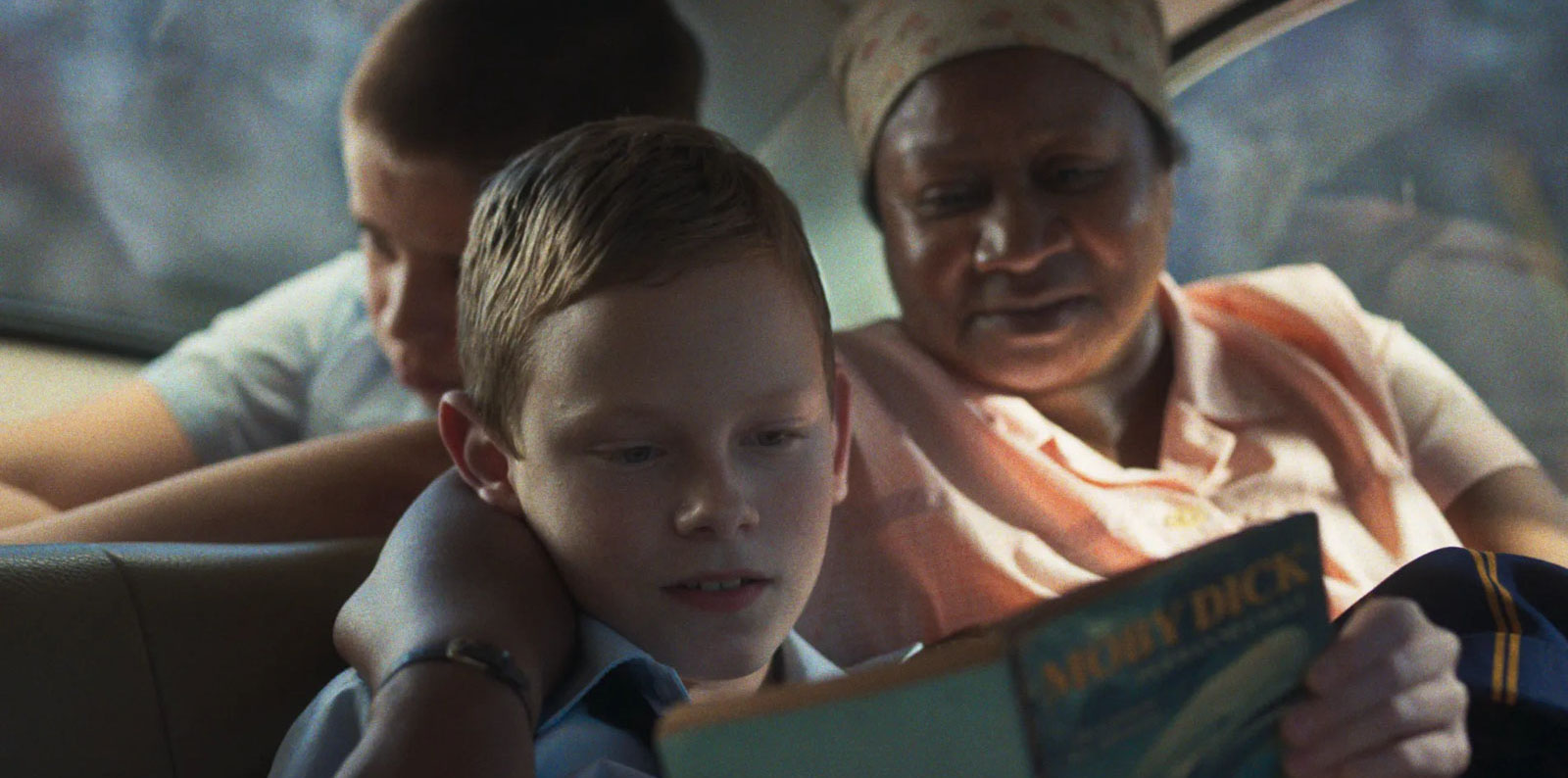
"…when a general from Chile, Mr. Smith comes to visit, many of the roles in the family become destabilized."