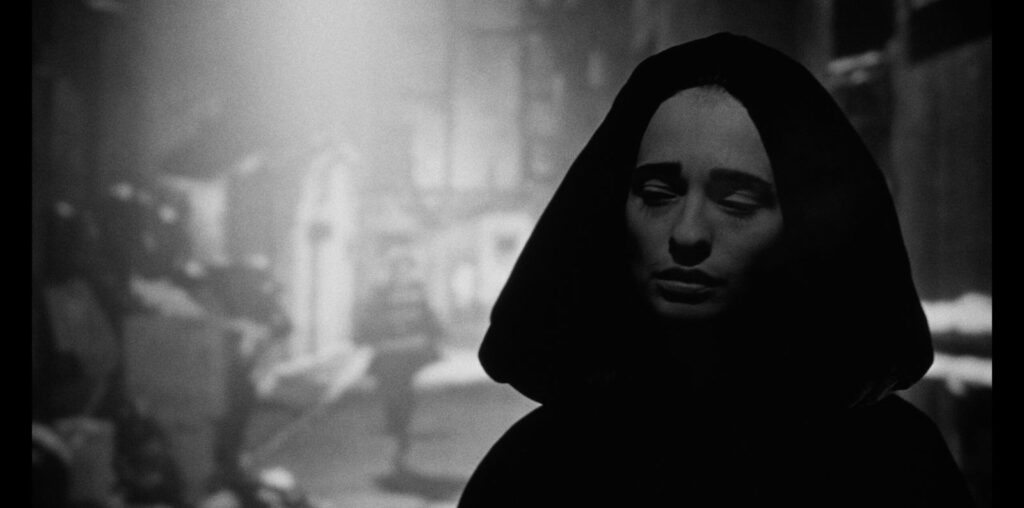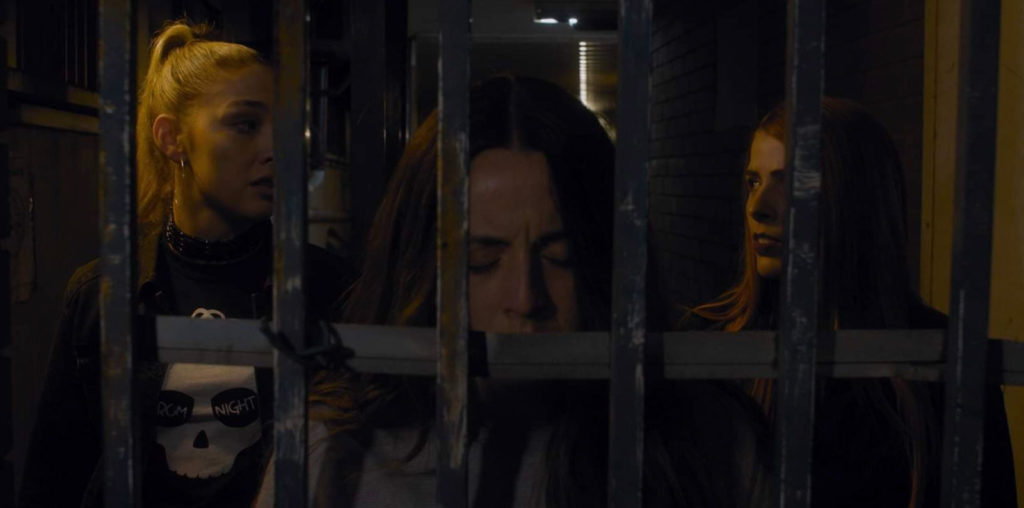
Alice Maio Mackay’s The Serpent’s Skin arrives with DIY textures, genre hybridity, and a fascination with bodies under pressure, but what distinguishes this is not its surface nor even its supernatural moments. At its core, the film is a possession romance, a story with a familiar structure of enticing evil that transcends the particulars of sexuality or subcultural framing. Full view here demonstrates, perhaps more clearly, that this is obsession, desire, and corruption in a world that some people can relate to as a newcomer in a new life and clubs scene.
Anna, a young trans woman played by Alexandra McVicker who escaping family tension, driving her to be a ‘cutter’ and rebuilding in a new environment. She is saving herself, which is a key point as it shows trans people that there really is no trap. She arrives at her sister Dakota’s (Charlotte Chimes) apartment and tries to get settled among the small talk of old life and new life. Anna encounters two figures, Danny (Jordan Dulieu), the ‘hot’ tenant of the apartments, and later Gen (Avalon Fast), who pull her into female desire, intimacy, and ultimately danger because both share special abilities. Psychic powers emerge, bodies change, and a demonic force begins to infect the social circle. But these elements, while rendered through queer characters, are not inherently tied to queerness as subject matter. They function instead as mechanisms: the awakening of power, the seduction of control, the collapse of boundaries between self and other.

“At its core, the film is a possession romance, a story with a familiar structure of enticing evil…”
This distinction is crucial. The film does not depend on its characters’ identities to generate conflict; rather, it uses a familiar dramatic romantic entanglement leading to possession and transformation. One could transpose the same narrative onto any group of characters, and the core tensions would remain intact. In that sense, The Serpent’s Skin aligns with a long lineage of horror cinema in which intimacy becomes the gateway to annihilation, from Possession, The Hunger, to It Follows.
Where the film becomes more distinctive is in its treatment of community. The central friend group is not idealized; it is volatile, shifting, and often contradictory. Alliances form and fracture. Jealousy, attraction, and insecurity circulate freely. These dynamics are not unique to any one group. The picture captures the chemistry of social systems, where emotions can spread as quickly as any supernatural infection. When Danny becomes overtaken by a demonic force, transforming into a predatory, parasitic presence, it reads less as an invasion than as an amplification of traits already present. The predatory male who preys upon members of a marginalized and often dehumanized community.
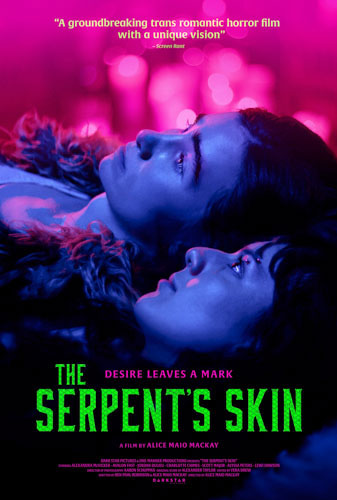
"…aligns with a long lineage of horror cinema in which intimacy becomes the gateway to annihilation,"