VASHON ISLAND FILM FESTIVAL 2026 REVIEW! In our ever-changing society, about how we should live, The Life We Leave offers a different perspective. This well-executed documentary examines how we choose to pass on, presenting an alternative to burial—human composting. While living, considering how you leave this life and world is an expanding conversation, especially as options emerge. More than just an alternative to burial and cremation, The Life We Leave, directed and produced by JJ Gerber, delves into the business of composting as a burial practice. Through the dedication and ingenuity of Micah Truman, his efforts and business have led to an industry change but at great cost to his life, publicly and personally.
In 2019, Washington State became the first place in the world to legalize human composting, recognizing decomposition as a regulated form of disposition. Since, public interest in this form of disposition has grown, with 14 states legalizing it over the past five years and another 14 introducing legislation.
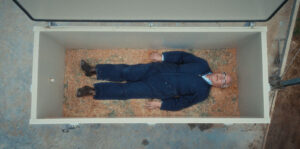
As an entrepreneur, Truman is dedicated to his business, Return Home, the world’s first large-scale terramation facility. But when the conventional deathcare industry resists, he must pivot, learning to care for the grieving while transforming his business. Alongside funeral directors Brie Smith and Katey Houston, he realizes that the double bottom line is the only way to truly profit. What begins as an ambitious venture becomes personal as they rediscover human connection, ritual, and legacy.
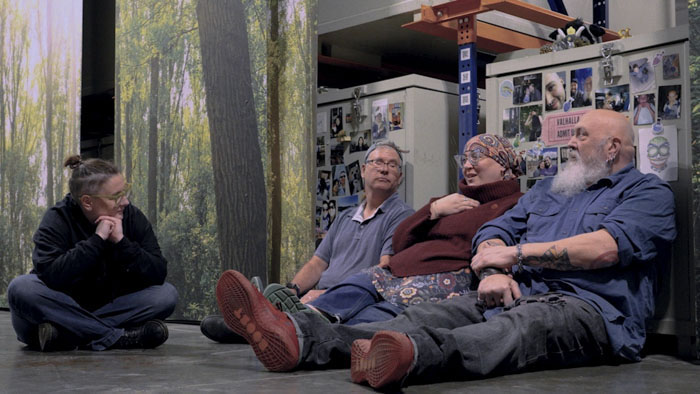
Return Home’s staff and subjects gather at the facility in a candid moment from The Life We Leave.
“In 2019, Washington State became the first place in the world to legalize human composting, recognizing decomposition as a regulated form of disposition.”
The Life We Leave is a deeply rooted story across business, deathcare, and acceptance, spanning all levels of existence, especially in the context of “care, connection, and continuity.” In caring for the dead, Gerber considers how we care for the living and the world we leave behind for those who come after us. Gerber constructs The Life We Leave to offer insight into ritual and the service of one of life’s most important processes. This requires aligned values and a sense of existence, as grieving for loved ones is traumatic and highlights everyone’s mortality. This topic is very close to Gerber, yet he presents it with compassion and understanding, especially because some consider this type of burial unorthodox.
Gerber not only tells the story of the alternative idea, human composting, a natural biological process that uses the microbes already present in our bodies to transform us back into the earth when we die, but he also engages those involved and those who experience it. It is eye-opening and educational. In addition, the film channels its clear emotion not toward death but toward Truman. His life transforms through his dedication to the business, to all people, and, most importantly, to his staff. Gerber handles this tightrope well.
Understanding terramation through The Life We Leave is important and should continue to become mainstream as people discover it. Those who find this process do so for various reasons, whether it is their environmental beliefs, the idea of nature and its ability to regenerate, or simply a desire not to be incinerated or buried but to be used to grow plants and replenish the earth, honoring someone you loved and cared for deeply. Knowing that those who are no longer physically with us are connected through the ground, flowers, trees, or plants offers an entirely new understanding of the meaning of life.
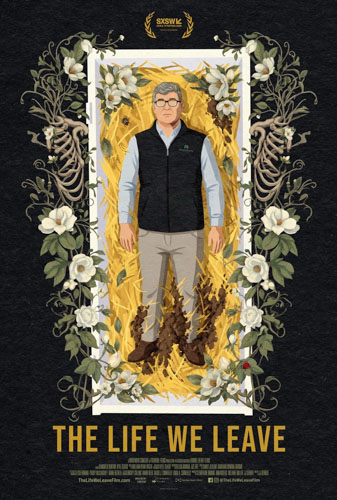
The Life We Leave screened at the 2026 SXSW Film Festival.
"…It is eye-opening and educational."