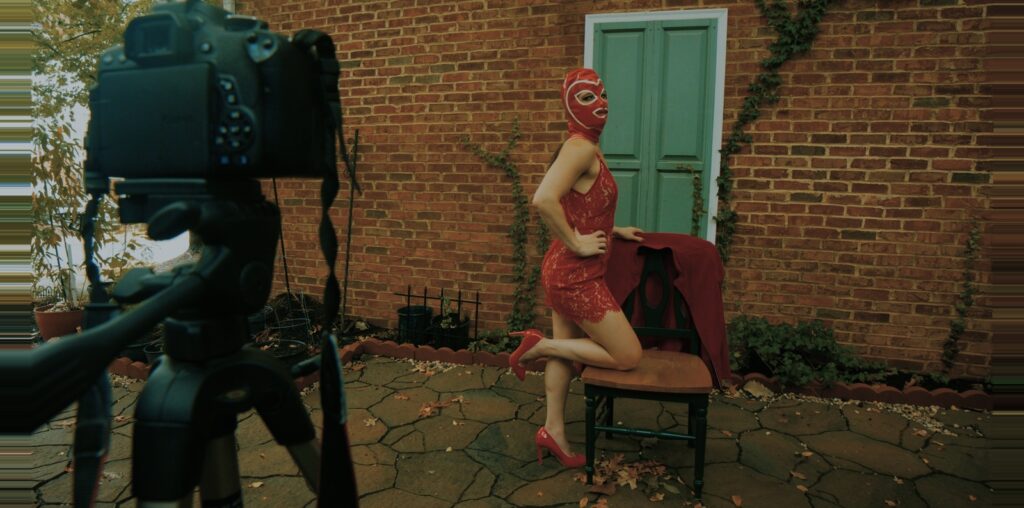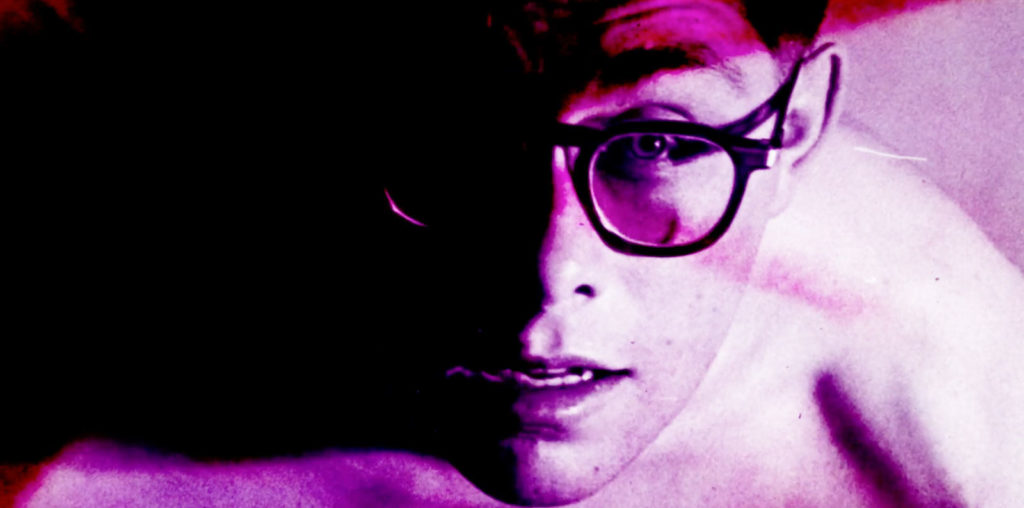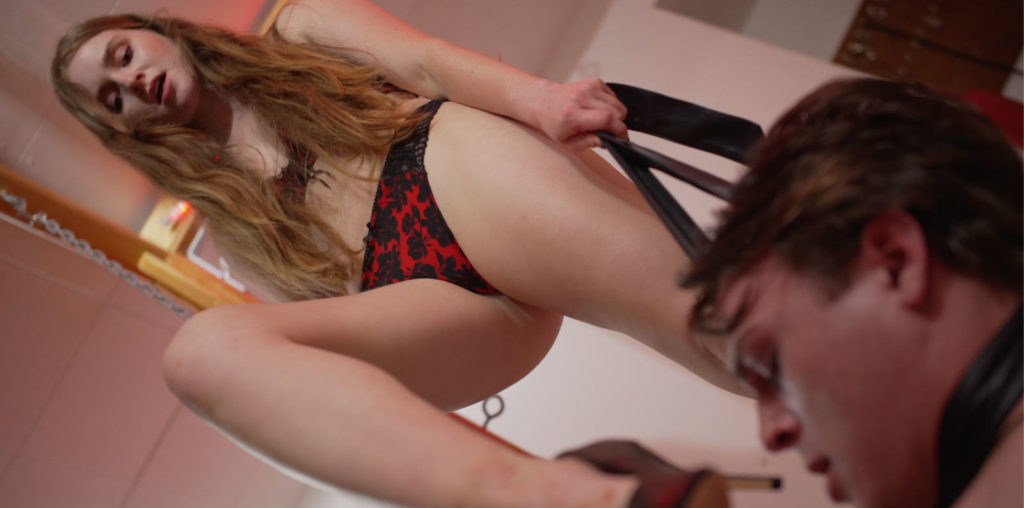
Italian director Loris Di Pasquale’s Punk State is an intense, dark thriller. Seven people have been invited to an exclusive art event. With no details shared, they know only that it is absurdly expensive, exclusive, and promises to be an unforgettable performance that will become a milestone event in their lives.The group is comprised of wealthy and middle class people. One man identifies himself as a white supremacist.
Inside a darkened auditorium, three leather-masked men in black tactical quasi-uniforms await them. They could be police, or they could be part of an unexpected BDSM scene. The group is seated and for an uncomfortable period of time nothing happens. When the white supremacist loudly demands the show begin, it does. As the evening unfolds, the guests learn that they are not the audience, but rather the subjects of the performance. Their deepest conditioning is exploited as the night descends into a violent ritual.
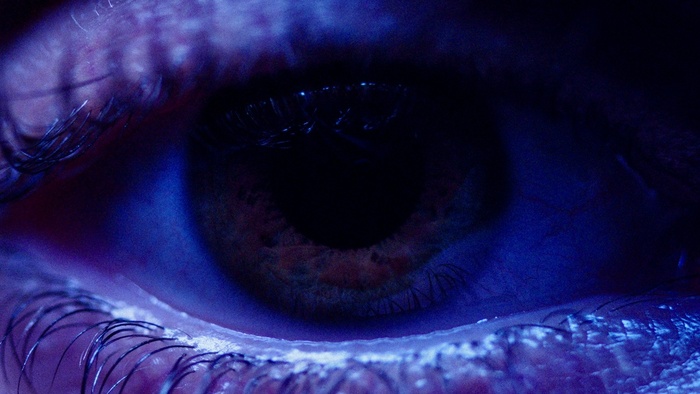
” Seven people become the unwitting subjects of a violent performance art piece …”
The first “act” so to speak is that the white supremacist is beaten mercilessly with night clubs under a blood-red backlit swastika. The “performers” then tell the audience that if they will comply with the demands of the show, one of them will win 100,000 Euros. The shocking acts of violence (many self-inflicted) that unfold are, to say the least, inhumane. But, that is the point of the allegory. In a culture where core moral values are trumped by greed, self-enrichment, and narcissism, schadenfreude is the best entertainment possible. This revelation isn’t exactly news in 2026. We see it daily now, where the unthinkable becomes the norm. To keep this “entertainment” fresh the cruelty must continuously escalate to the next level to sustain the thrill. Cold delight over human torment is a hell of a drug. The establishment of status in such a brutal context is always in the delta between those at the top of the pecking order and those at the bottom. There are no rich without the poor. There are no strong without the weak. There is no power if no one is powerless.
Punk State is experimental cinema that reminds us of the South Korean program Squid Game, with echoes of Passolini’s Salo. There are many points to ponder. Are the participants compelled? Has their freedom been taken away, or have they surrendered it willingly in a Faustian bargain? Why are they looking on passively when others are tortured, or worse complying when they are encouraged to torture others? As for us, the audience watching these events unfold, the conversation about the cinematic experience is complicated. If you enjoy this film are you complicit? If these characters, who were meant to be an audience themselves, are actually players in the psychodrama, then who is the audience? Is it just us?
Pasquale talks about his intent in his director’s statement. “In a culture that disguises its pressures as choices, violence becomes strength, alcohol becomes liberation, cruelty becomes entertainment and silence becomes survival. The film questions these learned patterns, revealing how much of our suffering is not innate, but constructed. Through a visceral and disorienting experience, the viewer is drawn from an apparent normality into a dystopian dimension shaped by disturbing images, sounds and symbolism. The visual and sound experimentation mirrors the characters’ psyche, immersing the audience in a journey of loss and the impossible reclaiming of freedom. Punk State is my act of resistance.”
One wouldn’t go so far as the say a viewer will enjoy this film. At least, no one will who isn’t a psychopath. But it is a crucial, valuable examination of how we can normalize extremes of human evil when it is presented, incentivized, and endorsed by an authority.
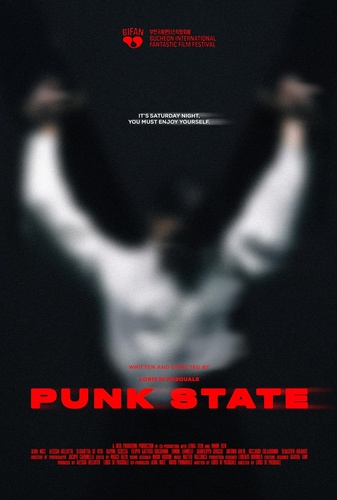
"…An operatic, violent commentary on the current culture..."