
One aspect I did find a little odd, however, was the film’s veterinary clinic sequences. Having spent years doing what a proper owner should do by visiting veterinary clinics, I have become reasonably familiar with the experience, the examinations, the discussions and, occasionally, the rather uncomfortable conversations about diagnoses and treatment. The interactions portrayed here didn’t entirely correspond with my own experiences. I found some of the diagnostic dealings a little unusual. That isn’t to say such situations don’t happen; veterinary experiences vary enormously, and I have no doubt other pet owners may recognize exactly what is portrayed. It simply struck me as something that felt somewhat removed from my own dealings with veterinary professionals.
The film’s 48-hour time frame gives the proceedings an added sense of urgency. There is little room for reflection when the next bill is waiting, the money is disappearing, and the future of a beloved animal remains uncertain. The situation is painfully recognizable, particularly for anyone who has experienced the uncomfortable intersection of financial insecurity and emotional responsibility.
Los Angeles provides an appropriate backdrop. For all its associations with opportunity, creativity, and reinvention, it is also a place where ambition can become an expensive exercise in disappointment. They have, in a sense, lost themselves and their humanity, as reflected in some comments from influential client Sebastian Curry, played ice-cold by Joshua Burge.
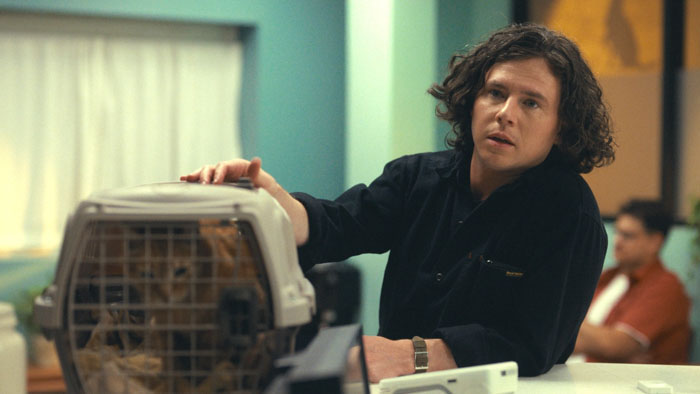
Alex waits at the veterinary clinic with Petunia in her carrier in Petunia.
“The film’s 48-hour time frame gives the proceedings an added sense of urgency.”
What makes the premise interesting is that the film understands how quickly an ordinary financial problem can become an emotional crisis. There is also something refreshing about the decision to make the central conflict relatively ordinary. We are not dealing with extraordinary villains or elaborate cinematic catastrophes. Instead, Petunia finds its drama in everyday indignities: the inability to pay for something important, the humiliation of asking for help, professional disappointment, and the resentment that can develop when two people are struggling in different ways.
Brief alert: I was not able to watch the “Rainbow Bridge” moment, as I have gone through this a few times, and perhaps other pet people will understand its impact, which literally opens both Alex and Lily up to themselves and the world.
Ultimately, Petunia is about the bonds we form with animals, the responsibilities that come with those bonds, and the sacrifices we are willing to make for those who depend on us. Edited with a good, unobtrusive musical score of songs and instrumentals, the cast all seem genuine in all aspects. Charlie McDermott and Vanessa Marano have a good connection on screen and seem aloofly attached to each other in moments. Good moments of dialogue between them in the latter half of the film, as Lily is sitting in an SUV with a glass barrier, which is lovely if not a direct metaphor for what is happening to both of them. Petunia does steal the show in every frame and sound.
For those of us who have been adopted by an animal, there is really no explanation necessary. We already understand. Emma thinks I got it right.
For screening information, visit the Petunia official website.
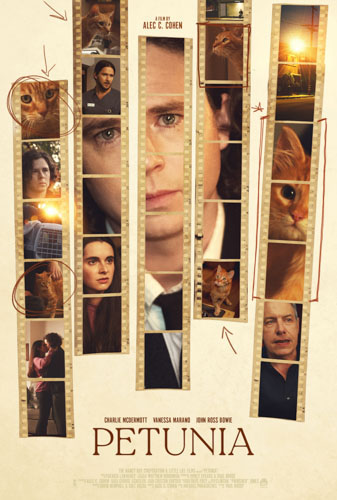
"…Its concerns are human: insecurity, disappointment, commitment and the struggle to hold on to something meaningful when everything else seems to be slipping away. "


