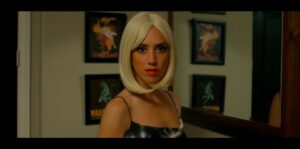
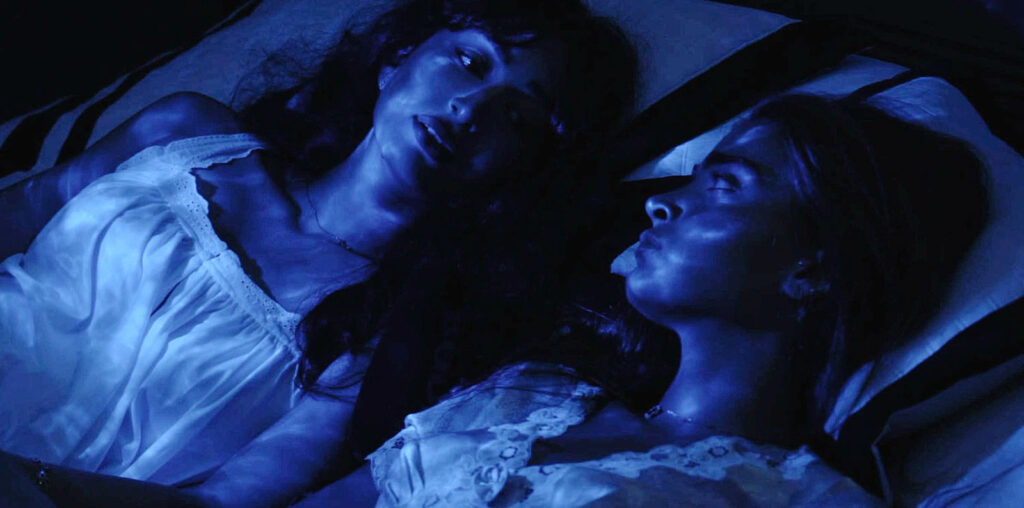
In Indie horror film Mouser, Eleanor (Romina Valenti) is a young woman with schizophrenia who takes prescription drugs to control it. She is coaxed to attend a party by two well meaning friends. The host of the party, Ian (Gavin O’Fearraigh) is engaging and agreeable. She’s aware that her meds are affected by alcohol, but she drinks anyway at the urging of her friends. She passes out and is abandoned at Ian’s house by the ditzy party girls.
While unconscious she begins experiencing vivid encounters with a sinister talking cat named Mouser (Stephen A. Moeller), who wants to control her actions. She sees Mouser in a fractured vision of black and white. Mouser is a human form dressed in black with an outlandish headpiece and furry cat-paw gloves. He’s kind of a cut-rate Pennywise. The low-budget accouterments make the character even more sinister. It is unclear to her, and to the viewer, whether this is a dream, a hallucination, or actual reality. If it is real, it is bizarre in the extreme.
When she wakes, everything is normal again, Ian takes her home and then asks her out. She accepts and they go to dinner together. A strange narration accompanies the dinner, and later Ian plays masked sex games with Eleanor. Life is good. When Ian goes out of town and leaves Eleanor the keys to his opulent home, she again has the unusual dreams, featuring Mouser who is entreating her to obey his nefarious commands. She is not sure at this point if she’s awake, and what is real. Her state is reminiscent of Edgar Allen Poe’s poem asking “Is all that we see or seem but a dream within a dream?”
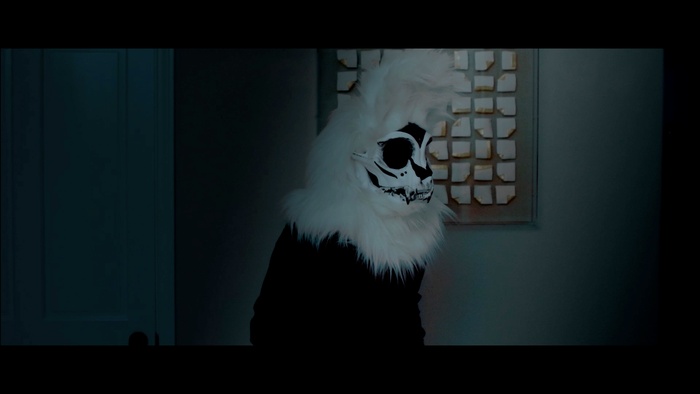
“… an unintentional intoxication that goes wrong …”
Mouser is a great concept in minimal trappings. The performances are adequate, but exaggerated, with a forced, soap-opera amateurish quality. Production values are commensurate with the budget. Locations are suburban homes and offices, instead of movie sets. Generic snippets of music punctuate the segues between scenes to build the mood. The soap-opera melodrama comparison holds throughout the film. A few of the actors employ overly formal, unrecognizable accents.
There are technical issues. The dialogue is too low in the mix. This is a common indie film problem, and a lesson for all budget filmmakers: make sure your dialogue is clear and sharp, and that your incidental music does not overwhelm the actors’ voices. Some of the scenes are shot too dark to see the action. The man-in-suit Mouser character is kitschy, but also deeply weird, so that works as intended, one assumes. Minor flaws aside, Mouser is an effectively creepy mindf**k, a waking nightmare reminder that antipsychotic drugs and alcohol don’t mix.
Breaking Glass Pictures specializes in genre films, usually low to no-budget, and distributes them globally. They provide a friendly home base for Indie filmmakers getting started, or those working with few resources, and have distributed over 500 films. They have made their place in the world of cinema as “passionate advocates for the independent filmmaking community.” What these films, like Mouser, lack in polish and expensive production quality, they make up for in ambition and vision.
Learn more at the official Mouser website.
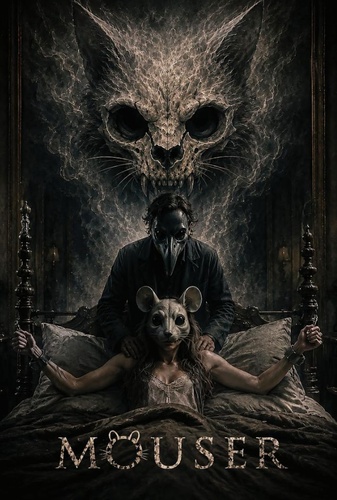
"…A waking reminder that antipsychotic drugs and alcohol don't mix"


This movie was the worst movie the music was so loud you could not hear the voices not to mention they story line is so bad