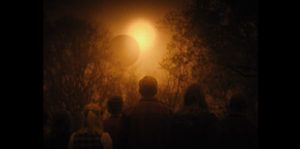
Kaishaku, directed by Harry Locke IV, opens brutally, juxtaposed with a slow song in black and white, and continues to shock from there. The film begins as an anxiety trip. We follow Iris, a mother struggling with her son for acting out in school, while hardly able to afford groceries. With the financial desperation she’s facing, she agrees to become a “spotter” for her friend’s suicide. From there, she becomes tangled in supernatural dark forces that make every day a living nightmare.
The black and white opener immediately grounds us in tragedy before cutting to the present, where colour feels muted and depressing. After the suicide, there’s a strange sense of relief in Iris’s life. For the first time in a long time, she has a bit of money. Not enough to fix much, but enough to breathe. She buys her husband a small gift, grabs a few things for the house, and gets groceries without counting every dollar. The moments are quick and simple, but they feel warm. It’s the first time her home feels calm again, which makes what comes after even harder to watch.
That short stretch of peace makes the shift into horror hit harder. The comfort doesn’t disappear all at once. It slips away piece by piece. A noise from another room. A light that flickers when nothing’s wrong. The house starts to feel too still. The unease grows slowly, twisting the quiet moments into something uneasy. Iris (Stefanie Estes) moves through her world like someone already half-haunted, even before the supernatural begins to take hold. We feel her guilt and desperation through her every move. She is quietly suffering, and Estes plays it with such honesty that it almost doesn’t feel like acting. You believe every bit of fear, every small attempt to keep control as the world around her starts to bend.
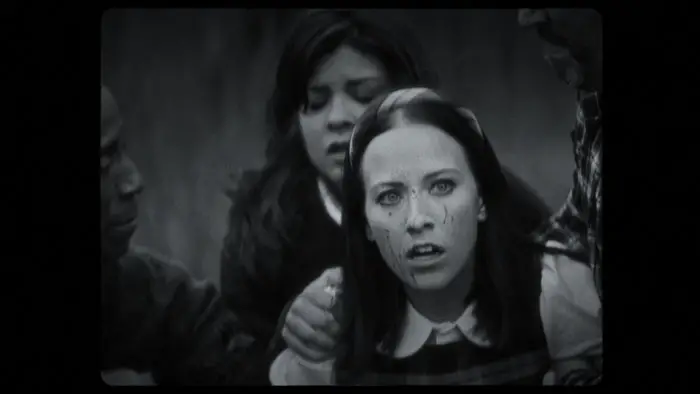
“Dreams start to bleed into her waking life until she can’t tell the difference anymore.”
Bridgette (Alyshia Ochse) brings a heavy presence. She feels cold, almost detached, like she’s already left before the act even happens. The suicide isn’t emotional for her; it’s methodical, something she just needs to get done. There’s no hesitation, no fear, just this calm. That lack of emotion hits harder than any outburst could. It feels real in a way that’s uncomfortable, like watching someone who’s already made peace with disappearing.
As things deepen, Iris begins to sense something she can’t explain. The fear moves into her sleep, her thoughts, her home. Dreams start to bleed into her waking life until she can’t tell the difference anymore. One night, she hears a TV murmuring about an old ritual meant to ease pain, a kaishaku. The word hangs in the air like a warning. The idea of endless suffering settles in, and the film starts to feel like a countdown she cannot stop.
Kaishaku finds its fear in the quiet. It moves slowly, heavy with guilt and grief, showing how easily a normal life can start to feel cursed. It is the kind of story that sticks to you after it ends, hard to shake and harder to forget.

"…finds its fear in the quiet."


What an emotional thriller, this movie was absolutely amazing. Great acting the movie. Had you at the edge of your seat. As a mom who has struggled who would do anything to provide for her family this movie head home. I’m not one for thriller movies, but this one was great. A must see. I really hope to see this movie though a lot further because more people need to see it. Thumbs up to the directors for a great movie.