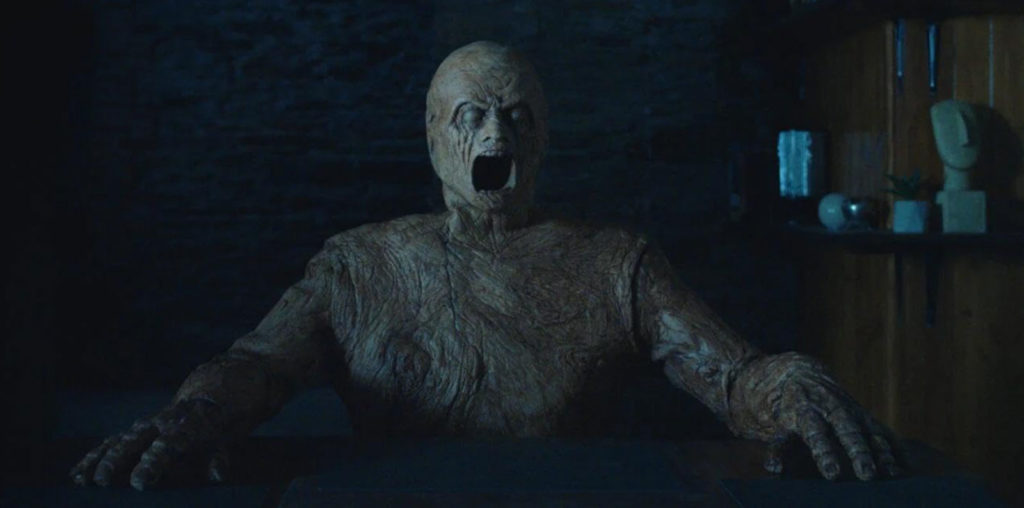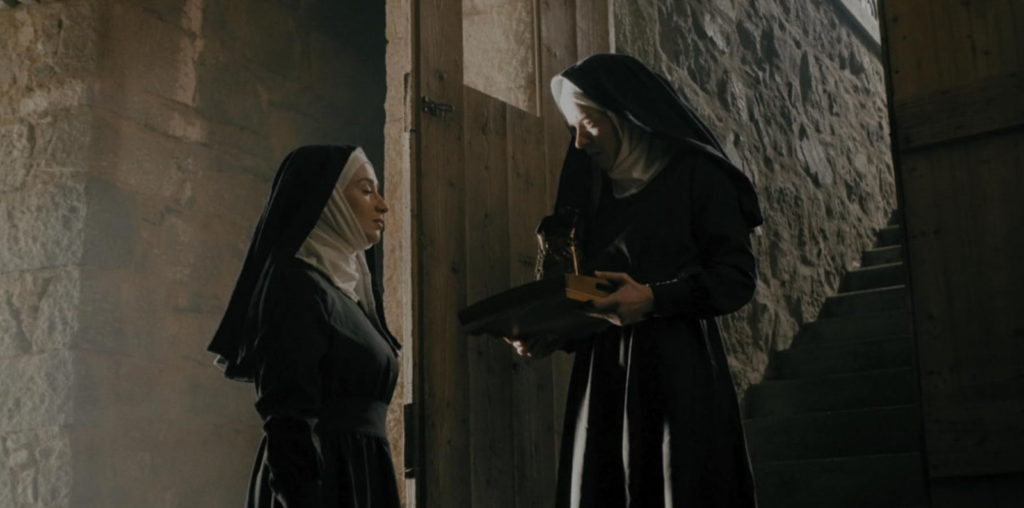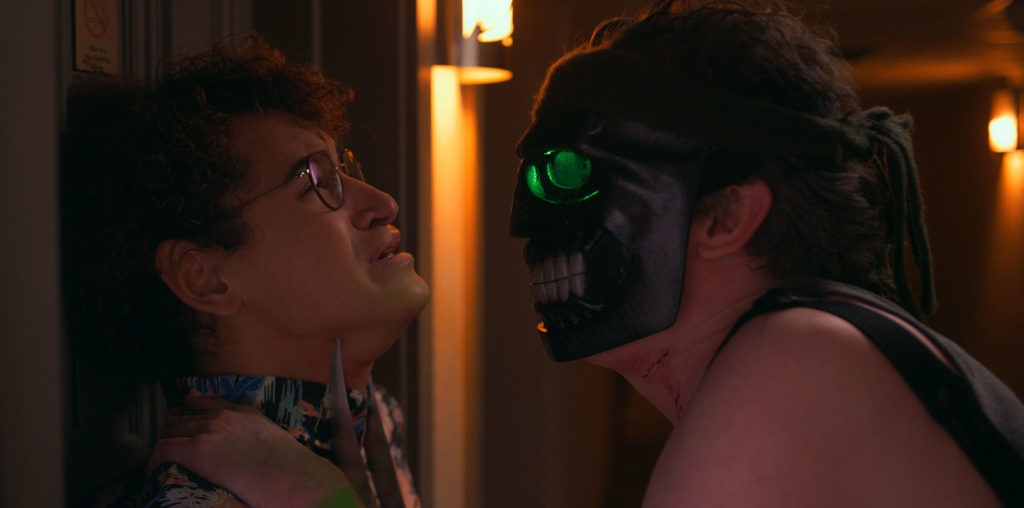
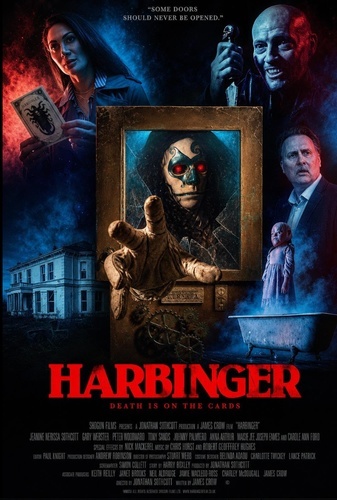
Lots of films are called by the same title, so now you add James Crow’s Harbinger, which is part of the recent revival of British independent horror, consciously embracing the traditions established by Hammer Films, Tyburn and Amicus Productions while staying away from established monsters. A harkening back to video nasties in a very tame way as they introduce grisly, original supernatural villains
Written by Simon Cluett and produced by Shogun Films, a family-owned independent company, the film has elements of Amicus’s run of Anthology films, with an evil machine becoming central as members of the film crew receive their fate cards. Meet a “Zoltar“- style fortune-telling machine possessed by the spirit of a serial killer seeking resurrection and revenge.
The picture does not rely on excessive digital effects or relentless jump scares. The work allows the story to develop through careful lighting, unsettling interiors, and practical effects in the haunted setting where the murders shown in a prologue happen. This approach firmly places Harbinger within the lineage where atmosphere often proved more frightening than spectacle.
The ensemble cast further reinforces this connection with British genre history. Carole Ann Ford, forever associated with Doctor Who, was in the role of granddaughter Susan to the First Doctor played by William Hartnell, and is joined by Gary Webster, Jeanine Sothcott, Peter Woodward, and Tony Sands. Carol Ann Ford’s best remark in her small screen time will cause some Dr Who fans to snicker when she refers to ‘Getting delivery of a box’. The box being, of course, the TARDIS, which is still flying around.
The cast tries to be in the spirit of the exploitation horror or B-picture of yesteryear, with performances that are committed and refreshingly sincere, avoiding many of the pitfalls of today’s modern stories that then try to justify everything on society, mental illness, a bad parent, or some other force. This is no David Lean-like shots of blowing trees and creaking soundtrack asking the audience to fill in the gaps only to jump at you through those gaps to scare. Harbinger simply is what this style should be.
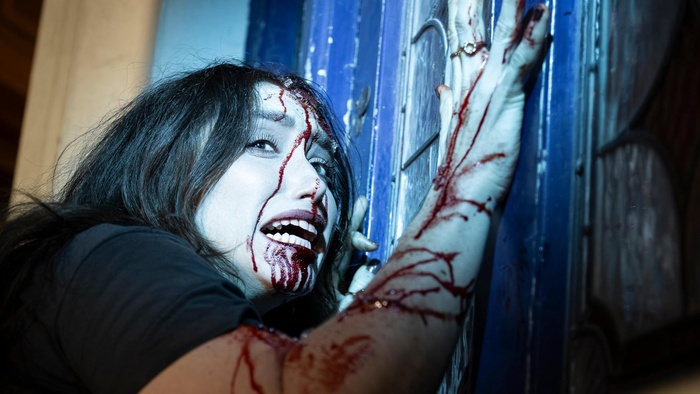
“… Julia is the sole survivor of a late serial killer …”
Julia, played by Jeanine Nerissa Sothcott, is the sole survivor of a late serial killer and her husband, Henry Decker (Peter Woodward), is lured back to the house she shared with him for a ghost hunting TV show. Hosted by Mike (Gary Webster), the film crew features the cool camera guy Barney (Joseph Emms), who has slept with the sound person April (Masie Gee) and with the makeup person Kathryn (Anna Arthur), Neal the obnoxious co-host (Tony Sands), plus the psychic expert Chris (Johnny Palmiero) who sounds like a young Michael Caine. They all battle within the house in the evening as doors lock, as a seance happens and the spirit begins the seeking of ‘Six delicious souls’ for an evil purpose of survival. Leaps of logic aside, which are apparent in this genre since it was created, are simply for entertainment
Harbinger also evokes another, grittier branch of British horror history, one represented by producer Tony Tenser and director Pete Walker. Walker’s exploitation films transplanted horror into contemporary Britain, exposing the anxieties lurking beneath seemingly respectable society. Films such as Frightmare, House of Whipcord, Schizo, and The Comeback used sensational violence not merely for shock but as pointed social commentary, in this case, trusting women in relationships.
The influence of Tony Tenser is equally apparent. As co-founder of Tigon British Film Productions, Tenser championed low-budget horror that emphasized atmosphere, sensationalism, and provocative subject matter over lavish production values.
The picture is also like Luigi Cozzi’s Paganini Horror. Both films embrace supernatural mythology with a lonely estate through distinctive cursed objects like a necklace while combining isolation, mystery, and escalating dread. There is a shared willingness to present bizarre concepts without apology, trusting audiences to enjoy imaginative horror that refuses to be constrained by realism.
The atmosphere also recalls Pupi Avati’s The House with Laughing Windows. Like Avati’s masterpiece, it favours slow-building psychological unease over constant graphic violence and saturated Giallo colours. Perhaps the most direct modern comparison is Halloween: Resurrection. That film placed a documentary crew inside the Myers house, broadcasting live as entertainment before discovering genuine evil.
Harbinger succeeds to a point because it understands that horror is most effective when rooted in basic atmosphere, character, and cultural memory. It honours Pete Walker’s darker social anxieties about the past corrupting the present and embraces Tony Tenser’s exploitation philosophy of delivering imaginative genre cinema on modest means. For admirers of B-picture and “Soho’ style British horror, Harbinger is an engaging reminder that the country’s rich genre traditions remain very much alive.
"…consciously embracing the traditions established by Hammer Films, Tyburn and Amicus Productions"