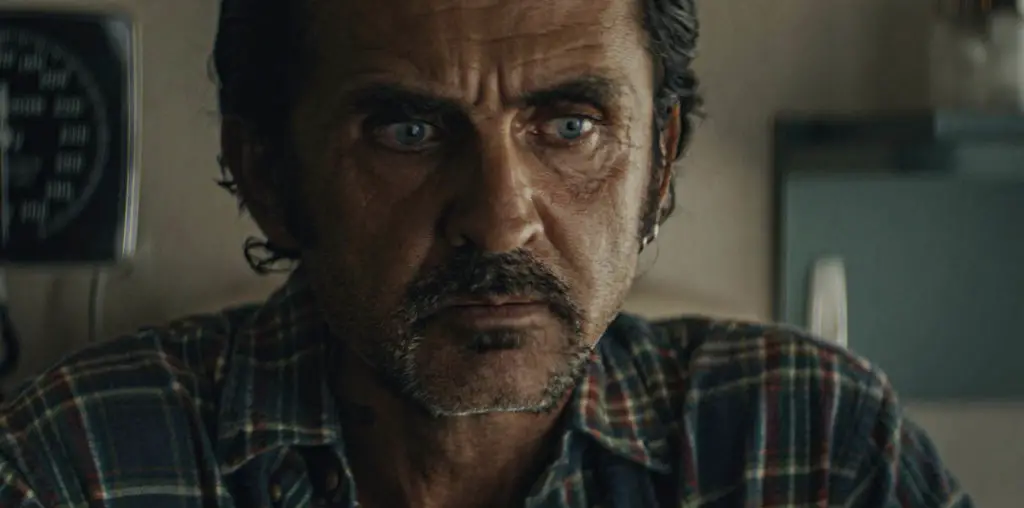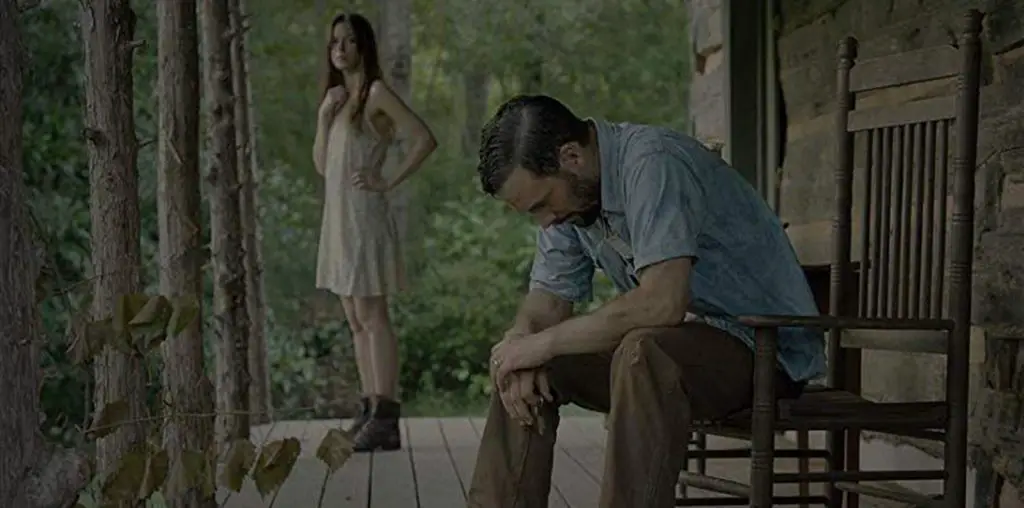
Director Bartul Marušić’s FILICIDE: A Means of Revenge Against a Partner takes on one of the most disturbing and least examined crimes in the modern world — the killing of one’s own children as an act of revenge against a former partner. It is a subject that most people instinctively turn away from, yet Marušić confronts it head-on, using personal testimony and global case studies to force the conversation into the open.
The documentary opens with a man walking into an office building, the air conditioning broken, the heat immediately setting a tone of discomfort. He is Bartul Marušić (director), an unemployed lawyer and member of an indie cinema club who has come to be part of the film. Before the interview begins, the production team asks him directly whether he has ever been convicted of a crime. Then Bartul opens up about his own marriage, recounting the moment his wife told him she wanted a divorce. His story, personal and raw, becomes the human anchor of a documentary that quickly widens its lens to something far darker.
From Bartul’s story, the film shifts to a case that cuts to the core of its subject, citing example after example of the tragic crime of filicide. A father murdered his children and then took his own life by hanging. The killing was not random. It was calculated revenge against his ex-wife. The collapse of a marriage is only one of many reasons people turn to filicide—the financial ruin of a failed business, the isolation of the COVID pandemic—all of it converged into a breaking point with no return. The documentary draws a line between this modern tragedy and the ancient myth of Medea, the story of a mother who destroys her own children to devastate the man who betrayed her. That ancient impulse, the film argues, is alive and global. The documentary goes on to profile the Susan Smith case, the American mother whose case became one of the most widely known examples of revenge filicide, sentenced to fifteen years per child.

“…draws a line between this modern tragedy and the ancient myth of Medea, the story of a mother who destroys her own children to devastate the man who betrayed her.”
The film then turns to the psychological and scientific machinery behind these acts. Experts discuss the battle between ego and superego, and whether damage to the frontal cortex plays a role in stripping away the capacity for rational thought. Men and women commit revenge filicide in roughly equal numbers, the documentary explains, but the patterns are starkly different. Men tend to act in bursts of raw emotion with no thought toward what comes next, while women are far more premeditative. In both cases, children become objects — victims of projection rather than people to be protected. The film points out that many who commit these acts believe, in their fractured state, that they are shielding their children from a worse fate. Nearly all show signs of suicidal ideation before carrying out what they’ve done.
The most haunting statistic is that there really is no profile. As this documentary comes to us from Croatia, filicide is not bound by borders. Nor is it bound by gender, class, or upbringing. In most cases, the common feelings are anger, betrayal, and jealousy. There is no villain or profile, but there are warning signs, the primary of which is suicidal ideation.
It’s always interesting to me to watch documentaries from other countries, as in this case…Croatia. Certainly, there are too many cases of filicide in the U.S. to make your head spin and heartbreak. Sometimes it is difficult to trust the common use of agenda-based facts and research, and watching a subject that could have been easily made from the states gives a fresh perspective on the subject. It was also interesting to open the film with the ground rules for the documentary, as it makes clear what director Bartul Marušić can say and do, and what kinds of testimony he can get from others.
As a foreign language film, I watched it with subtitles throughout. Marušić’s film requires a great deal of concentration for English audiences. I’ll admit it was a struggle to keep up, as it is easy to miss some key information. The documentary looks like it was made with very little money, while cramming a lot of information from a large community of survivors willing to talk. But what is important is that the information given felt balanced and comprehensive to a degree.
FILICIDE: A Means of Revenge Against a Partner is not an easy film to sit with, but it is an important one. Director Bartul Marušić has made something that lingers long after the subtitles stop scrolling — a quiet alarm bell for a crime the world has not yet figured out how to stop.
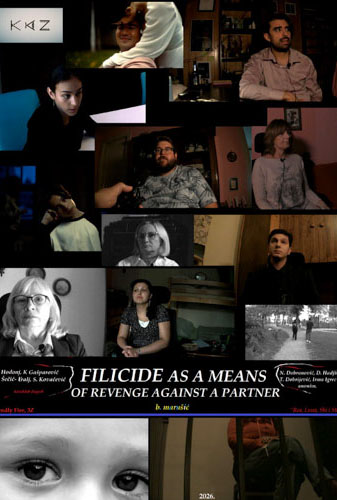
"…The most haunting statistic is that there really is no profile."