Candlewood is director Myke Furhman’s feature-length debut. Furhman wrote the screenplay with Victoria Flores-Argue, from a story by Joseph Patrick Conroy. The story follows Wall Street heavy-hitter Kevin (Joel Bryant), his wife, Veronica (Lisann Valentin), and their kids, 17-year-old Sarah (Isabel Lysiak) and the younger Matteo (Coulter Ibanez). Veronica suffers from PTSD, among other issues, ever since she was assaulted in New York City. In hopes that a change of scenery will help, the family moves from the Big Apple to the secluded countryside of New Milford, Connecticut.
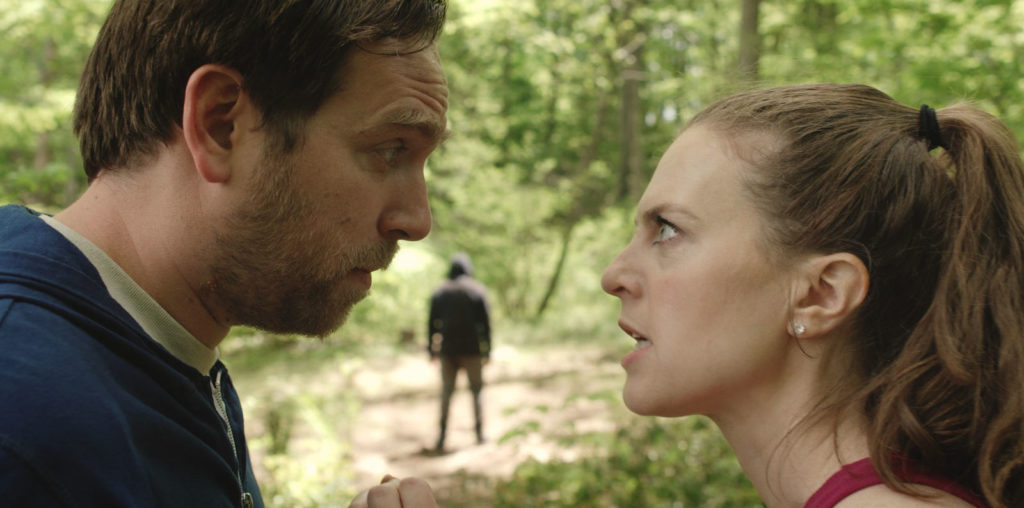
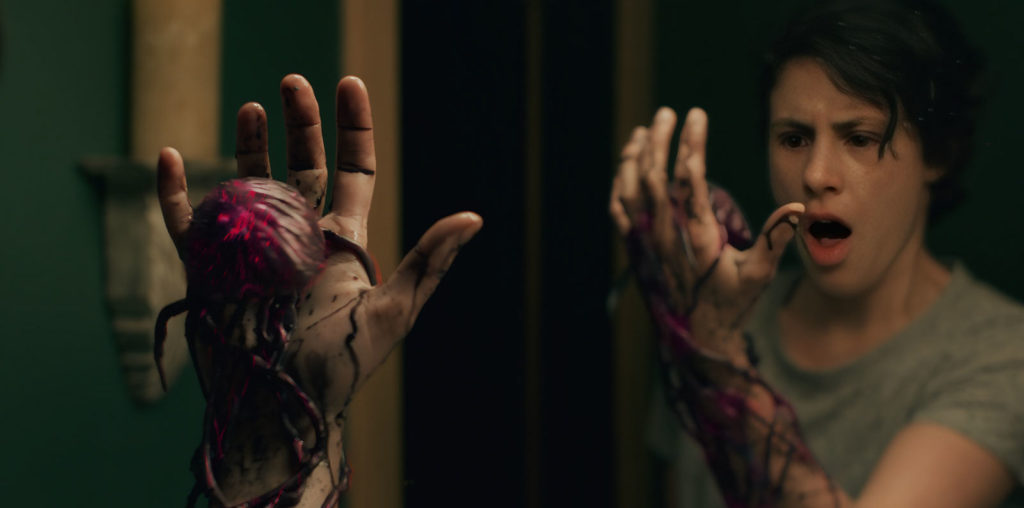
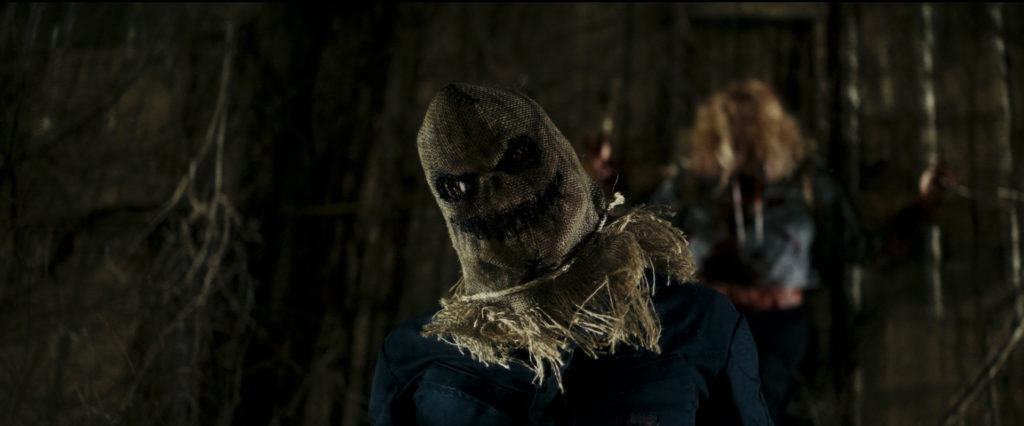
Specifically, they move into Candlewood Hills, a luxurious home nestled in the forest. Sarah is very frustrated at having to uproot her life and leave her girlfriend just because her stepmother is having problems. But she and her dad have a close bond, and both are trying to make the best of it. Unfortunately, very shortly after settling in, Kevin, Veronica, Sarah, and Matteo begin to see and hear things that no one else can. Sarah sees Matteo sucking on an eyeball while the visage of the local urban legend haunts him. Kevin swears that the property manager, Eli (Jeffrey Alan Solomon), is spying on them at night, while jealousy seems to take hold of Veronica in the ugliest of ways. What is causing these hallucinations, and will the family be able to return to reality before tragedy befalls each of them?

A quiet moment overlooking Candlewood Lake before the horror begins.
“…very shortly after settling in, Kevin, Veronica, Sarah, and Matteo begin to see and hear things that no one else can.”
Candlewood fails to offer up a satisfying “why.” The “what” is not too hard to piece together for eagle-eyed viewers, but the why is never properly addressed. This causes all watching to be left with a meh feeling at the end. All the build-up leads to… to very little of substance. It is too bad, as said build-up is genuinely excellent. To avoid spoilers as much as possible, this is all that will be said about the “why” and the ending.
To start the positive side of things, let’s highlight the best element of the film: tension. Furhman excels at wringing out a sense of mystery and dread in every scene that requires it (so every scene past the 15-minute mark, give or take). The family members’ reactions to each other’s freak-outs are all believable, further cementing both the love and the dysfunction the main characters share. But it is their reactions to their freak-outs that make everything that transpires completely plausible. It feels real, which makes everything all the more taut.

"…should Furhman direct another film, I will be first in line to watch it..."