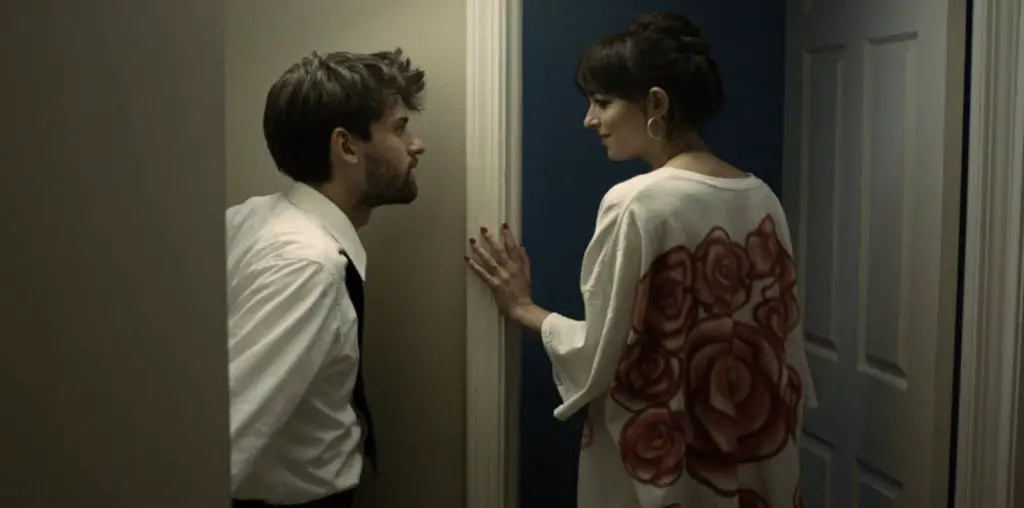
That went double when the shot included the outstanding production design by Eve Martin, with the camera lovingly going over all the details of Noemie Delrieu’s set decorations. I am a big fan of steer skull imagery, and this film works those bone arrangements full throttle to almost surreal heights. The action is caught with swooping kinetic style, which editor Clemence Diard slices and sets up with a speedy expertise.
And flying over it all is the magnificent score by Yan Wagner, filling your ears and squeezing your heart all the way. This movie is well-made down to the teeth.
What blasts Animale through the barbed wire fence that has held horror back for decades is how she worked the real-life horror subtext into the supernatural main text of the narrative. Traditional horror movies would have two layers, one on the surface that had a bunch of boogie monsters running around, with a deeper layer that contains the themes that are being symbolically explored.
“This is as good as it gets and so is Animale.”
The original Cat People is a good example, with the modern wonder It Follows being an even better one. However, Benestan draws back the symbolism curtain and brings the real-life horror up from the cellar to bleed along with the supernatural aspects. This means everyone knows what something really means every time, because it isn’t an exclusive puzzle that requires special glasses.
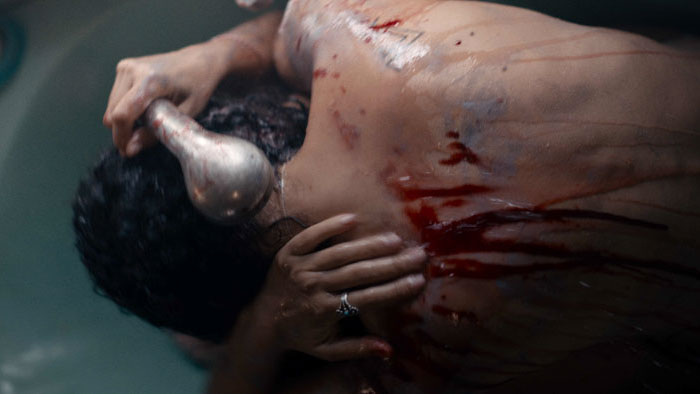
Animale also takes its premise and goes beyond its satisfaction with it. Not to beat a dead night horse, but all my disappointment in the failure of Nightbitch to deliver on its concept was avenged by how well Animale fulfills a similar set-up. And unlike that howler, we actually get a transformation scene, a really good one that means as much as it looks, symbolism-wise.
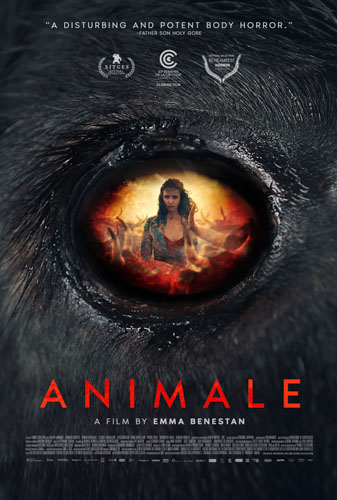
Animale is the new state-of-the-art for high-end horror. It will have genre fans and art house aficionados weeping black tears of joy worldwide.
"… high cinematic art painted with the bloody brush of horror."