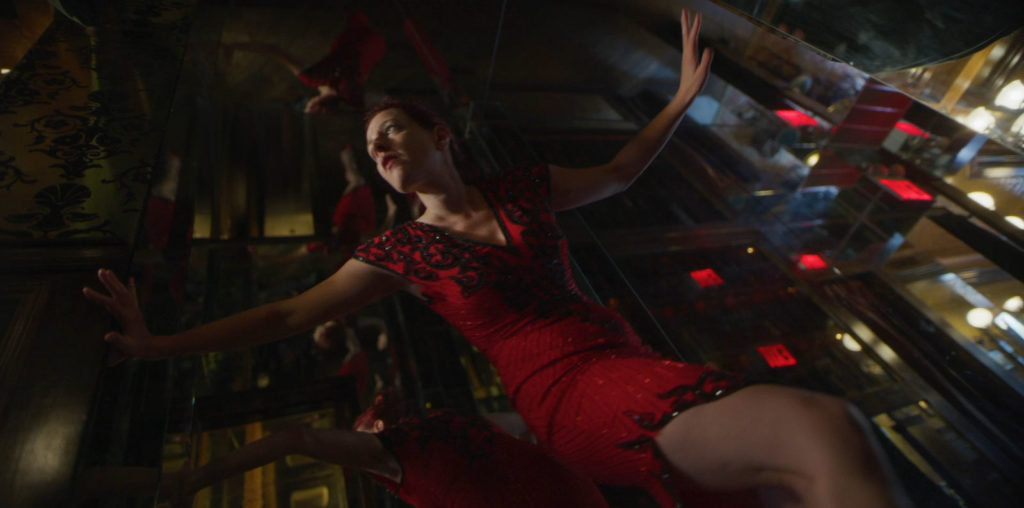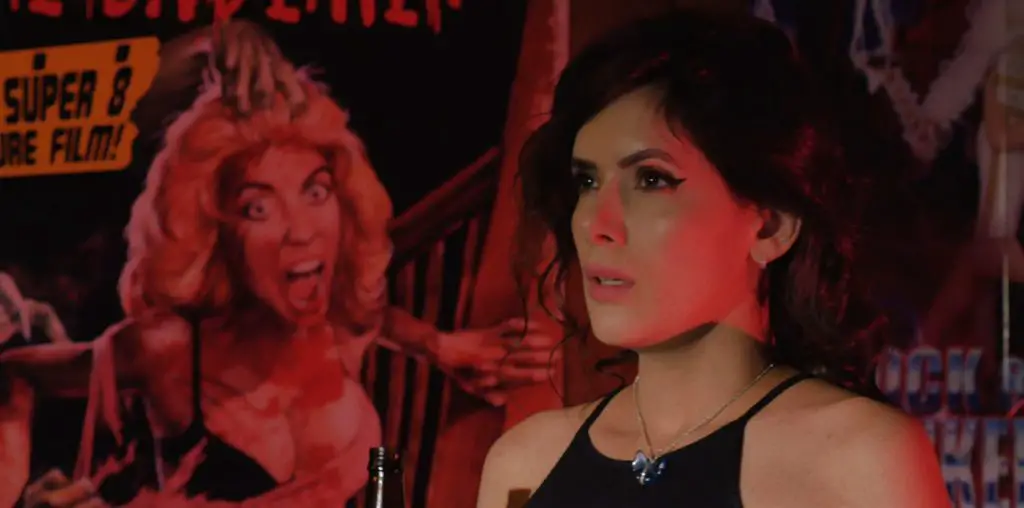
Writer-director Daniel John Peters’ A Maze in Truth opens with a simple question: What if the life you’re living isn’t your first? What if someone out there knows who you really are, and they’re coming for you?
Beth (Milly Mattison-Nottage) is just a young woman living her life. She and her best friend Sarah (Julie Harrop) spend their days scrolling through social media, crashing at the flat Beth’s mother helps her pay for, and planning dinner out. Nothing unusual except Beth keeps getting dizzy spells she can’t explain. Even weirder, wherever the pair goes, they notice a man following them everywhere…watching from a distance.
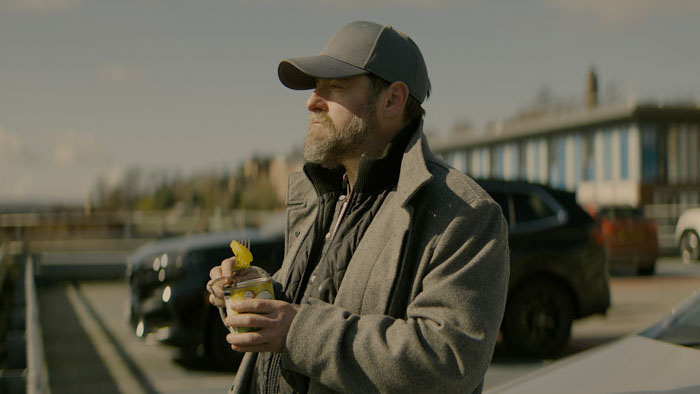
That man is Jake (Andrew McGillan), and he’s got his own strange routine. He eats canned pineapple in a parking garage and records voice memos to himself, logging whether his memory is holding up and whether the pineapple is safe to eat. He notes he is one day past his “original life.” By coincidence, Jake runs into Beth at the bus stop; he doesn’t threaten her, but he just knows things about her that he shouldn’t. He knows who she used to be. Back at Beth’s flat, Jake explains to Beth and Sarah that the Beth he knew died nineteen years ago from an allergic reaction to pineapple. He recognized her on social media and came looking.
Beth’s mother has been sitting on a bag of old photos and Blockbuster tapes, and the mail just brought a leaflet that reads “Just Say No to Clones.” Jake explains that she is a clone like Dolly the sheep, grown from the original Beth, who choked on a slice of pizza in a crazy accident nineteen years ago. Having trouble processing…everything…Beth tries to make sense of what she is. Jake is quietly falling apart, having never known his deceased wife had been cloned.
“She lived a full life before she died, including one with Jake, and her clone has been living a new one without knowing any of it.”
I love where A Maze in Truth is going and can’t wait to see what happens in later episodes. I’ll give my minor nitpick. The opening of episode one drags a bit. I’m not exactly the audience interested in the lives of older teen girls obsessed with Snapchat filters. Openings like this risk losing cold viewers before they discover the treasure to come. Just an opinion. By the end of episode one, we know this is going to be an intriguing sci-fi adventure.
That second episode is where A Maze in Truth really locks in. The dynamic between Jake, Beth, and Sarah starts to carry real weight once the big reveal lands. Beth is a clone. She lived a full life before she died, including one with Jake, and her clone has been living a new one without knowing any of it. The way the show plays with those relationships is brilliantly conceived. It’s sci-fi with a human core, and episode two gets it right.
This is what sci-fi is meant to do. Take an idea like cloning and explore the human ramifications. Our cast delivers these great, grounded performances. It feels like they are just normal, everyday people who find out one of them is a clone. It literally asks, “What if your best friend were a clone, and both of you just found out?” This is why low-budget productions can tell better stories than big studio films and television. Filmmaker Daniel John Peters has built something surprising here, and it only gets more intriguing the deeper it goes.
For more information, visit the A Maze in Truth official Instagram page.
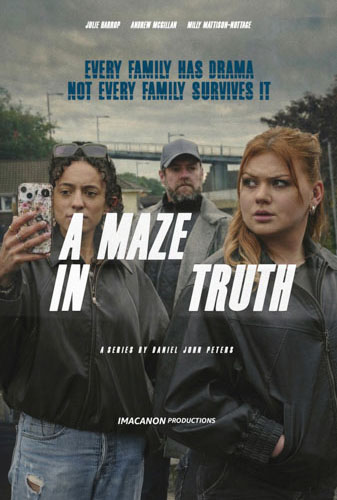
"…What if your best friend were a clone?"