This year’s TCM Classic Film Festival brought a heavy roster of iconic classics with its theme, “The World Comes to Hollywood.” Robert Redford was given a celebratory tribute with a screening of Barefoot in the Park at the TCL Chinese Theatre IMAX. Famous songwriter and actor, Paul Williams, was given recognition with his work on major films, such as The Muppet Movie and Ishtar. I saw a number of incredible films over the course of three days.
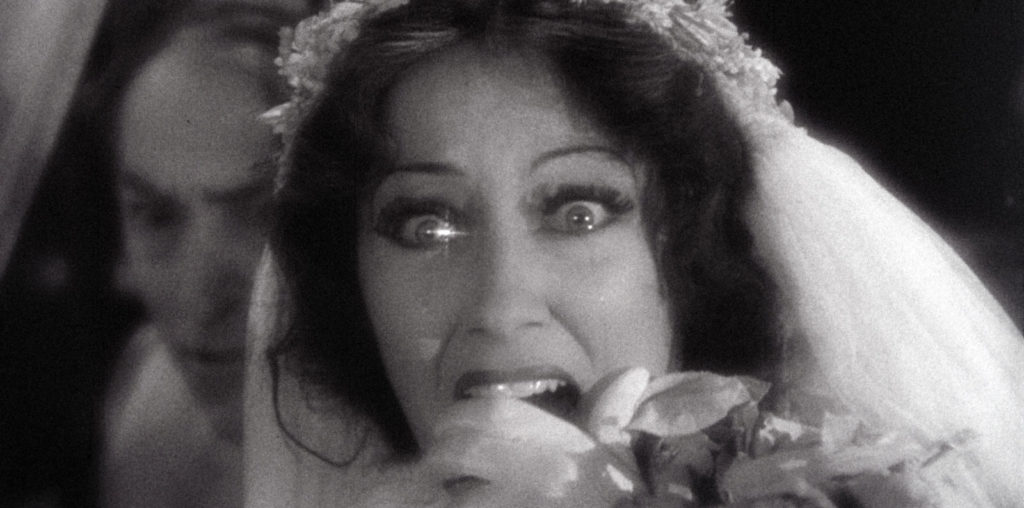
Friday was jam-packed with imaginative comedies and a rarity. Letty Lynton (1932) was a major screening at the festival. It was such a bonanza with lines extending out to the Walk of Fame. This was a classy Pre-Code film that had been out of circulation for decades due to an infamous lawsuit. Thanks to Joan Crawford’s grandson, Casey LaLonde, and the amazing team at Warner Archive’s brilliant restoration work, this film felt fresh and honest. It captures the magic of producer Irving Thalberg’s masterwork at MGM in the early 1930s. The film has everything from Adrian’s sleek costume design to Oliver T. Marsh’s sparkling cinematography. Director Clarence Brown created many well-composed shots through picturesque framing, including a photogenic use of Crawford’s coat as a piece of blocking. Character actress May Robson stole the film as Letty Lynton’s mother!
I got a delightful dose of slapstick comedy, frothy musical numbers, and gorgeous Technicolor in Money From Home (1953). The film was a joint restoration effort by the 3D Film Archive and Paramount Pictures. Its restoration was done over the course of two years because 3D films have more reels than a standard film, not to mention it had the meticulous 3-strip Technicolor process added on to it. This Dean Martin and Jerry Lewis comedy was based on a story by the noted author of gangster/crime fiction, Damon Runyon. Edith Head’s costume design stood out in this heightened version of the Roaring Twenties. Martin and Lewis played to each other’s strengths, especially in a sequence involving lip synching to a radio. The larger-than-life comedy worked well within the 3-Dimensional medium! Producer Hal Wallis’ smart decision to focus on immersion and avoid gimmicky gags (ex. throwing objects at the audience) made for an enjoyable viewing experience. The film was preceded by Lumber-Jack Rabbit (1953), a whimsical Looney Tunes short featuring Bugs Bunny getting into hijinks in Paul Bunyan’s garden.

HOLLYWOOD, CALIFORNIA – MAY 03: (L-R) TCM Host Ben Mankiewicz and Paul Williams speak onstage at “A Conversation with Paul Williams” during the 2026 TCM Classic Film Festival at The Hollywood Roosevelt on May 03, 2026 in Hollywood, California. (Photo by Emma McIntyre/Getty Images for TCM)
“Famous songwriter and actor, Paul Williams, was given recognition with his work on major films, such as The Muppet Movie and Ishtar.”
Carole Lombard and Fred MacMurray star in The Princess Comes Across (1936), a romantic comedy blended with a murder mystery plot. Notably, Carole Lombard fought for MacMurray during his time at Paramount and demanded that he be paid more. He paid tribute to her by naming one of his daughters after her, as described by Katie MacMurray, his eldest daughter. It has the tone of a witty Astaire and Rogers musical, and this is due to Lombard and MacMurray’s playful repartee. The film is strengthened by its amazing supporting cast, consisting of Porter Hall, Sig Ruman, and George Barbier, among others. William Frawley, best known for playing Fred Mertz on I Love Lucy, has a fantastic supporting role and keeps the pace snappy with his one-liners.
Saturday was an eclectic mix of a B-movie, a melodrama from a notable auteur, and a workplace comedy ahead of its time. The day began with a delightful B-movie musical-comedy, The Bamboo Blonde (1946). This film was the 10th B-film in Anthony Mann’s early years as a director. Notably, it was made during the height of the film star’s popularity, Frances Langford. RKO contract player Jane Greer is a stand-out as the rival love interest. She brings a sassy “mean girl” energy, while looking glamorous in gowns by Renie. Langford is an underrated talent during Hollywood’s Golden Age, and Mann’s film is an excellent showcase of her dramatic and vocal talent. The humor throughout has a Tex Avery-style energy. It is worth rediscovering!
Notable auteur and director Douglas Sirk delivers a tightly plotted melodrama in There’s Always Tomorrow (1956). This was a remake of a film previously made in 1934. Barbara Stanwyck had a ton of say in the film’s production, including final cut approval. Russel Metty’s atmospheric cinematography and Sirk’s cage motif add to the delicate performances. Thematically, it tackles hot-button issues: the never-ending debate on whether a woman should be career-minded or a housewife. These concepts are delivered in a thoughtful way with multiple perspectives. While the film deals with an affair as the center of its plot, Sirk treats it with a deep internal understanding and does not cater to a scolding tone often seen during Production Code enforcement. It was also wonderful to hear Gigi Perreau’s reflections on the film, and she appreciated Sirk’s patience with his approach to directing actors and actresses.