
Filmmaker and social entrepreneur Valerio Zanoli turns his camera on five unhoused individuals living on the streets and underground tunnels of Las Vegas in Homeless, a documentary that seeks to restore dignity and visibility to people too often rendered invisible by society. Zanoli sat down with Film Threat to talk about his approach to humanizing a crisis, the challenges of filming in extreme conditions, and why he believes empathy — not statistics — is the only real path to change.
What inspired you to create Homeless and focus on this issue?
Homeless people often become invisible because they live in the shadows and are not given a voice. By making the documentary Homeless, I wanted to change that. I chose to focus on five unhoused individuals, giving them the opportunity to speak, be heard, and be truly seen. I looked them in the eye through the camera lens, and I made sure their stories were told with dignity. I even brought one of them with me to the film’s premiere at the World Urban Forum, organized by the United Nations Human Settlements Programme, and I invited him to speak on stage — so his voice could reach far beyond the streets where it began.
Homeless is a natural extension of two initiatives I deeply care about: Let’s Make a Difference and Helping Vegas. The first brings together the socially conscious films I’ve directed, while the second promotes direct action to provide affordable housing and raise awareness about homelessness. Since 2014, through my company, I’ve helped house approximately 2,000 low-income and homeless families. I’ve opened doors to people who are often turned away elsewhere — those facing challenges like past evictions or credit issues. Many are referred by organizations such as Clark County Social Services and The Salvation Army, and include veterans, elderly individuals, and people from vulnerable communities. Working closely with dedicated case managers — whose commitment I deeply admire — I’ve had the chance not only to support these individuals but also to get to know them and understand their daily realities. This personal connection is what ultimately inspired Homeless. Bringing together my experience in cinema and real estate felt like a natural step — one that allowed me to shed light on an urgent issue in a meaningful way. I’m proud to have used my work as a filmmaker to allow people to be seen, heard, and given a chance at a better future.
What do you hope audiences take away after watching Homeless?
I produced and directed Homeless with the goal and dream of humanizing unhoused people and showing that each of us can — and should — make a difference. Through this film, I strive to foster empathy and understanding, while also challenging viewers to reconsider how homelessness is perceived and addressed. Homeless gives visibility to those who are so often rendered invisible in everyday life. Homelessness is not just a social condition — it is a lived reality that too frequently exists out of sight and, as a result, out of mind. When people are not seen, their struggles risk being reduced to statistics rather than understood as human experiences. That invisibility can deepen isolation and foster a sense of being forgotten by society.
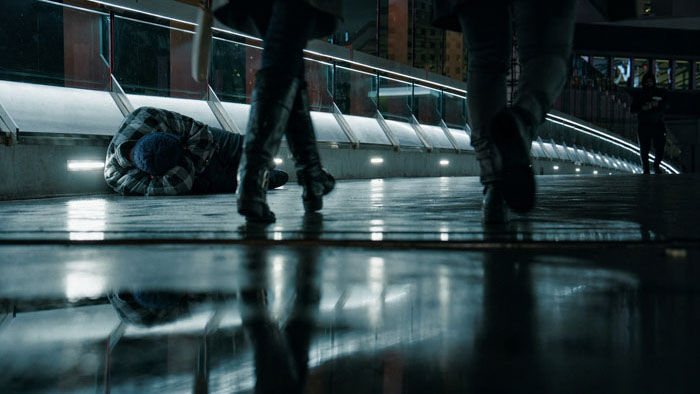
“Homeless people often become invisible because they live in the shadows.”
Homeless intends to bring these stories back into view in a direct and honest way, not as abstract issues but as real lives with names, faces, histories, and emotions. Giving visibility is not just about representation — it is about recognition. It is about restoring dignity and reminding audiences that behind every situation of homelessness, there is a person whose life matters. At a time when this issue is becoming increasingly urgent in many cities, I believe it is especially important to keep it present in public awareness. Visibility is the first step toward empathy, and empathy is what ultimately makes understanding — and meaningful change — possible.
I truly hope that audiences will keep in their hearts an important concept I reinforce throughout the documentary: we are all part of the same community, and therefore we share a responsibility to care for one another. As one participant in Homeless says, “There is no us and them: there’s only we.” My desire is for the film to spark action — both big and small — by reminding everyone that we can trigger transformation. You could ask an unhoused person if there is anything you can do. If you feel uncomfortable donating cash, you can donate a meal, a blanket, or even just a bottle of water. In the United States, excessive heat causes approximately 1,500 deaths every year. Simple acts of kindness, such as looking at homeless people in the eye and smiling, can have a positive impact on their day — and life. This doesn’t apply only to homeless people, but also to those who are elderly, ill, or alone. Thinking of it, it applies to everybody. We are all human, and we are all in this together.
How did you approach the visual style of Homeless to balance realism with cinematic storytelling?
The visual approach to Homeless was rooted in showing people with dignity and realism while still creating a compelling cinematic experience. This choice influenced both the technical and stylistic decisions — such as shooting in 8K with two RED cameras and a full set of prime lenses to capture high-quality, detailed content. From the start, the goal was to depict every individual in a fair and respectful way, without resorting to shock value, stereotyping, or the kind of sensationalized imagery that is often associated with homelessness. I deliberately avoided anything that felt exploitative — no unnecessary spectacle, no “poverty aesthetics,” and no drone shots of tents designed to dramatize suffering. The intention was to always keep the focus on the human being, not the condition.
For the sequences captured on the streets of Las Vegas and in the underground tunnel system underneath the city, I leaned into a more observational and immersive approach. These moments were shot in an unobtrusive way to preserve authenticity without unnecessary interference or stylization. In contrast, the studio interviews were filmed with a more controlled and cinematic language. Using long lenses and shallow depth of field, I was able to visually isolate the subjects from their surroundings, drawing the viewer’s attention directly to their expressions, emotions, and words. This creates a more intimate and reflective space, where their stories can be received with intention and presence. By combining these two styles — raw realism on location and cinematic intimacy in the interviews — I feel that Homeless achieves a balance between authenticity and storytelling. It remains grounded in reality while still using the language of cinema to elevate personal narratives and ensure they are seen, heard, and felt.
What were the biggest challenges you faced while filming on location in Las Vegas?
Filming Homeless in Las Vegas came with a unique set of challenges, many of which were directly tied to the city’s stark contrasts and harsh realities. The choice of Las Vegas was intentional — it highlights the striking divide between the luxury of the casinos and the desolation where many unhoused people live, while also representing a broader crisis affecting major cities across the United States.
One of the most difficult and dangerous aspects of filming was working in the vast network of flood-control tunnels, where hundreds of people — often referred to as “mole people” — have formed their own community. These tunnels stretch for miles and come with serious risks. Beyond the potential for unsafe encounters, there’s a constant threat from flash flooding: when it rains, the tunnels can fill with water very quickly, and every year, lives are lost as a result. The weather in Southern Nevada was another major obstacle. Extreme heat in the summer — with temperatures exceeding 115°F — makes everything physically demanding, while cold winter nights pose a different kind of challenge. During one shoot near the Welcome to Fabulous Las Vegas sign, even crew members struggled with the cold late at night, which only underscored the harsh conditions faced by those living on the streets year-round.
What role does music, especially the song One World One Home, play in supporting the film’s emotional tone?
Music plays a fundamental role in Homeless, serving as a powerful sentimental driver that deepens the audience’s connection to the stories on screen. Throughout the documentary, the score is built around a central melody that enhances the emotional tone — guiding viewers through moments of hardship, resilience, and humanity. That same melody becomes the foundation for the original song One World One Home, creating a seamless connection between the film and its musical identity. Because the song is directly derived from the score, it feels like a natural extension of the documentary’s emotional journey rather than a separate element.
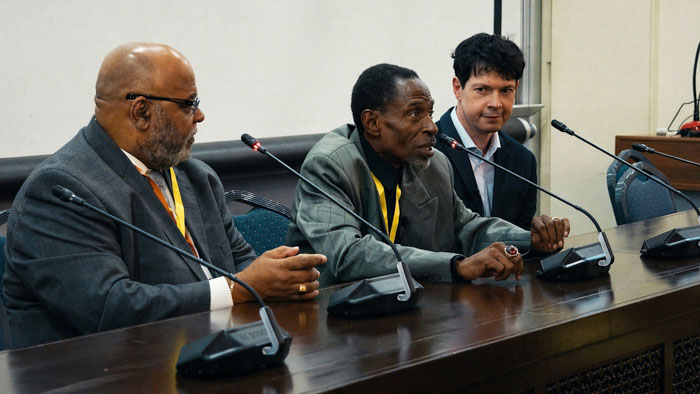
“If you’re not serving others, then you’re not leading.”
Performed by world-famous Bonnie Tyler, alongside the Dallas Street Choir, One World One Home brings together both global recognition and authentic voices connected to the issue. This collaboration reinforces the film’s message of unity and compassion while also giving a voice — both literal and symbolic — to those affected by homelessness. One World One Home serves as the emotional anchor of the film. It adds a poignant resonance and reflects its core themes of dignity, shared humanity, and collective responsibility. With lyrics by me and music by Valentino Favotto, the song amplifies the idea that housing insecurity is not just an individual struggle, but a societal challenge that calls for empathy and action.
Beyond its role within the film, One World One Home extends its impact into the real world. Proceeds from both the documentary and the song are dedicated to helping secure affordable housing for underprivileged families, reinforcing the central message that homelessness is not a hopeless condition, but a challenge that can be overcome through collective effort and compassion. Beginning April 24, 2026, One World One Home will be released across all major music platforms and retail outlets, available in digital format as well as on vinyl and CD.
What responsibility do filmmakers have when tackling real-world social issues like homelessness?
Cinema can be either a form of escapism — a way to temporarily step away from everyday problems — or a powerful art form that confronts, interprets, and reflects reality while promoting social change. When I choose to tell stories about real-world issues like homelessness, I feel a personal responsibility to make the best use of that opportunity to raise awareness, evoke empathy, and encourage deeper understanding. That’s why I created the project Let’s Make a Difference: to go beyond entertainment and use my films as a tool to communicate meaningful social messages and ignite transformation.
In my work, including Homeless, I don’t try to offer definitive solutions. Instead, I focus on shining a light on perspectives and human experiences that are often overlooked or misunderstood, giving space to voices that are too frequently unheard or ignored. I believe that responsibility extends beyond representation alone. Filmmakers have the possibility to influence how audiences think, feel, and even act after the credits roll. This means approaching sensitive topics with honesty, dignity, and care, avoiding exploitation or simplification, and ensuring that the people whose stories are being told are portrayed as full human beings rather than symbols of a problem. This approach is also rooted in my own experience. By combining my passion for filmmaking with my involvement in real estate, I take on these stories through the lens of social entrepreneurship. It is about using tools, skills, and resources — whether in film, business, or community work — to generate both social value and tangible impact.
What are you working on now?
Right now, I’m continuing to provide affordable housing through my project, Helping Vegas, while also looking for more social issues that need attention. At the same time, I believe this responsibility doesn’t belong to just one person, and I invite others to join in and engage in their own way. I’ve always been driven by the idea that leadership isn’t about position or status — instead, it’s about action and service. It’s not a pyramid with someone at the top, but rather an inverted one, where true strength comes from lifting others. If I’m not serving others, then I’m not leading.
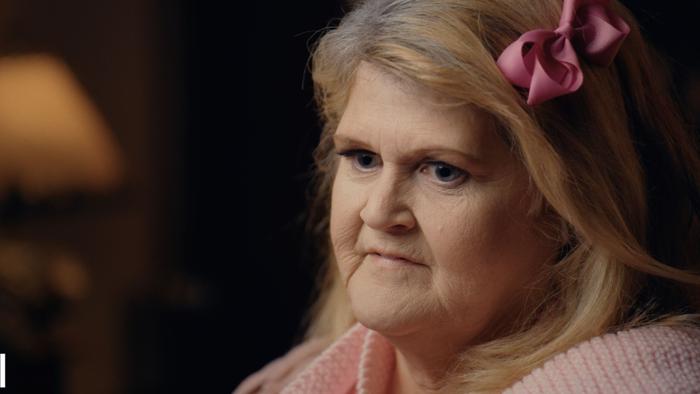
“Each of these stories matters and galvanizes me.”
I keep a quote close to me, often attributed to the 14th Dalai Lama: “If you think you are too small to make a difference, try sleeping with a mosquito.” It’s a simple but powerful reminder that even the smallest gesture can create a lasting impression. I explored a similar idea in my film Hopeful Notes, where a small moment — watching ants work together — becomes a reflection of how collective effort can achieve something meaningful.
From time to time, I receive messages from people who were motivated by my films or who were able to improve their lives through an affordable unit I helped secure. Each of these stories matters and galvanizes me. Each one is a step forward and a reminder that change is possible. I may be just one person, but I’m not alone. I’m part of a community — social workers, advocates, and individuals who genuinely care — and they inspire me every day. I also carry my parents with me in everything I do, and I’m committed to honoring them through service. As Albert Einstein said, “Only a life lived for others is a life worthwhile.” Together, we can make a difference.
Homeless is now available on all major streaming platforms, including Prime Video.


I am requesting to work with you regarding the homeless population in Las Vegas and globally. I am a college student at SNHU. Please contact me at your convenience.
So very commendable and noble!!! I lived in vegas several years and used to see all the homeless and wish I could help them. Now I’ve lost my husband and half my income and find myself basically homeless and having huge difficulties finding something I can afford in vegas and henderson. All programs to help with this are closed or years on waiting list, but can’t even get on waiting lists! I would be so greatful to get housed in vegas/henderson and be part of your team to help others, yes I’m in great need to be housed but I find I feel my best when being able to help others, I would love to be part of the team of helping others, unfortunately currently I’m in need of a bit of help right now. Sincerely Cheryl Nelson