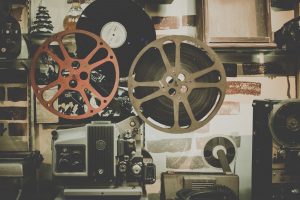
No crew, no craft services, no wrap party — the editing bay is where the real second half of filmmaking happens. Here’s what that isolation actually does to editors.
Everyone remembers the wrap party. Nobody throws one for the editor.
By the time a film reaches the edit bay, the crew has scattered, the director’s attention has usually split toward the next project or the festival submission spreadsheet, and the editor is left alone with weeks or months of footage and a deadline that doesn’t care how they’re doing. It’s one of the strangest jobs in filmmaking: intensely creative, entirely solitary, and almost invisible until something goes wrong.
The Job Nobody Sees Happening
A cinematographer’s work shows up in every frame. A production designer’s work is the room you’re sitting in. An editor’s best work is often the cuts you don’t notice — the ones that feel so natural the audience assumes the footage always existed in that order.
That invisibility cuts both ways. Great editing gets credited to the director half the time. Bad pacing gets blamed on the script. The editor sits in the middle, doing structural work that shapes the entire emotional arc of a film, largely unseen by anyone outside the process.
Quick tip for filmmakers reviewing an edit: if a scene feels “off” but you can’t say why, ask your editor what they cut, not what they kept. The removed material almost always explains the problem faster than the assembled cut does.
How Editors Actually Cope With the Grind
Ask around post-production circles and the coping strategies vary, but a few show up constantly: walking away from the monitor at fixed intervals rather than “one more pass,” watching the cut on a completely different screen to catch what a laptop hides, and building in a hard stop time even when the temptation is to keep going until it’s right.
Some editors also lean on something to help unwind after a long session without knocking them flat for the next day’s work. A handful I’ve talked to keep tinctures with kratom on hand for exactly that — a small dose after a long cutting session, taken slow to see how it sits before using more. Legality varies significantly by state, so it’s worth checking local rules before adding anything like this to a routine, and starting low matters more than most people assume when trying something for the first time.
Isolation Is Baked Into the Process
Directing involves constant negotiation — actors, department heads, a dozen opinions in a room. Editing strips almost all of that away. It’s one person, a timeline, and hours of raw footage that only they have watched in full.
That solitude has a real cost. Editors report some of the highest rates of burnout in post-production roles, partly because the isolation removes the natural pacing that a crew environment provides. On set, a bad day ends when everyone wraps and goes home. In the edit bay, a bad day can bleed into the next one with nobody around to notice the editor hasn’t left the chair in fourteen hours.
Documentary editors face an even sharper version of this. Feature editors work from a script; documentary editors often build the actual story structure from scratch, watching hundreds of hours of footage to find a narrative nobody wrote down first. That’s a different kind of exhausting — less about stamina, more about carrying the entire shape of the film in your head alone until it clicks.
The Deadline Pressure Compounds the Loneliness
Post-production schedules routinely get compressed when a shoot runs long or a festival deadline looms. The editor absorbs that compression directly. There’s no “next department” to hand off to when the schedule slips — the cut has to be locked, and that responsibility sits with one person staring at a monitor at 1 a.m.
Veteran editors talk about a specific kind of fatigue that sets in around week three or four of a tight cut — not sleepiness exactly, more a fog where every choice starts to feel equally right and equally wrong. Most describe stepping fully away from the footage, even for twenty minutes, as the only thing that reliably clears it. Fresh eyes matter more in editing than almost any other filmmaking role, and fresh eyes require actual breaks, not just shorter ones.
Why This Matters for the Films Themselves
An exhausted, isolated editor doesn’t just suffer personally — it shows up in the work. Rushed cuts feel rushed. Pacing decisions made at 2 a.m. under deadline pressure are rarely the same decisions that would get made with a clear head and time to sit with a scene.
The best post-production supervisors know this and build in real breaks between cut passes, not just between projects. It’s a small operational choice that has an outsized effect on whether the finished film actually feels considered, or just finished.
The Bottom Line
The editing bay produces some of the most consequential creative decisions in a film, made by someone working almost entirely alone, on a schedule that rarely accounts for the toll of that isolation. Recognizing what that job actually costs — and building in the small things that make it survivable — matters just as much for the finished film as any decision made on set.
Suggested image: a solitary editor at a multi-monitor workstation in a dim room, timeline visible on screen.