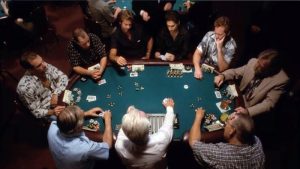
There’s a reason why stepping into a casino feels like walking onto a movie set. The velvet ropes, the golden light spilling across green felt, the soft clink of chips between fingers. None of that happened by accident. Hollywood taught us what a casino should feel like long before most of us ever visited one. And honestly? The film industry didn’t just influence casino culture. It practically invented the version we carry around in our heads, from physical floors to the screens we play on today.
When the Silver Screen Built the Blueprint
Think back to the early James Bond films. Sean Connery in a tailored tuxedo, leaning over a baccarat table with composure that suggested he’d already won before the cards were dealt. Those scenes established an aesthetic language casinos have borrowed from ever since. The black-tie dress code, crystal chandeliers, the hushed tension around a roulette wheel. Bond made the whole room feel like a stage.
Then came the heist movies. The original Ocean’s Eleven in 1960, followed by Steven Soderbergh’s slick 2001 remake, flipped the script. The casino wasn’t just glamour anymore. It was a fortress to be cracked. Those films framed beating the house as an irresistible fantasy, dressed up in sharp visual storytelling. Tracking shots gliding across casino floors, tight close-ups on nervous hands, split-second edits that mirrored the pace of a real gamble.
Scorsese’s Casino and the Aesthetic That Changed Everything
If Bond gave casinos their elegance, Martin Scorsese gave them their grit. His 1995 epic Casino didn’t romanticize Las Vegas. It dissected it. Robert De Niro’s Sam Rothstein ran the Tangiers with surgical precision, and Scorsese matched that energy with obsessive visual detail. Neon lights, mirrored ceilings, red carpets, golden interiors. Every frame dripped with seductive decay.
Richardson’s cinematography and Ferretti’s production design recreated 1970s Vegas with such accuracy that the film became a reference point for an entire industry. Scorsese’s camera lingered on counting rooms and tracked the mechanical rhythm of slot machines, turning the casino floor into something almost alive. That same visual DNA now lives online. Today’s online casino platforms borrow from this cinematic playbook, pairing sleek interfaces with atmospheric tension to recreate the feeling of a Scorsese tracking shot on a screen. Sports betting sits next to table games, slot libraries run deep with genre-themed visuals, and the whole experience reflects the same calculated structure Rothstein would have appreciated.
The film celebrated its 30th anniversary in 2025, and the cultural reckoning has been remarkable. At Tribeca, Scorsese and De Niro reunited on stage, and critics who once dismissed it as a lesser Goodfellas now call it the more daring work. Scorsese told The Guardian that Casino has become “an allegory for the times we live in”. That says something about how deeply the film’s aesthetic shaped our imagination.
The Sound of the Gamble
We tend to focus on visuals when discussing film aesthetics, but sound design has been just as influential. The layering of ambient noise in casino scenes, the shuffle of cards, chips stacking, the murmur of conversation, creates an atmosphere that real casinos have studied and replicated.
Music matters too. A tense score beneath a high-stakes poker scene does more than build suspense. It teaches the audience how to feel. That emotional shorthand has crossed over into how gaming environments design their soundscapes, on the casino floor and inside the apps on your phone.
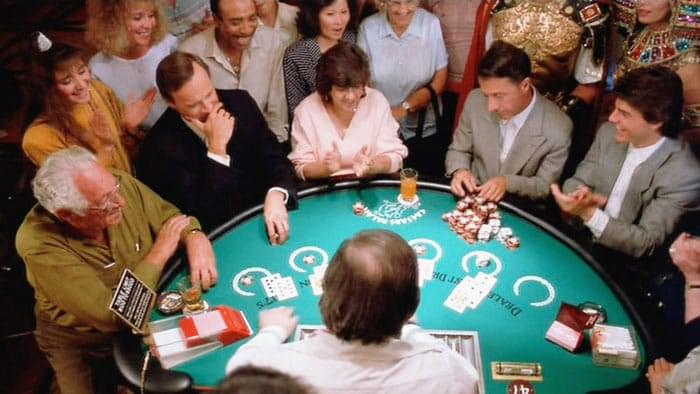
Beyond the Screen: Where Film Meets the Casino Floor
Here’s where it gets interesting. The relationship between film and casino culture is no longer one-directional. Scorsese recently announced a new Netflix series set in present-day Las Vegas, created with Billions team Koppelman and Levien. The casino as a cinematic space is evolving alongside the real thing.
Meanwhile, indie films like Down to the Felt, shot in Columbus, Ohio, are pulling the casino setting away from the Strip entirely. The gambling room doesn’t need to be glamorous anymore. It just needs to feel real. That same instinct drives online platforms too. A 2025 report found that over 41% of new slot releases featured visuals borrowed directly from film. Crime-themed games channel noir aesthetics with shadowy palettes, while adventure slots pull from franchises like Tomb Raider. Every spin becomes a little scene.
The casino aesthetic has become a shared language between filmmakers and digital designers, each borrowing from the other in a loop that keeps tightening. The chandeliers, the green felt, the controlled lighting, the tension. It all started on screen. And thirty years after Scorsese’s opening car explosion in Casino, we’re still living inside that visual grammar, whether we’re watching it or playing it on a screen in our pocket.