Online romance doesn’t look like it did ten years ago. It’s faster, noisier, and more mediated: profiles, filters, voice notes, verification badges, and the constant feeling that a “better match” might be two swipes away. The newest wave of dating-focused film and TV finally treats that reality as the story, not the background. Instead of cute montages, you get questions that feel uncomfortably familiar: What happens when intimacy is performed for an audience? When compatibility is measured like a lab result? When your “perfect partner” can be purchased, customized, or faked?
Love Me is the cleanest distillation of this era’s weirdness. It’s a romance between two AIs—a buoy and a satellite—who learn what love is by studying humans online, including influencer couples who turn private life into content. The comedy comes from the cringe of imitation, but the sting is real: it shows how easily people borrow personas to feel chosen, and how quickly “connection” becomes a performance.
If you like your romance with teeth, Companion flips the fantasy of an always-agreeable partner into a thriller about control. A weekend getaway unravels after it’s revealed that one character is a companion robot, and the relationship’s hidden power imbalance starts to surface. The sci-fi hook is fun, but the real tension is psychological: who gets to set the rules, and what happens when the other person finally refuses?
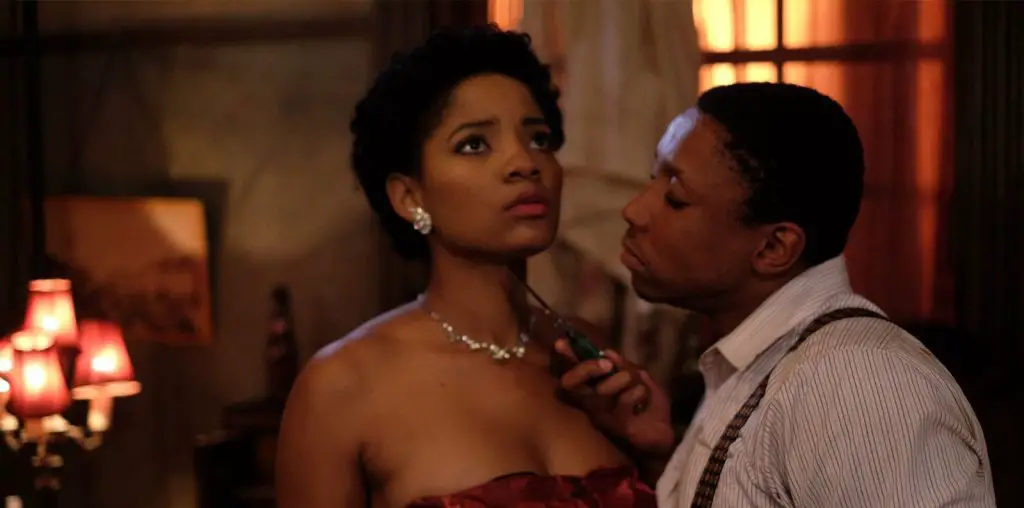
Fingernails lives in a more realistic nightmare: an institute claims it can test whether a couple’s love is “real.” The film isn’t about gadgets; it’s about doubt. It captures the modern urge to outsource judgment to systems—tests, quizzes, labels, and “green flag” checklists—because uncertainty feels unbearable. Watching it, you can almost hear the subtext: if a machine says we’re compatible, does that mean my gut is wrong?
For something bingeable and oddly tender, Upload remains one of the strongest relationship shows built around a tech premise. Its digital afterlife is essentially a subscription product, which turns love into something you can upgrade, pause, and monetize. Under the jokes, the show keeps returning to a dating-era fear: that convenience will replace commitment, and that choice overload will make everyone restless and half-present.
Reality dating gets dismissed as fluff, but Love Is Blind is still useful if you watch it like a social experiment. Recent seasons are less about “will they get engaged?” and more about what breaks under pressure: conflict style, money habits, family expectations, and the gap between online chemistry and daily-life compatibility. It’s messy, but it’s educational in the way a friend’s chaotic dating story can be educational: you spot patterns you’d rather not repeat.
Now for the webcam layer—where intimacy, money, secrecy, and identity collide. Confessions of a Cam Girl takes a straightforward, dramatized route, but it still hits a truthful nerve: when attention becomes income, boundaries get complicated fast, and relationships can suffer even when the motivations are understandable. It’s not subtle, yet it captures the emotional whiplash of living two versions of yourself on two screens.
Cam is older, but it’s still the sharpest “screen horror” about losing control of your image. After a look-alike takes over a cam model’s account, the story becomes a nightmare about identity theft, parasocial obsession, and the frightening idea that the internet can clone you and keep going without your consent. In an age of deepfakes and stolen content, it feels less like fiction and more like a warning label.
Not every story about dating is romantic; some are about fraud and recovery. Love Con Revenge (Netflix) and Hey Beautiful: Anatomy of a Romance Scam (Hulu) focus on how scammers manufacture intimacy: mirroring your values, escalating fast, isolating you, then attaching urgency to money. They’re heavy watches, but they can also be clarifying, because they turn “I had a bad feeling” into concrete behavioral patterns.
To help you choose by mood, here’s a quick snapshot:
|
Title |
Year |
Type |
What it explores |
Where to watch |
|
Love Me |
2024 |
Film |
AI romance + influencer intimacy |
Theatrical / VOD (varies) |
|
Companion |
2025 |
Film |
Control inside “perfect partner” tech |
Theatrical / VOD (varies) |
|
Fingernails |
2023 |
Film |
Compatibility testing and doubt |
Apple TV+ |
|
Upload |
2020– |
Series |
Love under subscription logic |
Prime Video |
|
Love Is Blind (S6+) |
2024– |
Series |
Values under fast commitment |
Netflix |
|
Confessions of a Cam Girl |
2024 |
Film |
Webcam secrecy and pressure |
Lifetime |
|
Love Con Revenge |
2025 |
Docuseries |
Romance scams and manipulation |
Netflix |
|
Hey Beautiful |
2025 |
Docuseries |
Catfishing and aftermath |
Hulu |

Try pairing a reality show with a scripted film. The contrast is revealing. Reality shows how people negotiate under pressure; scripted stories exaggerate dynamics until you can see them clearly, like turning the volume up on a habit in your head.
What ties these together is mediation. Dating isn’t just two people; it’s two people plus a system—an app, a camera, a feed, a test, a bot, or a storyline they think they should live up to. That’s why the most satisfying titles here aren’t the ones with the flashiest premises; they’re the ones that leave room for awkward honesty. They show characters saying the unglamorous truths that actually build closeness: “I need consistency,” “I’m not okay with that,” “Slow down,” “Show me with actions.”
If you’re watching with your own life in mind, look for the fault lines that keep repeating across genres. Control can masquerade as care. Validation can masquerade as love. Convenience can masquerade as compatibility. The healthiest connections—on screen and off—usually appear when someone stops trying to optimize every interaction like it’s a dating service and starts treating it like a real conversation with a real person who is allowed to be imperfect.