Ryan Seacrest took over “Wheel of Fortune” in September 2024 after Pat Sajak’s 41-season syndicated run, but the wheel remained thestar attraction. That tells you something about game shows built around chance. The host can change. The spinning thing in the middle of the stage is harder to replace. Shows like “Deal or No Deal,” “Press Your Luck” and the BBC’s “The Wheel” mix luck, judgment and knowledge in different proportions. What connects them is their treatment of uncertainty. They work the way a good thriller does, through lighting, sound, pacing and a cutting room that knows when to hold a shot.
The Dutch Briefcase Trick
“Deal or No Deal” grew out of the Dutch show “Miljoenenjacht,” which launched in 2000 and introduced its familiar briefcase format later. NBC’s version arrived with Howie Mandel in December 2005: 26 briefcases, a top prize of $1 million and an unseen Banker phoning in offers. Choosing a case cannot reveal its contents, but deciding whether to accept an offer involves weighing the money remaining against a guaranteed sum. The staging makes that calculation feel like a confrontation. The Banker calls, the room tightens and Mandel relays the number. It’s horror-movie grammar applied to a cash offer.
The British version, hosted by Noel Edmonds on Channel 4 from 2005, went further with 22 boxes and a set that felt like a cross between a séance and a game of poker. Edmonds could make a pause feel almost confrontational. Any filmmaker who’s fought with a producer over whether a scene is “too slow” should study the effect. The silence gives viewers time to imagine both outcomes before either arrives. Once the box opens, the reaction has somewhere to go.
That same staging now shapes online casino games. Evolution’s Dream Catcher, launched in 2017, puts a presenter beside a large upright wheel and streams each spin to players. Online casinos also offer live games built around this presenter-led format; players can see the full list of no verification casinos and compare their live-game selections. The appeal of a hosted wheel game lies partly in that familiar television rhythm: the host builds anticipation, the camera holds on the wheel and the result brings the suspense to a close. The casino format gives the viewer a wager in the outcome, while the production makes a simple spin feel like a performance.
Whammies, Wheels and the Art of the Stall
“Press Your Luck” builds its spectacle around a flashing board and the Whammy, the animated menace that wipes out a contestant’s winnings. Questions earn spins, while decisions about taking or passing those spins add another layer of pressure. The board supplies the visual frenzy: money, prizes and disaster competing for attention. It’s a kind of rapid montage built into the set. ABC’s 2019 revival with Elizabeth Banks preserved that central attraction while adding a substantial bonus round. The familiar machinery became the foundation for a longer climb toward a bigger finish.
“Wheel of Fortune” is the gentler cousin, though calling its puzzles a veneer of skill misses half the game. Solving quickly and choosing letters well matter. The spin introduces the interruption nobody can reason away: a promising turn can still end in Bankrupt. Watch the relationship between the moving wheel and the waiting contestant. The pointer supplies one kind of suspense, the face another. The viewer knows what a bad landing would mean before it happens. It’s the same basic advantage a thriller gets by showing the audience a danger its characters cannot control.
When the Camera Explains the Game
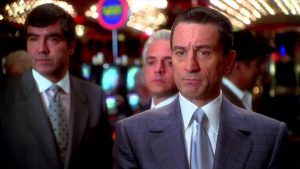
Martin Scorsese’s “Casino,” revisited in a Casino anniversary reappraisal, offers a useful cinematic comparison. The film makes the movement of money and the machinery surrounding it visually absorbing. Its casino isn’t just a backdrop with attractive lights. It’s a system the camera keeps explaining. Game shows work on a smaller scale, teaching viewers to read a board, a box or a pointer until a tiny change within that system feels enormous. A prop becomes dramatic once the audience understands its consequences.
Michael McIntyre’s “The Wheel” launched on BBC One in November 2020, and it makes the relationship between knowledge and luck particularly visible. The contestant sits at the centre of a huge wheel surrounded by celebrity experts. A spin selects a helper, but answering questions remains essential. The production turns that selection into an attraction in its own right. The circular arrangement gives the camera faces, movement and scale before anyone has supplied an answer. NBC’s adaptation premiered on December 19, 2022, also hosted by McIntyre, not a new American presenter.
The comparison isn’t that these programmes are interchangeable. A briefcase reveal, a puzzle solve and a celebrity answering a question ask different things of their contestants. What travels between them is the grammar of anticipation. Establish the possible reward, make the threat legible, then give the audience enough time to care. The hardware does some of that work. The director has to decide when to show it and when a human reaction is more interesting.
Seacrest Takes the Wheel
The Seacrest era offers a useful test of how a familiar format accommodates a different performer. Sajak’s dry, half-amused delivery often made him seem slightly outside the commotion. Seacrest brings a brighter manner. Neither approach eliminates the need to watch a contestant think, hesitate or realise what a spin has cost. The host gives those moments their social rhythm, while the wheel gives them a deadline. Calling the host replaceable is a good opening provocation, but it isn’t the whole story.
Nor has the programme simply stood still. Season 44 began on September 14, 2026, with Seacrest alongside Vanna White and a new opening round called Fortune Frenzy. Contestants have 30 seconds to solve as many puzzles as possible, earning $1,000 for each correct answer, before a traditional spinning round follows. That’s a conspicuous investment in puzzle-solving, not evidence that the wheel decides everything. A durable format can protect its signature image while changing the pace around it.
The craft is consistent across all four shows. An uncertain outcome gets a close-up, a sound cue, a lighting change or an edit that refuses to release the tension too soon. Directors working on thrillers could borrow the toolkit without borrowing the budget. The lesson isn’t that skill doesn’t matter or that any presenter will do. It’s that suspense needs an object the audience understands, a consequence it can feel and somebody behind the camera patient enough to let both register.